NYDIG to Sell Institutional Trading Business to BitGo for Approximately $42.5 Million
Key Takeaways
- •NYDIG is selling its institutional trading business to BitGo for roughly $42.5 million in cash and stock, plus a $15 million performance-based earnout.
- •The sale covers only NYDIG's trading unit, and NYDIG will continue operating its other businesses, including custody services for clients such as Riot Platforms.
- •BitGo, a crypto custody firm founded in 2013, gains trading capabilities that expand its services for institutional clients.
- •The transaction terms are documented in a merger agreement exhibit filed with the U.S. Securities and Exchange Commission.
- •The deal reflects consolidation in institutional crypto infrastructure as firms combine custody, trading, and related services for large clients.
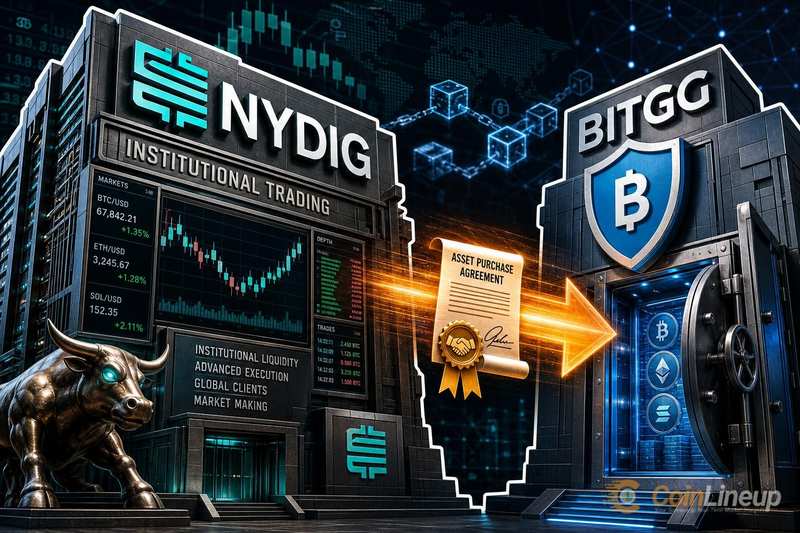
NYDIG, a Bitcoin-focused financial services firm, plans to sell its institutional trading business to crypto custody company BitGo for approximately $42.5 million. The deal transfers a slice of the institutional trading market from one major player to another.
What NYDIG Is Selling
NYDIG is the seller in the transaction. It is handing over its institutional trading business only, not the entire company, and NYDIG will continue operating its other services.
BitGo is the buyer. The firm is best known for safeguarding crypto assets for large clients, a service known as custody. Founded in 2013, BitGo has long served institutional clients and has pursued expansion in recent years through acquisitions and new business lines. The two companies announced the deal in a post on BitGo's website.
The reported price of about $42.5 million should be treated as approximate rather than final. According to CoinDesk's reporting, the payment combines cash and stock, plus an additional $15 million earnout tied to performance. An earnout means part of the payment is made later only if certain targets are met.
The transaction is also documented in a filing with the U.S. Securities and Exchange Commission (SEC), the government agency that oversees securities markets. The full terms appear in the merger agreement exhibit submitted to the SEC.
Why the Deal Could Make Sense for Both Firms
For BitGo, acquiring an existing institutional trading operation offers a faster route to expansion than building one from scratch, adding trading capabilities to a business already focused on serving large institutional clients.
For NYDIG, selling the unit may signal a refocus on its remaining priorities. NYDIG already provides custody services elsewhere in the industry; for example, it holds Bitcoin for companies such as Riot Platforms. Divesting the trading arm allows NYDIG to concentrate its resources.
These motivations are analysis based on the deal's structure, not statements confirmed by either company. What is confirmed is the fact of the sale and its approximate size.
What It Could Mean for Institutional Crypto Trading
The deal centers on institutional trading infrastructure—the plumbing that lets large investors buy and sell crypto. When one firm absorbs another's trading unit, fewer separate providers serve that market, and such consolidation can shift how institutional clients choose their partners. It is a pattern seen in other corners of the crypto industry, where firms have combined custody, trading, and related services under one roof to offer institutions a single point of access.
The transaction also arrives as the wider industry continues reshaping around large clients, as seen in developments such as the growth of crypto ETFs and evolving regulatory proposals for exchanges. As more institutional money enters the market through these channels, demand for the underlying trading and custody infrastructure has grown, and the firms serving that demand are positioning accordingly.
For an individual crypto holder, the deal changes nothing about their own coins. It matters mainly to institutions and to observers tracking how the businesses behind the market are combining. What to watch next is whether the transaction closes on its stated terms, including the performance-linked earnout, and whether further consolidation among institutional crypto service providers follows. The clearest takeaway is simple: two established firms are consolidating a portion of institutional trading, and the terms are now on the public record.
