Bitcoin Drops Below $84,000 as Surging Bond Yields Fuel Broad Crypto Selloff
Key Takeaways
- •Bitcoin dropped to about $83,000, falling below the key $84,000 support and losing more than $5,000 from its weekly peak, while major altcoins such as Arbitrum, Uniswap, and Pepe also declined.
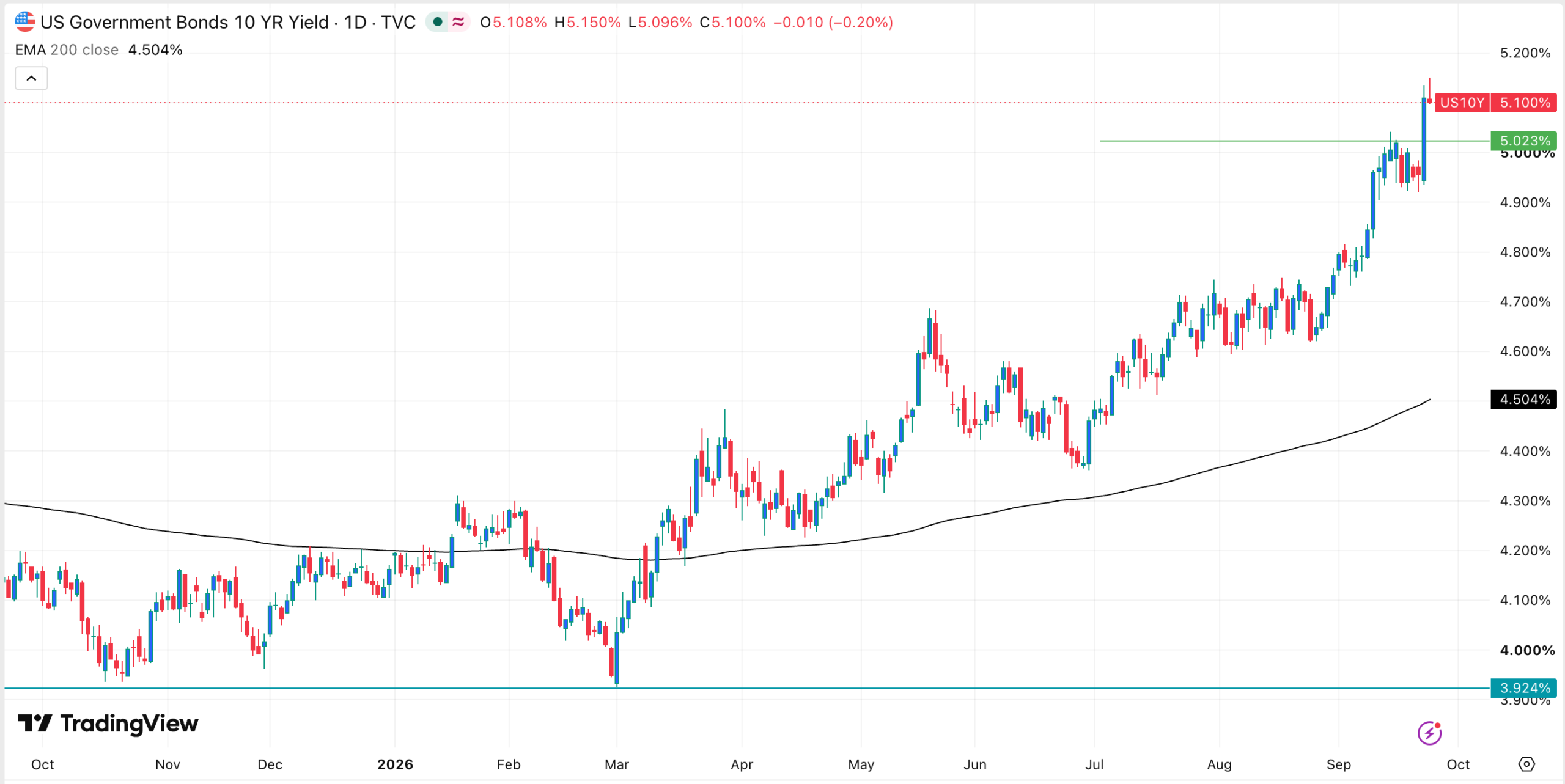
- •Government bond yields surged globally, with the U.S. 10-year Treasury hitting 5.1210%, its highest level since 2004, and yields in Japan, Australia, Germany, and France reaching multi-year highs.
- •Brent crude rose to $105 per barrel and WTI to $93, intensifying inflation and lifting expectations of another Federal Reserve rate hike, which prediction markets place in October or December.
- •Profit-taking accelerated the selloff as previously overbought tokens led losses, including Pons, which plunged 13.3%, alongside Celestia, Arbitrum, Worldcoin, Venice Token, and Zcash after strong weekly gains.
- •Bitcoin is retesting the $82,135 level, the upper boundary of a cup-and-handle pattern, and holding it as support would form a break-and-retest continuation signal with a potential rebound toward $90,000.
Bitcoin slid below the crucial $84,000 support level, falling to about $83,000 — a drop of more than $5,000 from its highest point of the week — as a broad selloff swept through the cryptocurrency market. The retreat reversed gains made earlier in the week, and most major altcoins followed, including Arbitrum, Uniswap, and Pepe. Below are the main drivers behind the decline in Bitcoin and other leading tokens.
The pullback reflected three converging pressures: a surge in government bond yields across major economies, rising crude oil prices that have reignited inflation concerns, and profit-taking in tokens that had become overbought. Together, they illustrate how closely crypto currently tracks the broader macro backdrop.
Global Bond Yield Surge
The selloff coincided with renewed jitters in the bond market, where yields have climbed steadily this month. The U.S. 10-year Treasury yield rose to 5.1210%, its highest level since 2004. In Japan, the 10 yield climbed to 3.08% a week after the Bank of Japan (BoJ) raised interest rates. Australia's 10-year yield jumped to 5.36%, while yields in major European economies, including Germany and France, reached their highest levels in years.
Rising yields are tracking an acceleration in public spending. U.S. public debt has surged to a record high of more than $40.2 trillion, a trajectory that, if continued, could push the total to $50 trillion within the next few years.
Higher yields lift the returns available on Treasuries and other cash-like instruments, raising the opportunity cost of holding assets that generate no cash flow of their own. That helps explain why Bitcoin and other cryptocurrencies have historically tended to underperform when bond yields are in an uptrend. The same dynamic has weighed on gold and stocks, which have also continued falling this week.
Soaring Oil Prices and Inflation Risks
The crypto market's slide came as crude oil prices surged. Brent rose to $105 per barrel for the first time this week, while West Texas Intermediate (WTI) jumped to $93, pushing gasoline and diesel prices higher.
Higher oil prices point to continued inflationary pressure in the coming days, raising the risk that headline and core consumer inflation will remain above the 2% target for the foreseeable future. Energy costs feed into transport, production, and household expenses, so sustained moves in crude tend to surface in broader price data.
That, in turn, increases the likelihood that the Federal Reserve will need to hike interest rates again this year after delivering its first increase last week. In a statement today, John Williams, president of the New York Fed, noted that the central bank may need to raise rates once more before the end of the year. Prediction markets are pricing another move in either October or December, putting the Fed's remaining policy meetings this year firmly on the market's watch list. Bitcoin and other risky assets have historically underperformed whenever the Fed is in a hiking cycle.
Profit-Taking After Overbought Run-Ups
Profit-taking also accelerated the decline, as many tokens had become highly overbought. Although most altcoins fell, a closer look shows that many of the day's biggest laggards were among the week's strongest gainers. Pons plunged 13.3%, while Celestia, Arbitrum, Worldcoin, Venice Token, and Zcash were among the top decliners. All of these tokens were highly overbought earlier in the week, and the shift from leading gains to leading losses underscored how stretched positioning had become.
Technicals Frame the Sell-Off
Technical factors also help explain the selloff and what may come next. The daily chart shows Bitcoin had broken above key resistance at $82,135 — its highest level since May and the upper boundary of a cup-and-handle pattern. The current pullback therefore amounts to a potential retest of that level as support, making $82,135 the key line to watch as traders assess whether the breakout structure holds.
Such a move would form a break-and-retest pattern, a common continuation signal. Under that scenario, there is a likelihood that Bitcoin rebounds and potentially reaches $90,000. If that happens, altcoins would likely bounce back alongside the broader market.
Source: The Market Periodical — Crypto Crash Today: Here's Why Bitcoin and Top Altcoins Falling

