Bitcoin Whales Add 121,117 BTC as Price Slides Nearly 30%
Key Takeaways
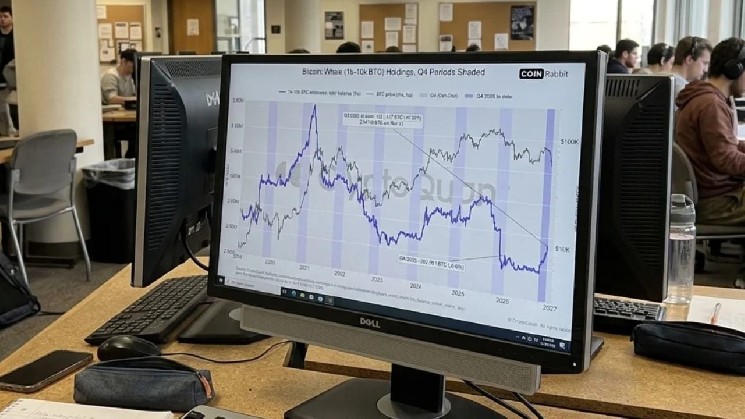
- •Bitcoin addresses holding 1,000 to 10,000 BTC added 121,117 BTC between Sept. 30 and Nov. 21, raising their combined balance to 2.95 million BTC as bitcoin's price fell 29.5% to about $55,000.
- •The cohort's 4.29% quarterly increase is counter-seasonal, as this group has shed coins in seven of nine fourth quarters since 2017 and recorded its largest fourth-quarter gain in bitcoin terms since 2020.
- •Addresses holding at least 1,000 BTC realized net losses averaging $41 million a day through Nov. 21, reversing the $131 million in average daily gains posted from 2019 through 2025.
- •Unrealized gains for addresses with at least 1,000 BTC fell to $23.8 billion from $124.7 billion at the end of September, while the 1,000-to-10,000 BTC group's unrealized profit margin dropped to 5.7% from 33.9%.
- •Daily exchange inflows from outputs of at least 1,000 BTC rose to 5,012 BTC in November from 3,239 BTC in October, and bitcoin loan counts among Coinrabbit customers with more than $100,000 in loans climbed 298.9% from September to October while loan volume fell 16.2%.
Bitcoin Whales Add 121,117 BTC as Price Slides Nearly 30%
Bitcoin addresses holding between 1,000 and 10,000 BTC raised their combined balance to 2.95 million BTC between Sept. 30 and Nov. 21, according to on-chain analytics firm Cryptoquant's fourth-quarter whale analysis, published Nov. 27 with support from crypto lender Coinrabbit. The accumulation unfolded as bitcoin's price dropped 29.5% over the period, falling to about $55,000 on Nov. 21.
"Balances in the 1k–10k $BTC cohort are up 121,117 $BTC since Sep 30 while price fell 29.5%," Cryptoquant wrote in the report.
Counter-Seasonal Buying During a Fourth-Quarter Downturn
The buying contrasts with the cohort's usual behavior. The report noted: "The cohort of addresses with a balance of 1k–10k $BTC has shed coins in seven of nine Q4s since 2017."
Holdings rose 4.29% this quarter, the biggest fourth-quarter gain in BTC terms since 2020, after the group declined by 202,981 BTC in the fourth quarter of 2025. At the same point in the fourth quarters of 2018 and 2022, balances had fallen 0.06% and 1.29%, respectively. Addresses holding 100 to 1,000 BTC moved in the opposite direction, shedding 15,169 BTC this quarter through Nov. 21.
Because the analysis cutoff falls on Nov. 21 and the quarter runs through Dec. 31, updated balance snapshots will show whether this year's counter-seasonal accumulation held through year-end.
Cryptoquant had placed holdings for a broader group at 3.03 million BTC in October. That measure covered addresses holding at least 1,000 BTC and excluded exchange and mining pool addresses. Address-based tracking carries structural caveats: a single holder can control several addresses, and a custodian can hold coins for multiple customers, which shapes how analysts interpret changes in the combined balances of size-based address groups. Those caveats matter because cohort balances like these are commonly cited in on-chain analysis as gauges of large-holder positioning, even though they measure wallet addresses rather than identifiable owners.
Whale Losses Mount as Exchange Inflows Pick Up
Addresses holding at least 1,000 BTC realized net losses averaging $41 million a day through Nov. 21, reversing their historical fourth-quarter record. From 2019 through 2025, the group averaged $131 million a day in net gains over the same period. October remained profitable at $66 million a day before November swung to a daily net loss of $197 million through the cutoff.
Unrealized gains for addresses holding at least 1,000 BTC fell to $23.8 billion from $124.7 billion at the end of September. The unrealized profit margin for the 1,000-to-10,000 BTC group sank to a 2026 low of 5.7% from 33.9%. Earlier in November, Cryptoquant market analyst Darkfost estimated that short-term whales' paper losses totaled nearly $8 billion for coins acquired within the previous 155 days.
"Selling now locks in a thin gain or a loss, yet unlike 2018 and 2022 the whale cohort is still adding coins," Cryptoquant added.
Exchange inflows from unspent transaction outputs of at least 1,000 BTC rose to 5,012 BTC a day in November from 3,239 BTC in October. The quarter-to-date average of 3,955 BTC a day remains below the 2019-2025 fourth-quarter average of 4,575 BTC. Whale-sized transfers accounted for 9.9% of all exchange inflows, down from 10.8% between January and September. Inflows of this kind are generally read in on-chain analysis as coins moving toward venues where they can be traded or sold, although the transfers alone do not confirm that sales occurred.
During the November sell-off, wallets linked to London hedge fund Abraxas Capital Management received about 17,597 BTC from Binance and Kraken. The withdrawals increased the firm's tracked balances during the downturn, though the transfers alone leave the terms of any underlying trades unknown.
Large Borrowers Take More BTC Loans as Volume Falls
Among Coinrabbit customers with more than $100,000 in loans, the number of BTC loans rose 298.9% from September to October while loan volume fell 16.2%. In October 2025, loan count fell 3.7% while volume rose 122.8%. Cryptoquant did not link those borrowers' accounts to the addresses in its whale analysis. Within the group, the number of loans per customer rose 6.9% in October while volume per customer fell 37.3%.
Borrowing against bitcoin can provide cash without selling the collateral. Interest adds to the cost, however, and a falling bitcoin price can trigger liquidation.
Crypto tax software provider Summ suggested that wider tax reporting could encourage large holders to defer sales, borrow against bitcoin, or realize losses for tax purposes. Summ presented those potential incentives as an interpretation of the data rather than established outcomes. The Global Forum of the Organization for Economic Cooperation and Development expects the first cross-border crypto tax data exchanges in September 2027 under its Crypto-Asset Reporting Framework.

