Crypto Traders Brace for Fed Chair Kevin Warsh's Jackson Hole Speech
Key Takeaways
- •Warsh’s Jackson Hole remarks were scheduled for Aug. 28, 2026, during the Kansas City Fed’s annual symposium in Wyoming.
- •Bitcoin was trading near $79,796, up 1.39% on the day, with a market value of about $1.6 trillion.
- •Traders were mainly listening for clues on interest rates, since lower-rate signals can support risk assets while hawkish comments can pressure them.
- •The symposium agenda included digital payments, cryptocurrencies, stablecoins, and related policy issues, which gives the speech added relevance for crypto markets.
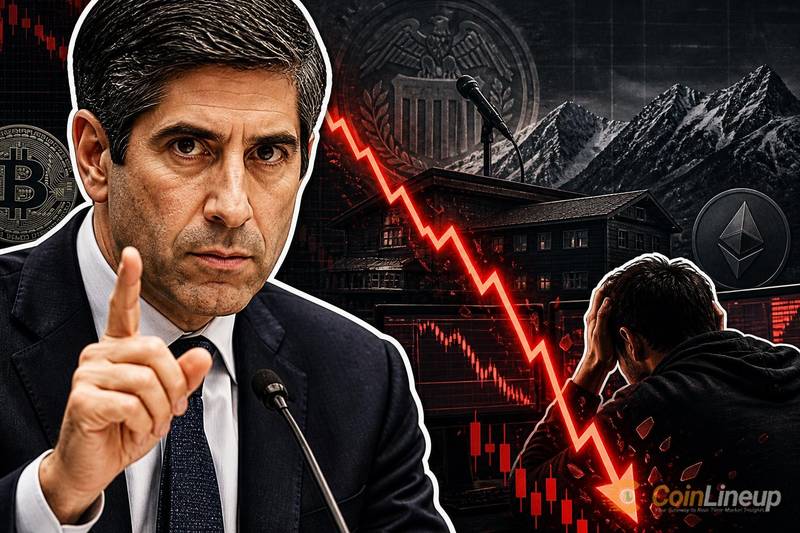
Crypto traders are closely watching Federal Reserve Chair Kevin Warsh's speech at the Jackson Hole symposium, looking for clues on the direction of interest rates and broader risk appetite. Bitcoin held near $80,000 as the market waited for signals that could move prices across digital assets.
The setting: Jackson Hole 2026
Each year, the Federal Reserve Bank of Kansas City hosts a major economic meeting in Jackson Hole, Wyoming. This year's symposium runs Aug. 27-29, 2026, under the theme "Financial Innovation: Implications for Payments and Policy."
Warsh's remarks were scheduled to stream on Friday, Aug. 28, 2026, at 10:00 a.m. EDT / 8:00 a.m. MDT. He took office as chairman on May 22, 2026, making this one of his first major speeches in the role. He is not new to the institution: Warsh served as a Fed governor from 2006 to 2011, and in the years before returning as chair he was an outspoken critic of the central bank's monetary policy framework — a record traders are weighing as they try to read his tone.
Why crypto traders are focused on the speech
The Fed sets the price of money in the United States. When it signals lower rates, riskier assets such as Bitcoin often rise, because cheaper money encourages investors to take chances. Jackson Hole, in turn, is where Fed chairs often deliver market-moving messages: a single sentence about rates can trigger fast price swings, which is why traders are bracing rather than merely watching. The venue has precedent for exactly that: Ben Bernanke's 2010 Jackson Hole remarks foreshadowed a second round of quantitative easing, and Jerome Powell used his 2020 speech there to unveil the Fed's average inflation targeting framework.
This year, the link to crypto is unusually direct. The Kansas City Fed said the symposium would examine digital payments, instant payments, cryptocurrencies, and stablecoins — the same fast-growing sector drawing new players such as the World Liberty crypto bank. The topic's policy profile has also risen quickly: the U.S. enacted its first federal framework for payment stablecoins, the GENIUS Act, in July 2025.
The signals traders will be listening for
The biggest question is interest rates. Higher rates make safe savings more attractive and pull money away from speculative bets like crypto.
Traders will also parse Warsh's tone on inflation and the broader economy. A worried, hawkish tone points to tighter money, while a calm tone can loosen financial conditions and lift risk assets.
Mark Connors said Warsh is likely to keep a rate-hike option alive on Friday while still expecting no actual hike before the November midterm elections, according to CoinDesk.
The uncertainty is real. In the July 29, 2026 FOMC press conference transcript, Warsh said he had not yet begun deciding what would go into the speech and described it as blank at that point.
For crypto specifically, stablecoins and tokenization matter as well. Samir Kerbage noted that Bitcoin traders should care more about liquidity and long-end yields, while Warsh's views on stablecoins and tokenization could matter more for other crypto assets. Macro events such as non-farm payrolls and geopolitical shocks have moved crypto in similar ways this year.
How crypto markets could react in the short term
Bitcoin was holding near $80,000 ahead of the speech, trading at $79,796 and up 1.39% over 24 hours. Its total market value stood near $1.6 trillion.
Big Fed events often cause sharp repricing across speculative assets within minutes, and the talk of "bracing" reflects expectations of volatility around the remarks. The two main scenarios traders outline are simple: a dovish, rate-friendly tone could push Bitcoin higher, while a hawkish tone hinting at tighter money could drag it lower.
Market mood was already warm. The Fear & Greed Index sat at 73, in "Greed" territory, meaning investors were already fairly optimistic heading into the speech.
One caveat: the first reaction can differ from the longer trend. Prices sometimes jump one way on the headline, then reverse as traders digest the full message. Beyond Friday's headline moves, the calendar offers a near-term checkpoint: the Fed's next scheduled FOMC meeting is set for Sept. 15-16, 2026. For a regular holder with a little Bitcoin on an exchange, the practical takeaway is patience — expect possible swings around Friday morning, and remember that short bursts of volatility do not always signal a lasting change in direction.
Disclaimer: This article is for informational purposes only and does not constitute financial or investment advice. Cryptocurrency and digital asset markets carry significant risk. Always do your own research before making decisions.
