Geopolitical Strategist Velina Tchakarova: Bitcoin Is the “Third Way” Between the Dollar and Yuan
Key Takeaways
- •Velina Tchakarova, founder of FACE, identifies the current era as a new Cold War that proceeds without direct confrontation among the major powers.
- •The United States is defending dollar supremacy through dollar-pegged stablecoins, while China and Russia are deploying state-controlled central bank digital currencies such as the digital yuan and digital ruble.
- •Bitcoin sits outside both rival monetary systems because no government or company issues or controls it, positioning it as a decentralized bridge between them.
- •Tchakarova cautions that Bitcoin could face increasing pressure from state actors as the global system fractures.
- •She argues a lasting agreement on rare earths and chips is unlikely soon and that artificial intelligence will determine which side wins the new Cold War.
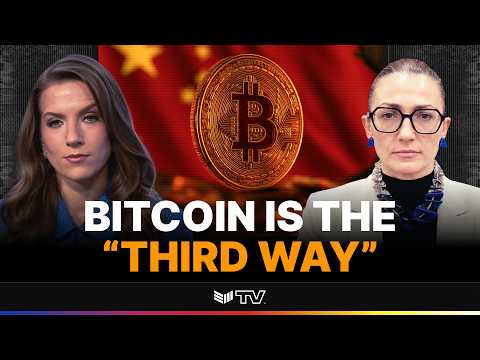
Velina Tchakarova, a geopolitical strategist and founder of FACE (For A Conscious Experience), argues that the world has entered a new Cold War — one unfolding without direct confrontation between the major powers. In an interview with Bitcoin Magazine, she examines how the United States and China are each building rival financial architectures and explains why Bitcoin serves as a decentralized “third way” between them.
On one side, the United States is defending dollar supremacy through stablecoins — blockchain-based tokens pegged to traditional currencies, most commonly the U.S. dollar. On the other, China and Russia are rolling out state-controlled digital currencies such as the digital yuan and the digital ruble, both of which are central bank digital currencies (CBDCs) issued under sovereign authority. Bitcoin differs from both models in that no state or company issues it, and in Tchakarova’s view it occupies a distinct position between the two systems, serving as a bridge across the divide — though she warns it may come under growing pressure from state actors as the global system splits. The distinction frames her argument: dollar-pegged tokens extend the existing dollar system, CBDCs extend state control over money, and Bitcoin sits outside both as a network no government issues or controls.
The conversation spans a wide range of geopolitical flashpoints. Tchakarova describes the present moment as a rupture of the global system and uncharted waters, pointing to two wars, Hormuz, and a compound systemic risk. She further discusses oil markets, rate hikes, and an inflationary turn, alongside the dynamic among Trump, Xi Jinping, and Vladimir Putin — what the discussion dubs the “Trump-Xi-Putin Triangle of Happiness” — and suggests that a trilateral meeting among the three leaders would be a positive sign for markets.
According to Tchakarova, a lasting agreement on rare earths and chips is unlikely to arrive soon, and artificial intelligence will decide which side wins the new Cold War. She also maps out the two rival digital money architectures, Bitcoin’s role within a U.S.-controlled architecture, and her conclusion that the Bitcoin community cannot stay insulated from geopolitics — the throughline being that, in her assessment, monetary technology and great-power competition can no longer be examined separately.
The full interview is available on YouTube, and the original segment appears on Bitcoin Magazine: Geopolitical Strategist: Bitcoin Is the “Third Way” Between the Dollar and Yuan.
The views and opinions expressed in the interview are those of the participants and do not necessarily reflect the official policy or position of BTC Inc. or Bitcoin Magazine. The content is provided for informational and educational purposes only and does not constitute investment, legal, tax, or accounting advice, nor does it constitute a solicitation, recommendation, or endorsement of any security or financial instrument.
The original post, written by Patrick Green, first appeared on Bitcoin Magazine on November 12, 2026.

