Crypto Markets Hold Steady as Chip Stocks Slide and Treasury Yields Climb
Key Takeaways
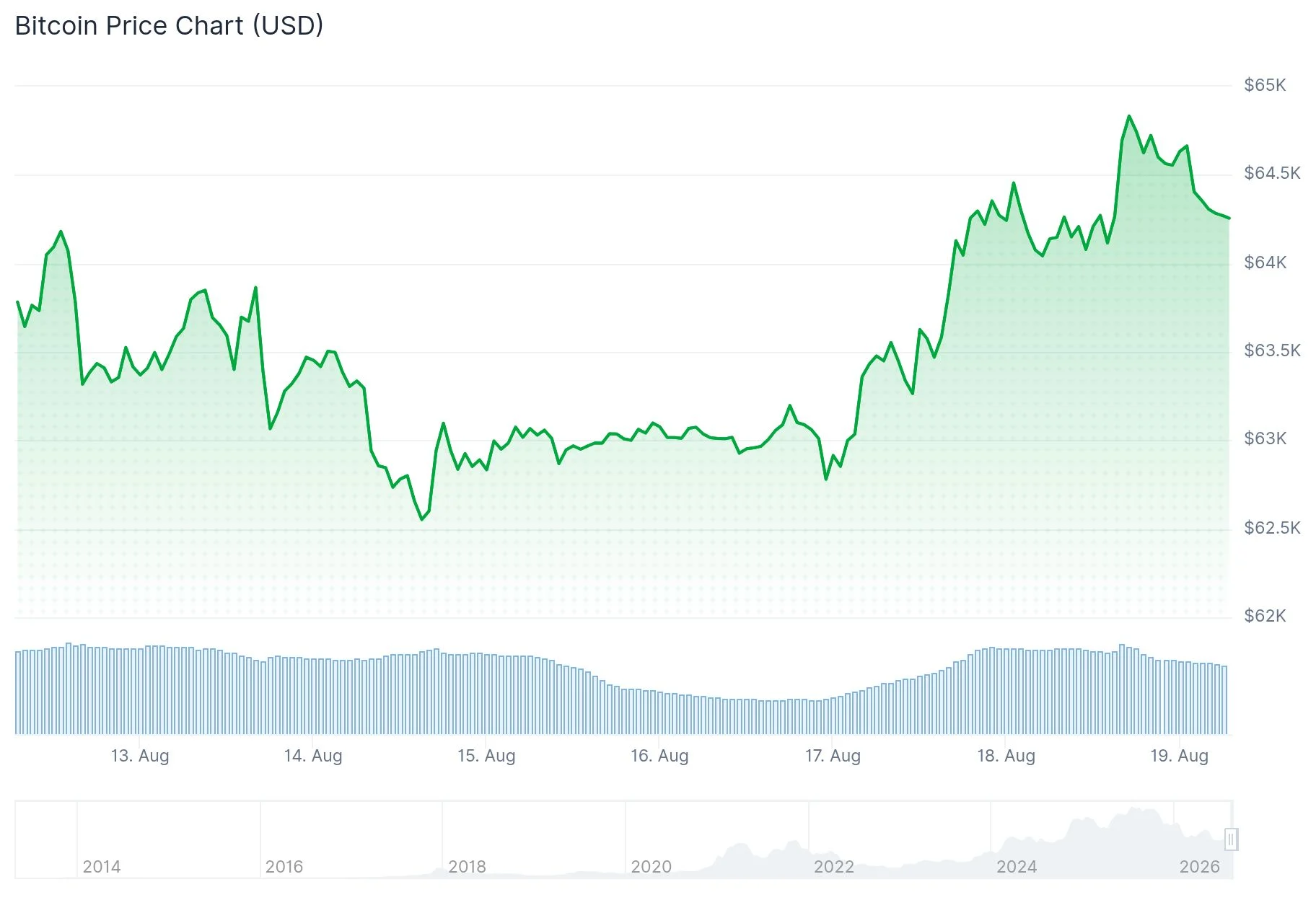
- •Bitcoin held near $64,250 on Wednesday while Solana rose 2% to approach $77 and ether climbed 1% to just above $1,900, leaving digital assets resilient despite the semiconductor rout.
- •Samsung Electronics and SK Hynix both dropped more than 7% in Seoul trading, pushing the Kospi down over 6% and contributing to a 2% decline in the MSCI Asia Pacific index.
- •The Philadelphia Semiconductor Index fell 5% on Tuesday, its steepest single-day loss since late July, and the Nasdaq composite retreated 1.3% as chip-related stocks weighed on U.S. indices.
- •Thirty-year U.S. Treasury yields reached their highest level since 2007 during a global bond selloff before easing to 5.28%, while gold rebounded more than 0.6% to surpass $4,360 per ounce.
- •The Fed's July meeting minutes are set for release at 2 p.m. ET, and a Reuters poll found 94 of 104 economists expect rates to remain unchanged at 3.50% to 3.75% in September.
Key Highlights
- Bitcoin held steady around $64,250 on Wednesday while the broader cryptocurrency market posted modest gains.
- Solana jumped 2% to approach $77, outperforming other major digital assets, while ether rose 1% to trade above $1,900.
- Korean semiconductor giants Samsung Electronics and SK Hynix plunged more than 7%, dragging the Kospi index down over 6%.
- The Nasdaq composite fell 1.3% on Tuesday in a semiconductor selloff that analysts attributed to market positioning.
- Federal Reserve meeting minutes are due at 2 p.m. ET, with 94 of 104 surveyed economists expecting no rate change in September.
Digital Assets Trade Firmly Amid Global Market Turbulence
Bitcoin hovered near $64,250 throughout Wednesday's session, logging marginal daily gains and a weekly advance of roughly 1%. The cryptocurrency sector demonstrated resilience despite significant turbulence in global semiconductor markets. The split reflects a structural difference between the two markets: major tokens carry no earnings or supply-chain exposure, while the chipmakers under pressure are central suppliers to the artificial-intelligence hardware buildout.
Solana stood out among major digital currencies, gaining 2% to trade near $77. Ether added 1% to settle just above $1,900 and leads major tokens on a weekly basis with a 1.5% gain.
XRP rose nearly 1% to approach $1, even as it remains down 2% over the past seven days. Tron and dogecoin each climbed 0.5%, trading at 33 cents and 7 cents, respectively.
Not every token advanced. BNB slipped to just above $600, extending its weekly decline to 2%. Hyperliquid's HYPE token fell more than 1% to just above $58, though it retains the strongest seven-day performance among major tokens with a 7% gain.
Semiconductor Sector Experiences Sharp Decline
In Seoul trading on Wednesday, Samsung Electronics and SK Hynix both tumbled more than 7%. The two companies are the world's largest memory-chip makers, rank among the Kospi's most heavily weighted constituents, and supply the high-bandwidth memory used alongside the AI accelerators at the center of the current infrastructure buildout. Their losses pushed Korea's Kospi index down over 6% and contributed to a 2% drop in the MSCI Asia Pacific index, while a regional semiconductor benchmark lost more than 3%.
The slide followed Tuesday's 5% plunge in the Philadelphia Semiconductor Index, its steepest single-day loss since the end of July. The index is a widely followed barometer of global chip-sector sentiment, with members including Nvidia, TSMC and Micron.
In U.S. markets, the Nasdaq composite retreated 1.3% on Tuesday. The S&P 500 shed 0.7%, and the Dow Jones Industrial Average declined 116 points, a 0.2% decrease. Semiconductor-related stocks weighed on the broader indices, with Caterpillar and Goldman Sachs, both viewed as beneficiaries of artificial intelligence infrastructure spending, among the Dow's biggest detractors.
Mizuho analyst Daniel O'Regan suggested that thin summer trading volume likely amplified the price moves beyond what fundamentals would warrant. He characterized the selloff as driven by portfolio repositioning rather than a fundamental reassessment of the AI investment thesis.
Treasury Markets and Federal Reserve Outlook
A worldwide government bond selloff pushed 30-year U.S. Treasury yields to their highest level since 2007. Ten-year yields also climbed near levels unseen since the beginning of 2025, raising financing costs for corporations investing in AI infrastructure. The 30-year yield serves as a benchmark for long-term borrowing costs, including U.S. mortgage rates, so its climb reaches beyond bond markets into household and corporate finance.
Markets showed signs of stabilizing by Wednesday. The 10-year yield slipped roughly one basis point to 4.69%, while the 30-year U.S. yield fell to 5.28% on Tuesday, ending a two-session streak of rising yields.
Gold gained as much as 0.6% to surpass $4,360 per ounce, rebounding from a nearly 2% decline in the prior session.
The Federal Reserve's July meeting minutes are scheduled for release at 2 p.m. ET on Wednesday. The minutes document the internal debate behind the committee's decisions, and investors parse them for signals about the balance of opinion among policymakers. A Reuters poll found that 94 of 104 economists expect rates to remain unchanged at 3.50% to 3.75% in September, and market pricing implies an approximately 68% probability of no rate adjustment.
Fed Chair Kevin Warsh is set to deliver remarks at the Jackson Hole symposium during the upcoming week. The annual Wyoming gathering has repeatedly served as a stage where Fed chairs have outlined shifts in policy thinking, a history that makes the appearance a recurring focal point for rate expectations.

