Bitcoin Steadies Near $77,800 Ahead of U.S. Midterms as ETF Outflows Weigh
Key Takeaways
- •Bitcoin steadied near $77,800 ahead of the November 3 U.S. midterm elections after slipping toward $76,000 in the wake of a Binance security breach.
- •Analyst Killa identified $78,800–$80,100 as the first resistance zone Bitcoin must reclaim before its short-term market structure improves.
- •U.S. spot Bitcoin ETFs recorded $643.2 million in outflows on October 30, erasing four sessions of inflows and leaving roughly $202 million in net weekly redemptions.
- •The Binance security breach affected an estimated $6.3 billion in crypto assets, although the exchange pledged to cover customer losses.
- •Historical midterm performance has been mixed, with Bitcoin gaining 30.91% in the month after the 2010 midterms but losing 47.13% in the comparable period after the 2018 vote.
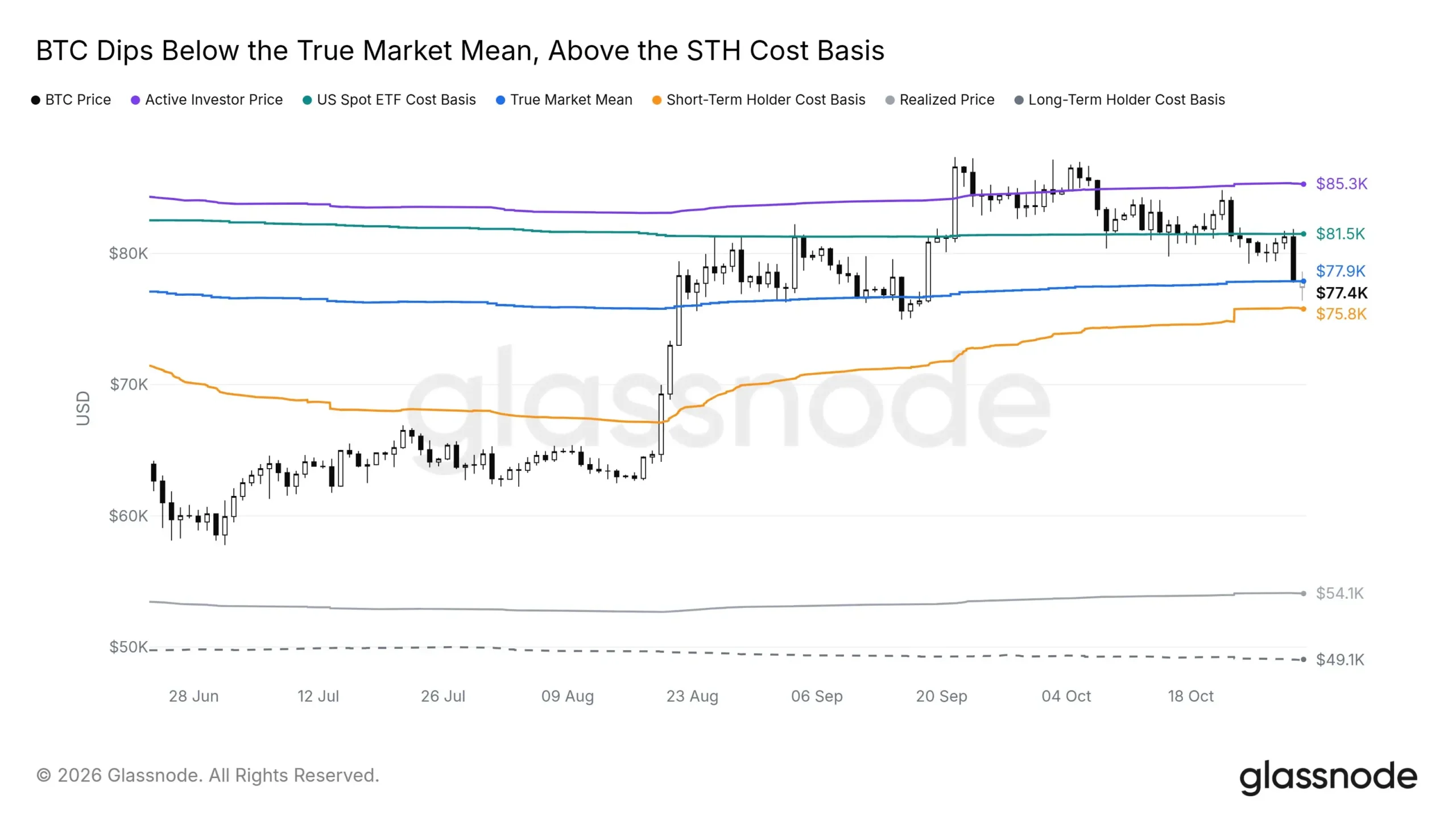
Bitcoin steadied near $77,800 ahead of the November 3 U.S. midterm elections after a difficult week for cryptocurrency markets. A weekend recovery has pulled attention back to the $80,000 level, although buyers have yet to reclaim it. Traders now face another stretch of political uncertainty, with spot ETF withdrawals and a recent exchange security breach continuing to weigh on the market. The election arrives with Bitcoin well below the $87,000 area it struggled to hold earlier in the month.
Bitcoin Faces $80,100 Resistance Before the Elections
Bitcoin traded in a narrow range on Sunday after recovering from Friday's selling pressure. The cryptocurrency had slipped toward $76,000 following Binance's security breach, but buyers helped stabilize prices over the weekend. Even so, BTC remains below $80,000, a level traders are watching for signs of renewed buying.
Crypto analyst Killa identified $78,800 to $80,100 as the first resistance area following Bitcoin's October monthly close. According to the analyst, BTC needs to reclaim that range before its short-term market structure improves. A failure to move above it could send prices back toward the monthly low.
"$BTC Monthly close is in. What's next? At the moment, apart from my monthly pivot, our first LTF barrier is 78.8K–80.1K. Given that we've broken down into the lower part of the range, this is the first area I'd be watching for a reaction. I'm bullish and will remain bullish, as… pic.twitter.com/4ak2wjolmD"
— Killa (@KillaXBT) via X, November 1, 2026 (source)
ETF Outflows and Binance Breach Add Pressure
The latest recovery also follows weaker demand from U.S. spot Bitcoin ETFs, which recorded $643.2 million in outflows on October 30. Those withdrawals erased four earlier sessions of inflows, leaving the week with roughly $202 million in net redemptions. The funds, which launched in January 2024 and hold Bitcoin on behalf of shareholders, are widely followed as a gauge of institutional demand for the asset. ETF demand had already weakened earlier in October, when Bitcoin struggled to maintain its rally above $87,000.
Adding to those concerns, the Binance security breach affected an estimated $6.3 billion in crypto assets at one of the world's largest cryptocurrency exchanges by trading volume. The incident triggered selling across several cryptocurrencies, although Binance pledged to cover customer losses. Bitcoin subsequently recovered some ground, while the exchange's investigation continued.
Historical Midterm Record Offers Mixed Signals
With the elections approaching, traders are also comparing Bitcoin's latest decline with previous market cycles. The historical midterm election record offers mixed results, despite recurring warnings about corrections during election years. Midterm elections, held halfway through a presidential term, decide every U.S. House seat and roughly one-third of the Senate, and they are a recurring point on the calendar for market participants tracking the U.S. policy backdrop for digital assets.
In the month following the 2010 and 2014 midterms, Bitcoin gained 30.91% and 6.61%, respectively, according to analyst Ali Charts. The comparable periods after the 2018 and 2022 midterms, however, recorded losses of 47.13% and 18.15%. These figures describe historical price movements rather than evidence that elections caused the changes.
"IF BITCOIN SELLS OFF, WATCH $73,000 If selling pressure accelerates following the Binance hack and the upcoming US midterm elections, one level to watch is $73,000. That's approximately where Bitcoin's short-term holder cost basis currently sits. This metric represents the… pic.twitter.com/XdR9erVekq"
— Ali Charts (@alicharts) via X, October 30, 2026 (source)
Crypto analyst Ted also pointed to earlier corrections during Bitcoin's previous bull markets. He counted five corrections exceeding 30% during the 2019–2021 rally and four exceeding 25% during 2023–2025. Ted argued that the current pullback could be part of another extended market cycle, although that remains his own assessment. His comparison draws on the BTCUSD True Market Mean metric (Source: X).
Key Levels to Watch This Week
For the coming week, Glassnode's short-term holder cost basis near $75,800 provides another price level to watch. The on-chain metric estimates the average price paid for recently moved coins, offering a reference point for where newer market entrants built their positions. A sustained fall below that area would leave recent buyers facing losses on average. Analysts have also identified $73,000 as a possible downside level if selling pressure increases.
On the upside, a recovery above $78,800–$80,100 would challenge the immediate resistance identified by Killa. With BTC holding near $77,800, price sits between the $75,800 cost-basis level and the $78,800–$80,100 resistance zone heading into the vote. Traders will also monitor fresh ETF flows when U.S. markets reopen on Monday, ahead of Tuesday's election results, which could deliver the market's next test.

