Bitcoin Holds Near $68,700 as Cooler US PPI Inflation Print Fails to Lift Stocks
Key Takeaways
- •Bitcoin traded around $68,700 after Friday's Wall Street open, down 4% on the day and rebounding from a roughly 12-week low near $67,500, its weakest level since mid-August.
- •The US Producer Price Index rose 0.3% month over month and 6.5% year over year in October, both 0.1 percentage points below expectations, though the annual gain was the largest since November 2022.
- •Implied odds of a 25-basis-point Federal Reserve rate hike in December rose from 85.4% to 89.7%, while odds of a 50-basis-point move fell from 14.5% to 10.3%, according to CME Group's FedWatch Tool.
- •US equities showed little relief, with the S&P 500 down 1.2% and the Nasdaq Composite down 1.5% as traders digested Nvidia developments following co-founder and CEO Jensen Huang's resignation on Thursday.
- •Analyst Rekt Capital warned that a Sunday weekly close below $73,000 would mark the third break of that support level in 2026, with each of the two prior breakdowns followed by a Bitcoin decline to around $60,000.
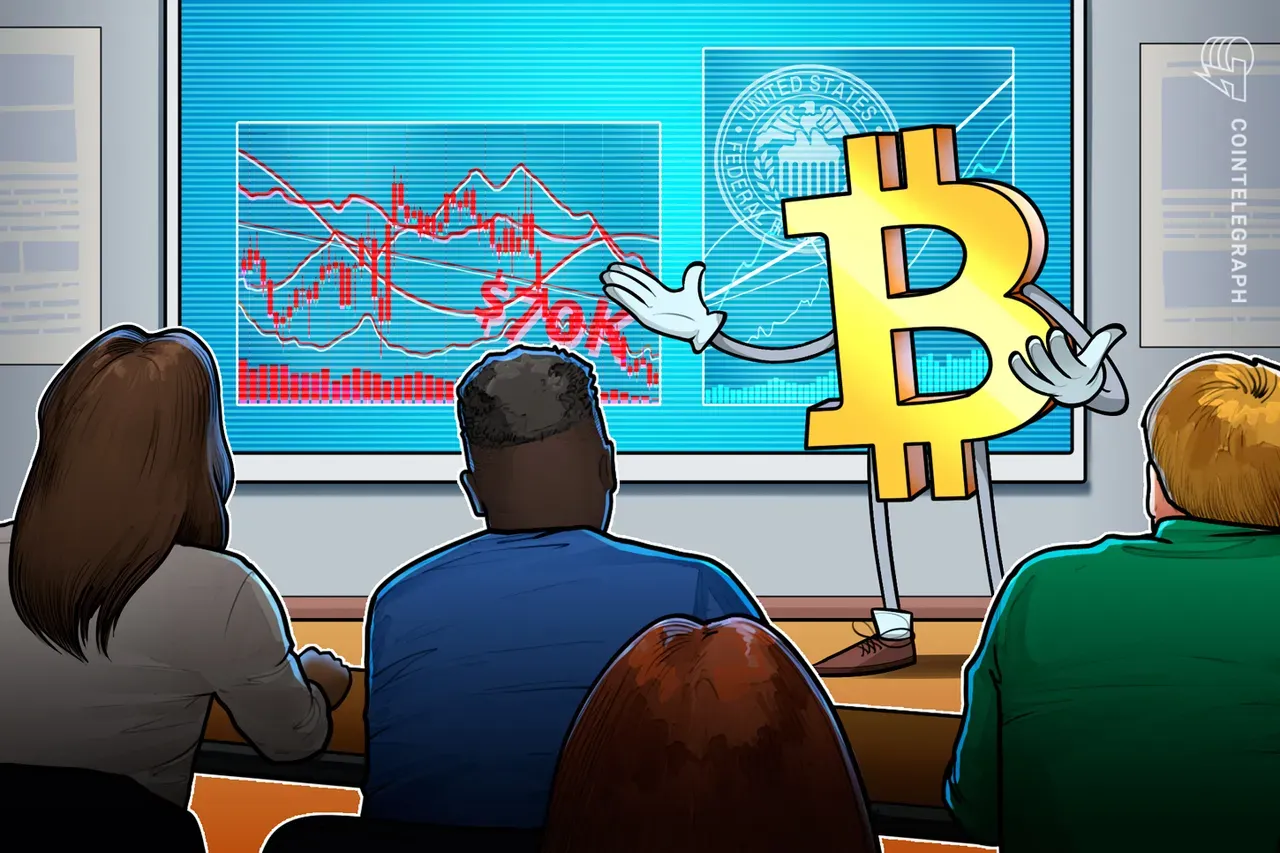
Bitcoin (BTC) hovered around $68,700 following Friday's Wall Street open, rebounding from an earlier dip to roughly $67,500. Despite the recovery, the asset failed to reclaim the $70,000 mark, with data from TradingView showing BTC/USD down 4% on the day after bouncing from a roughly 12-week low near $67,500 — its weakest level since mid-August. The session unfolded as markets digested a cooler-than-expected US inflation reading that nonetheless failed to lift equities. Inflation prints like this one are closely watched in crypto because they shape expectations for Federal Reserve policy, a key input into the liquidity backdrop for risk assets.
US PPI sees largest yearly gain since Q4 2022
The US Producer Price Index (PPI), which tracks changes in the prices domestic producers receive for their goods and services, rose 0.3% month over month and 6.5% year over year in October. Both readings came in 0.1 percentage points below market expectations, although the annual increase remained the largest since November 2022. Because the index captures wholesale-level prices before they reach consumers, the report is often read as an early gauge of pipeline inflation pressure.
"Leading the October advance in final demand prices, the index for final demand goods increased 0.5 percent. Prices for final demand services moved up 0.2 percent," the US Bureau of Labor Statistics (BLS) said in its Friday report.
Stocks show little relief as Nvidia developments weigh
Equities offered little sign of relief at the start of the US trading session, with traders still parsing developments around Nvidia after its co-founder and CEO, Jensen Huang, resigned on Thursday. The S&P 500 was down 1.2% at the time of writing, while the tech-heavy Nasdaq Composite Index was 1.5% lower.
The PPI release led markets to slightly adjust expectations for Federal Reserve rate hikes. Odds of a minimal 25-basis-point hike at the Fed's December meeting rose from 85.4% on Thursday to 89.7%, while odds of a larger 50-basis-point move decreased from 14.5% to 10.3%, according to data from CME Group's FedWatch Tool, which converts pricing in fed funds futures into implied odds of each outcome.
Economist Robin Brooks described a 25-basis-point hike in December as "all but inevitable." He argued, however, against a steeper increase, seeing it as ineffective in the face of the current drivers of inflation: the oil-price spike from the US-Iran war and the potential long-term acceleration of underlying inflation.
"If high inflation is about the Strait of Hormuz and oil, 75 basis points won't do anything about that. If the issue is that the pace of underlying inflation has risen, then 75 basis points is much too timid to get this under control," he wrote.
Bitcoin eyes repeat of breakdown that preceded $60,000 drop
Crypto trader and analyst Rekt Capital warned that a Bitcoin weekly close below $73,000 on Sunday would mark the third break of that support level in 2026. "Last week's Weekly Candle Closed below 3 Weekly levels," he wrote on X, referring to the $75,000, $76,800 and $78,300 levels. "This Weekly Candle looks set to do something similar. Which is testament to sell-side momentum still gaining and the bears being in control." Weekly candle closes are treated by chart analysts as the confirmation point for whether a support level has genuinely given way, which is why Sunday's finish is drawing attention.
After each of the two previous breakdowns, Bitcoin fell to around $60,000.
At roughly $68,700, BTC/USD is down 17.7% in the fourth quarter and 11.2% month to date. The quarterly performance currently stands as Bitcoin's second worst on record, according to CoinGlass data. With the Sunday weekly close and the Fed's December decision ahead, both the technical and macro threads of the story will remain in focus in the days ahead.
Related: Stablecoin supply falls $14.2B in biggest 30-day drop since June 2022
Further reading: Bitcoin returns to 200-week trend line as analyst sees risk of $57K next | Bitcoin hits 11-week low amid discouraging US CPI inflation
This article was originally reported by Cointelegraph.

