Bitcoin Stuck in Narrow Range as ETF Outflows Accelerate and Fed Hike Odds Climb
Key Takeaways
- •Bitcoin traded around $64,000 on July 29 within a narrow range as investors awaited the Federal Reserve's latest interest-rate decision.
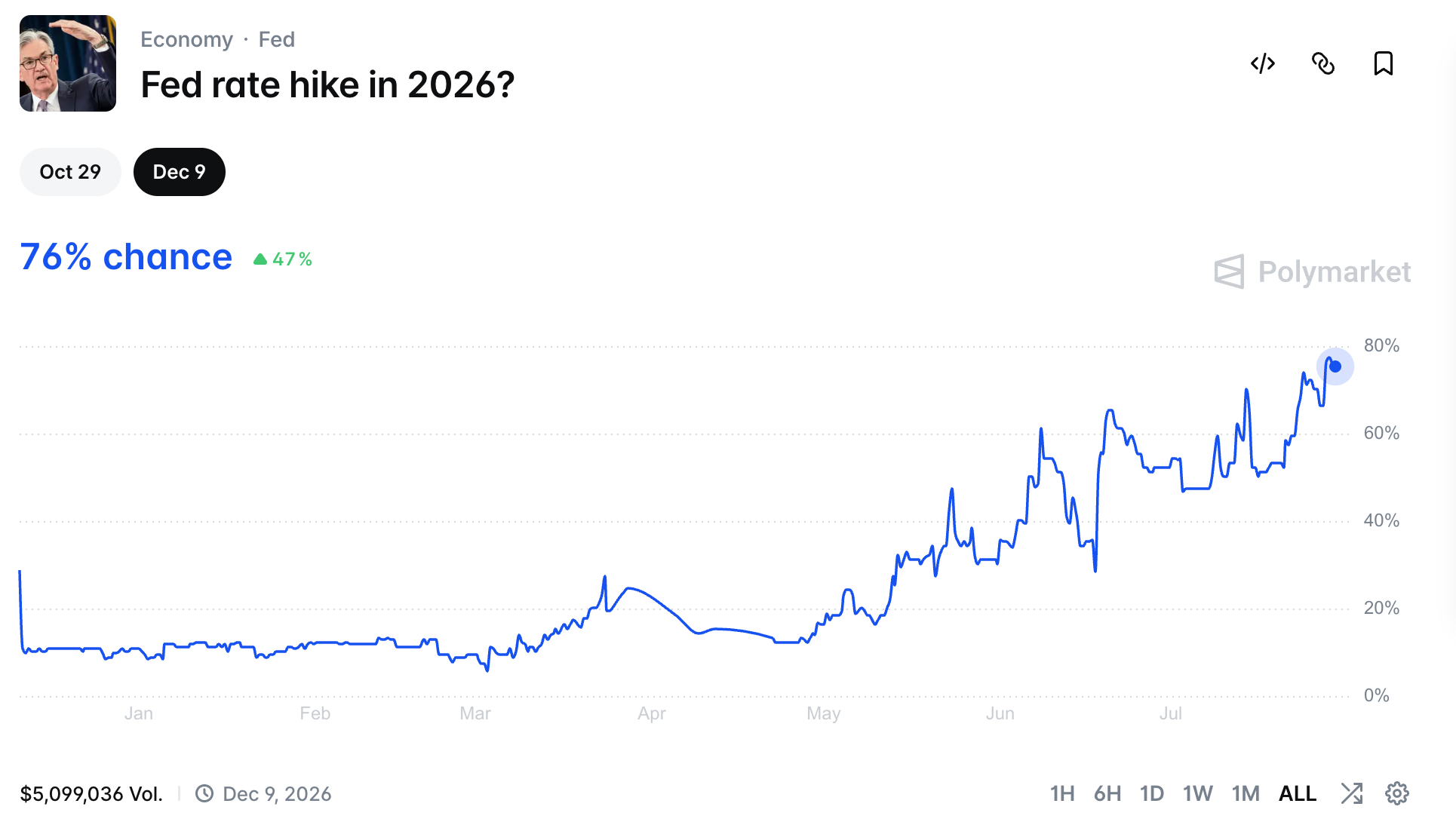
- •Market participants on Polymarket assigned 69%, 72%, and 76% probabilities to additional rate hikes in September, October, and December respectively, despite June's decline in both headline and core CPI.
- •Spot Bitcoin ETFs recorded cumulative outflows exceeding $525 million over four consecutive trading sessions, reducing July net inflows to approximately $172 million.
- •Major Bitcoin treasury companies including Strategy, Strive, American Bitcoin, and Metaplanet have paused coin accumulation in recent days, with Strategy's last transaction being a sale exceeding $200 million.
- •Technical analysis indicates Bitcoin is forming an unconfirmed bearish inverted cup-and-handle pattern, with nearest significant support near the year-to-date low of approximately $57,800.
Bitcoin held within a tight trading range this week as investors weighed the Federal Reserve's latest interest-rate decision, with spot Bitcoin ETF outflows mounting for a fourth consecutive session and traders increasing their bets on additional rate hikes later this year.
BTC traded near $64,000 on July 29 after failing to mount a sustained recovery above its short-term resistance levels.
Federal Reserve Holds Rates as Hike Expectations Build
Traders are raising the odds that the Federal Reserve will hike interest rates further, even as most analysts expect the central bank to leave rates unchanged at its current meeting. According to market data referenced by Polymarket, the probability of a September hike has climbed to 69%, while October and December hike odds have reached 72% and 76%, respectively.
These rising expectations come despite a recent report showing that both headline and core U.S. inflation declined in June. Headline CPI fell to 3.5%, while core CPI, which excludes food and energy prices, dropped to 2.5%.
However, escalating tensions between the United States and Iran have introduced fresh inflationary pressure. Data compiled by AAA indicates the average U.S. gasoline price has surpassed $4 per gallon. Fuel costs may continue climbing as military exchanges between the two nations resume.
In a statement to Fox News, President Donald Trump insisted the U.S. would strike Iran forcefully after the latter launched a major attack against American bases in Jordan. Iran has indicated it would respond to any U.S. military action, suggesting the confrontation may persist.
A sustained escalation would likely push crude oil and natural gas prices higher, keeping inflation above the Federal Reserve's 2.0% target for an extended period. Bitcoin and other cryptocurrencies have historically underperformed during periods of monetary tightening, as higher rates reduce demand for non-yielding assets and increase the opportunity cost of holding them.
Spot Bitcoin ETF Outflows Reach $525 Million Over Four Sessions
Bitcoin's price consolidation has coincided with a sharp increase in spot Bitcoin ETF outflows. The funds lost nearly $50 million on Tuesday, a significant jump from the $11 million recorded the previous day. Over the past four trading sessions, cumulative outflows have exceeded $525 million.
These withdrawals leave net inflows at approximately $172 million for July. Prior to the current outflow streak, spot Bitcoin ETFs had recorded eight consecutive days of inflows. The funds, which received SEC approval for trading in January 2024, have become a key conduit for institutional and retail exposure to Bitcoin through conventional brokerage accounts.
The ETF outflows are occurring alongside a pullback in purchases by Bitcoin treasury companies. Strategy, the largest Digital Asset Treasury (DAT), has not acquired additional coins in recent weeks. Its last Bitcoin transaction was a sale exceeding $200 million. Other firms, including Strive, American Bitcoin, and Metaplanet, have also paused accumulation in recent days.
Technical Outlook Points to Conditional Downside Risk
Bitcoin remains in a broader downtrend after retreating from its previous peak near $126,200. BTC has struggled to reclaim its 100-day moving average, trading around $64,000.
Chart analysis shows price action remaining below a descending trendline connecting major swing highs since January 14. Bitcoin appears to be forming an inverted cup-and-handle pattern, with the rounded decline constituting the cup and the recent sideways consolidation potentially representing the handle.
This formation is generally viewed as bearish once price breaks below the support line, though the pattern remains unconfirmed without such a break.
Bitcoin's nearest significant support sits near the year-to-date low of approximately $57,800. A decisive daily close below that level could expose the psychological support at $50,000. However, the bearish scenario remains contingent on Bitcoin losing its current range and confirming the pattern.
Conversely, a move above the 100-day moving average would weaken the immediate bearish case. A broader reversal would require Bitcoin to break the descending trendline and establish a higher high.
The near-term outlook remains tied to ETF flow trends, inflation expectations, and the market's interpretation of the Federal Reserve's July decision.

