Bitcoin Reclaims $60,000 as Trump Administration Proposes Tariffs on 14 US Trading Partners
Key Takeaways
- •The USTR proposed duties of up to 35% on Vietnam, 25% on India, 20% on China, and 15% on Japan, South Korea, and the European Union, but the measures are not yet in force.
- •October annual PCE inflation rose to 3.8% from 3.6%, core inflation increased to 3.3%, and revised third-quarter growth reached an annualized 4.3%.
- •U.S. spot Bitcoin ETF withdrawals reached a November record of $4.94 billion, with BlackRock’s iShares Bitcoin Trust representing 84% of the total.
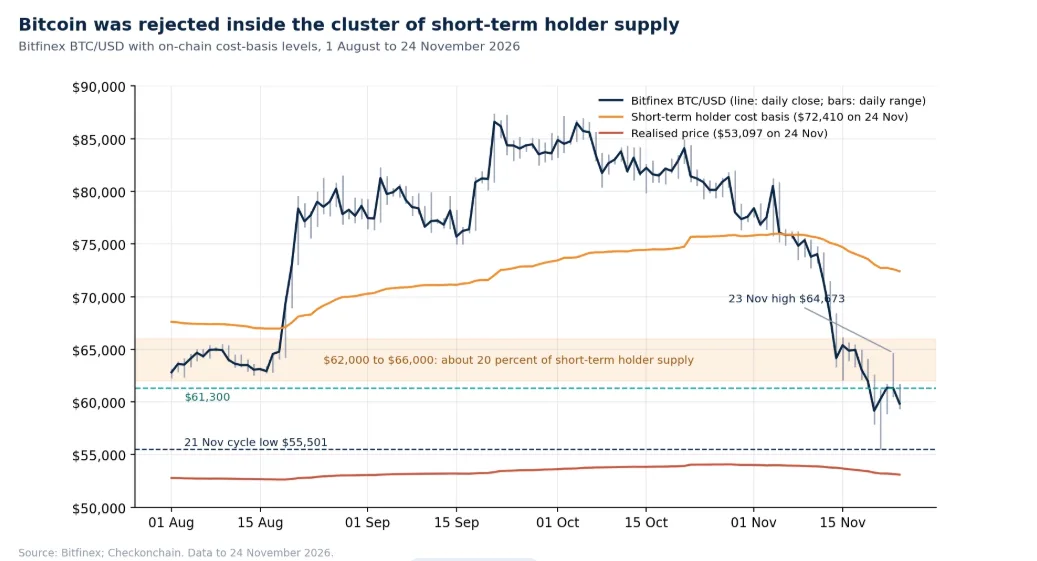
- •Bitfinex analysts identified $55,501 as a key downside level and approximately $53,100 as the next area of interest if that support fails.
- •A sustained recovery would require Bitcoin to move above $61,300 alongside renewed ETF inflows, while traders also face Friday’s $6.6 billion options expiry.
Bitcoin climbed back above $60,000 on Nov. 26, rebounding from the previous session's decline, which came as the Trump administration unveiled tariff proposals covering 14 U.S. trading partners and new economic data pointed to accelerating inflation.
Bitcoin (BTC) traded at $60,525 at 07:30 UTC, up 2.6% over 24 hours, according to The Block. The cryptocurrency had fallen to near $57,300 during the previous session. Meanwhile, traders continued to price in a December Federal Reserve rate increase, and separate fund data showed that monthly withdrawals from U.S. spot Bitcoin exchange-traded funds (ETFs), which debuted in January 2024, have exceeded $5 billion.
Trump Administration Proposes Tariffs on 14 Trading Partners
The Office of the United States Trade Representative (USTR) released its tariff proposals on November 25, following Section 301 investigations into manufacturing practices across 16 economies. Section 301, a provision of the Trade Act of 1974, allows the USTR to investigate foreign trade practices and impose remedies such as tariffs.
The proposed duties reach 35% for Vietnam and 25% for India. Chinese imports could face tariffs of up to 20% under the investigations, while proposed rates for Japan, South Korea, and the European Union reach 15%, subject to existing trade arrangements and exemptions.
The new duties are not yet in effect; under the trade-remedy process, any final action would follow the comment period and hearings. The USTR has set January 5, 2027, as the deadline for written comments, with public hearings beginning on January 25.
Inflation was already picking up in the United States before Wednesday's announcement, and higher tariffs could raise import costs, complicating the Fed's efforts to bring prices under control. Figures released Wednesday by the Bureau of Economic Analysis showed annual PCE inflation climbing to 3.8% in October from 3.6% in September, while core inflation rose from 3.1% to 3.3%. The same agency's second estimate of third-quarter output revised economic growth up from 3.4% to an annualized 4.3%.
Both readings strengthened expectations of a December rate increase. For Bitcoin investors, higher interest rates mean greater competition from assets that generate income.
Bitcoin ETF Outflows Reach a Monthly Record
Bitcoin's troubles began well before Wednesday's tariff announcement. U.S. spot Bitcoin ETFs lost another $231.4 million on Tuesday, as The Market Periodical reported, a day after investors withdrew approximately $570 million from the funds.
November withdrawals have now reached $4.94 billion, exceeding the previous monthly record of $4.51 billion set in June. BlackRock's iShares Bitcoin Trust, the largest of the spot Bitcoin funds, accounted for 84% of the total.
Tuesday offered a modest improvement, with daily withdrawals falling below $300 million for the first time since November 17. Nevertheless, the funds continued to lose capital. The distinction matters, because slower withdrawals do not necessarily mean buyers have returned.
Bitcoin briefly recovered to $64,673 on Monday, but the rally failed to hold as selling resumed.
Bitcoin Price Outlook: Can BTC Defend $55,500?
In a November 25 market report, Bitfinex analysts placed Bitcoin's near-term trading range between $56,300 and $61,400. Their immediate concern is the November 21 low of $55,501. If Bitcoin breaks below that level, analysts see its realized price of approximately $53,100 — an on-chain gauge of the aggregate cost basis of Bitcoin holders — as the next area of interest.
Bitfinex also noted that futures traders had increased their exposure while Bitcoin's price declined. The return of leveraged long positions without comparable spot buying, the analysts cautioned, leaves the market exposed to further liquidations. A recovery above $61,300, alongside three consecutive sessions of ETF inflows, would give the analysts grounds to reconsider their bearish outlook.
CryptoQuant analyst XWIN Japan likewise identified a return of spot buyers and consistent ETF inflows as necessary conditions for a Bitcoin price recovery.
Traders are now looking ahead to Friday's $6.6 billion Bitcoin options expiration, less than two weeks before the Federal Reserve's December 8–9 policy meeting. Further out on the calendar, the USTR's January 5 comment deadline and January 25 hearings mark the next dated milestones in the tariff process.
This article is for informational purposes only and does not constitute financial or investment advice.
Story first reported by The Market Periodical.

