Bitcoin Price Rebounds Above $82,000 After Brief Dip Below $80,000 Amid CPI Volatility
Key Takeaways
- •Bitcoin fell to an intraday low of $79,694 early Thursday before rebounding to $82,520 and consolidating above $82,000 by 1:00 p.m. ET.
- •The sell-off followed the hotter-than-expected September CPI report, which pushed market-implied odds of an October Federal Reserve rate hike briefly back to around 50%, according to Bitunix analysts.
- •Coinglass data showed approximately $172 million in long bitcoin positions were liquidated over 24 hours, compared with $42 million in short positions.
- •Total leveraged liquidations across the broader crypto market topped $929 million, with long bets accounting for more than $777 million of that total.
- •Despite the extreme volatility, bitcoin ended the period only marginally higher than 24 hours earlier, with its market capitalization nearly unchanged at just under $1.65 trillion.
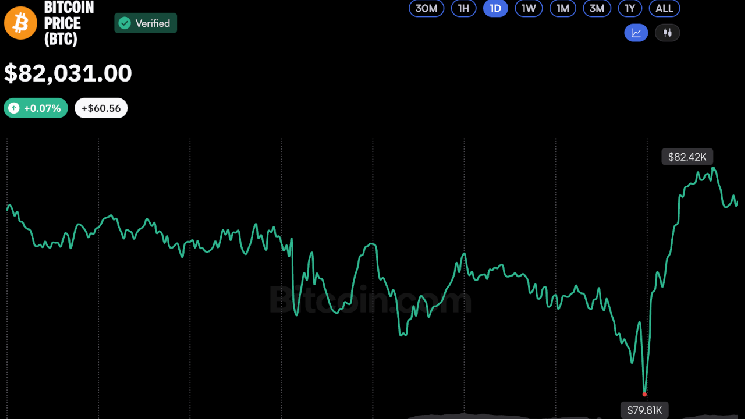
Bitcoin, the largest cryptocurrency by market value, recovered from a morning sell-off on Thursday, reclaiming $82,000 just hours after sliding below $80,000. The rebound erased most of the losses that followed the release of hotter-than-expected U.S. inflation data, which had sent the cryptocurrency tumbling from $84,000 to $82,700.
Selling Pressure and Sharp Intraday Swing
Mounting selling pressure on Wednesday drove bitcoin below its $82,000 support level, according to market data. After spending several hours struggling to break back above $82,000, the price dropped below $80,200 near midnight as investors digested the inflation report and weighed how it might push the Federal Reserve to raise rates again.
The September CPI report is among the most closely watched gauges of U.S. price pressures and a key input in Federal Reserve rate decisions, making it a recurring focal point for markets weighing the path of borrowing costs. Because crypto markets trade continuously around the clock, that assessment played out during the overnight hours, before regular U.S. equity trading had begun.
Over the next six hours, bitcoin traded in a tight range between $80,500 and $81,500 during a tug-of-war between bulls and bears. Shortly before 4 a.m. ET, a second wave of selling drove the price to an intraday low of $79,694. The rebound came swiftly, with bitcoin rallying to $82,520 before pulling back to consolidate above $82,000 by 1:00 p.m.
Despite the extreme volatility, bitcoin was only marginally higher than it had been 24 hours earlier, leaving its market capitalization almost unchanged at just under $1.65 trillion.
Liquidations Hit Long Traders Hardest
In the derivatives market, the volatility hit bullish traders far harder than short sellers. Liquidations occur when exchanges automatically close leveraged positions after losses exhaust a trader's margin, and when prices slide it is typically longs — traders betting on gains — who are forced out. According to Coinglass data, approximately $172 million in long bitcoin positions were liquidated over the 24-hour period, compared with $42 million in shorts. Across the broader crypto market, total leveraged liquidations topped $929 million, with wiped-out long bets accounting for more than $777 million — a scale that illustrates how much leveraged exposure was unwound during the swing.
Fed Policy in Focus After Hot CPI Print
According to the U.S. September Consumer Price Index (CPI) report, the higher-than-expected inflation reading has cast doubt on the outlook for a sustained decline in inflation. Furthermore, while surging oil prices were viewed as the primary driver, Bitunix analysts noted that price pressures extended beyond energy, increasing the likelihood of further Federal Reserve intervention.
"The Federal Reserve therefore has stronger grounds to maintain a restrictive policy stance in the near term, with market-implied odds of an October rate hike briefly returning to around 50%," the analysts wrote in a daily brief.
A restrictive stance — holding rates at elevated levels to cool price growth — raises the cost of leverage across financial markets, tightening the liquidity conditions to which risk assets such as cryptocurrencies tend to be sensitive.
Meanwhile, the analysts suggested that attention will now shift from a single CPI report to whether inflation remains persistent and whether the Federal Reserve responds to higher energy prices with further tightening. If Treasury yields and the dollar continue to strengthen, then crypto markets could remain under pressure from deleveraging, they warned. However, if rate expectations ease again, then "the next test will be whether $BTC can reclaim the upper liquidation zones and whether any rebound is supported by a healthier positioning structure."

