Spot Demand Lags as Bitcoin Tests Crucial $62,000 Support
Key Takeaways
- •Bitcoin is trading near $63,600 after failing to hold a move above $65,000.
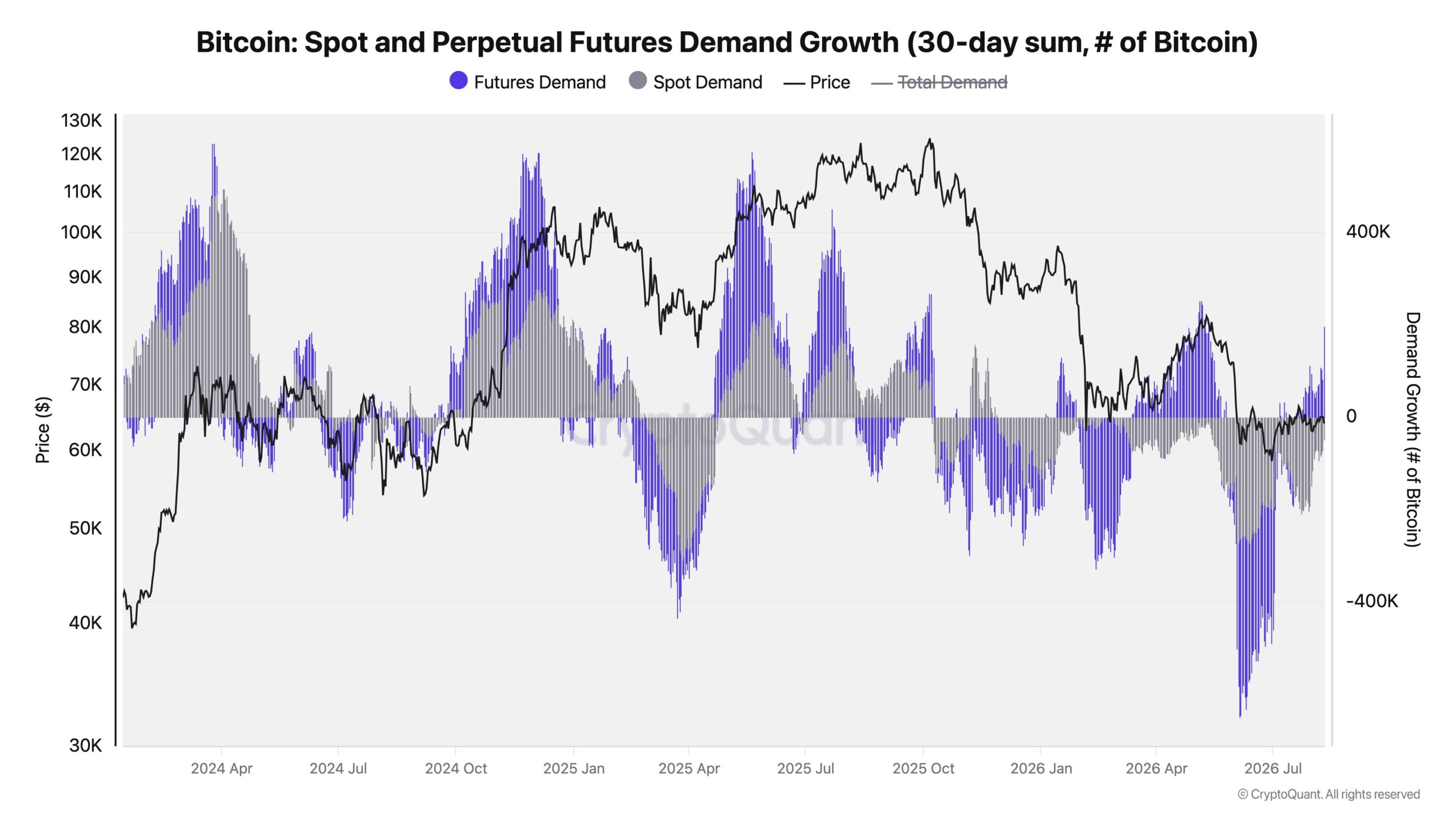
- •CryptoQuant’s Ki Young Ju said the rally is being led by futures trading while spot demand remains net negative.
- •Ardi said leveraged long exposure has dropped sharply, with the Cumulative Longs & Shorts Delta falling nearly 50% and open interest also declining.
- •Glassnode said selling pressure appears to be easing, but its bottoming signal has not yet been confirmed.
- •US spot Bitcoin ETFs recorded only $7.8 million in net inflows on Tuesday after a $144 million outflow on Monday, with only BlackRock’s IBIT posting a net inflow.
Key insights
The latest Bitcoin advance may fade without spot buying, even as futures open interest continues to rise.
Selling pressure remains a concern for Bitcoin, as leveraged long positions have dropped sharply.
Demand for Bitcoin exchange-traded funds (ETFs) has weakened again, following Monday's $144 million outflow.
After being rejected at $65,000, Bitcoin is now trading around $63,600. Market participants say the BTC market is currently being driven by futures activity but lacks sufficient spot demand. Bitcoin has been range-bound since reaching all-time highs above $73,000 in March 2024, and whether spot buyers step in at these levels will be a key factor in determining the next directional move.
Sellers still appear to have the upper hand, and near-term volatility could increase for BTC.
Bitcoin rally lacks spot market support
Ki Young Ju, CEO of CryptoQuant, said the current Bitcoin price rally is being driven by the futures market. Unlike spot purchases, which involve actual Bitcoin being bought and held, futures contracts are leveraged instruments that allow traders to speculate on price without owning the underlying asset. This distinction matters because futures-driven moves can reverse quickly if they are not anchored by genuine buyer demand.
Ju said that although Bitcoin futures open interest is rising, on-chain spot demand remains net negative. In his view, a sustainable rally needs support from both spot and futures markets.
He pointed to market action in April as an example, saying futures-driven rallies tend to fade when they do not have enough spot market demand. Bitcoin fell sharply in April after a similar divergence between futures activity and spot demand emerged.
Another crypto analyst, Ardi, said the recent Bitcoin pullback has triggered an aggressive reduction in leveraged long positions.
According to the analyst, the Cumulative Longs & Shorts Delta has fallen nearly 50%, dropping from more than $400 million to $226 million. Bitcoin open interest has also declined significantly during the move.
Ardi said this combination usually indicates that existing long positions are being closed or liquidated, underscoring the weakness in bullish positioning across the market.
He added: "$62.5K has saved this BTC range from breaking down six separate times. The next time we lose that pivot, we're heading back towards the range lows".
Bitcoin sellers still hold the grip
Blockchain analytics firm Glassnode said selling pressure in BTC appears to be easing, suggesting signs of seller exhaustion. However, it added that current levels remain below those seen during previous Bitcoin bear market bottoms.
According to Glassnode's Seller Exhaustion Constant (30d), the historical bottoming signal has not yet been confirmed. The firm said it will continue monitoring whether selling pressure weakens further.
Analyst Crypto Patel also warned about rising Bitcoin reserves on the crypto exchange Binance. Patel said Binance's Bitcoin holdings have climbed to about 667,500 BTC, the highest level since February. That compares with roughly 616,000 BTC in April.
Patel warned that exchange reserves may keep rising while Bitcoin weakens. If that happens, the growing supply held on exchanges could add further selling pressure, as Bitcoin held on exchanges is often viewed as inventory available for sale rather than long-term storage.
Bitcoin ETF flows dry up
After last week's strong inflows, flows into US spot Bitcoin ETFs have weakened again. Following Monday's $144 million outflow, spot Bitcoin ETFs recorded only $7.8 million in net inflows on Tuesday, August 11. These ETFs, which received SEC approval in January 2024, have become a significant channel for institutional and retail exposure to Bitcoin, making their flow trends a closely watched indicator of broader demand.
Data from Farside Investors showed that only BlackRock's IBIT posted an inflow, taking in $50.2 million. Fidelity's FBTC, Ark Invest's ARKB, Franklin's EZBC, and VanEck's HODL all posted net cumulative outflows.
The post Spot DemandIs Lacking As Bitcoin Price Tests $62,000 Crucial Support appeared first on The Market Periodical.

