Bitcoin Could Rally Sharply if AI Stocks Recover, Devere CEO Says
Key Takeaways
- •Devere Group CEO Nigel Green said on Nov. 26 that bitcoin could be one of the first assets to rally once confidence in AI stocks recovers.
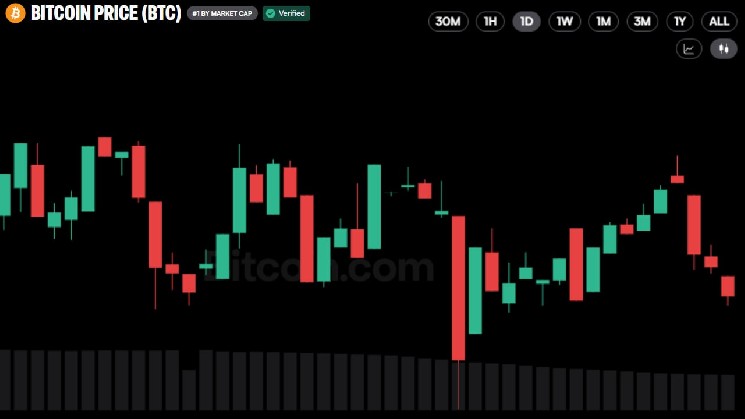
- •Bitcoin rebounded to roughly $61,000 on Nov. 26 after a Thanksgiving-period sell-off took it to $57,209 on Bitstamp, while Nvidia dropped 3.9% to $149.30 on Nov. 25 amid a second straight decline.
- •Devere measured a 0.67 correlation between daily bitcoin and Nasdaq Composite moves over the 30 trading days through Nov. 16, indicating the two have tended to move in the same direction.
- •U.S. spot bitcoin ETFs saw $453 million in net outflows on Nov. 25, a seventh consecutive day of withdrawals, bringing November outflows to about $5.39 billion through Nov. 25.
- •Green said chipmaker earnings, demand for AI computing, and the Federal Reserve's Dec. 8-9 meeting will influence bitcoin more than developments on its network in the weeks ahead.
Bitcoin Could Rally Sharply if AI Stocks Recover, Devere CEO Says
Nigel Green, chief executive officer of financial advisory firm Devere Group, said on Nov. 26 that bitcoin could be among the first assets to rally if confidence in AI stocks returns, and he expects the cryptocurrency's moves to remain closely tied to chip stocks in the coming weeks.
"Bitcoin is on the Nasdaq leash again. Right now, it trades like a supercharged version of the AI trade," Green said.
Nvidia Pullback and Bitcoin's Thanksgiving Sell-Off
Nvidia (Nasdaq: NVDA), a leading supplier of the processors behind AI computing, fell 3.9% to $149.30 on Nov. 25, its second straight decline after Jensen Huang returned as CEO. The stock closed 9.5% below its Nov. 23 finish of $165.05, and the Nasdaq Composite fell 0.6% on Wednesday.
Anthropic (Nasdaq: ANT), an AI developer, rose 1.1% to $82.79 after touching $73.85 intraday. The stock still closed below its $83 initial public offering price and about 15% below its first-day close of $97.17.
Bitcoin recovered to around $61,000 on Nov. 26, after a sell-off ahead of Thanksgiving took it to $57,209 on Bitstamp the previous day. U.S. stock markets were closed for the holiday, while bitcoin continued trading around the clock. After Huang's reinstatement on Nov. 23, bitcoin's jump to $64,505 faded within hours.
Devere cited a correlation of 0.67 between daily moves in bitcoin and the Nasdaq Composite over the 30 trading days through Nov. 16. Correlation coefficients run from -1 to 1, and a positive reading of that size indicates the two have tended to move in the same direction over the window measured.
Why Funds May Sell Bitcoin Alongside Tech Stocks
The Devere CEO said portfolio construction and shared risk systems explain much of the overlap between bitcoin and technology shares.
"It comes down to who owns bitcoin today. It sits in the same portfolios and on the same risk systems as the big AI names. When a fund needs to cut exposure fast, it sells whatever is most liquid and has run the hardest, and bitcoin ticks both boxes," Green said.
Bloomberg Intelligence counted 2,223 filers with spot bitcoin ETF holdings worth $29.8 billion as of Sept. 30. Spot bitcoin ETFs are exchange-listed funds that hold bitcoin directly, giving investors price exposure without managing the coins themselves. Investment advisers represented about 84% of those filers and accounted for $13.4 billion of the total.
Farside Investors' daily bitcoin ETF flow data showed $453 million in net outflows from U.S. spot bitcoin ETFs on Nov. 25, the seventh straight trading day of withdrawals. November net outflows reached about $5.39 billion through Nov. 25. The flow figures do not identify which investors sold or why; the same daily series will show whether the withdrawal streak extends.
Because bitcoin trades continuously and liquidity varies by venue and trading pair, the amount a fund can sell near the prevailing price when it needs to raise cash quickly depends on where it trades.
What Could Support a Broader AI Stock Recovery
Green expects chipmaker earnings, demand for AI computing, and the next Federal Reserve decision to have more influence on bitcoin over the next few weeks than developments on its network. He believes the link between bitcoin and tech shares will weaken once concerns about AI valuations ease.
Chipmakers' sales forecasts could show whether demand for AI computing is growing fast enough to support stock valuations. The Federal Reserve's December meeting on Dec. 8 and 9 follows a rise in annual inflation to 3.8% in October on the Fed's preferred measure, the Personal Consumption Expenditures price index, which the central bank aims to keep near 2%.
Trade policy added another source of uncertainty. The Office of the U.S. Trade Representative outlined proposed Section 301 actions on Nov. 25 covering 14 economies, including China and the European Union, after finding their manufacturing policies burdened or restricted U.S. commerce. Section 301 is the provision of the Trade Act of 1974 that lets the United States impose duties or other remedies once such a finding is made.
"Leashes don't last forever. Bitcoin's ties to tech stocks have tightened and loosened many times, and they tend to be strongest when fear runs highest," Green said. "This month, bitcoin has been dragged around by the AI trade for reasons that have little to do with bitcoin itself. But the leash pulls in both directions."
He concluded: "As confidence in AI rebuilds, bitcoin is likely to be among the first assets to feel the lift, and quite possibly the one that feels it most."
Source: CryptoNewsNet · Original report: Bitcoin.com News

