Bitcoin Price Nears $70,000 as Treasury Move Triggers Short Squeeze
Key Takeaways
- •Bitcoin climbed above $69,000 on Aug. 19 to an intraday peak near $69,366, its strongest level in nearly three months, before easing back toward the $68,000 area.
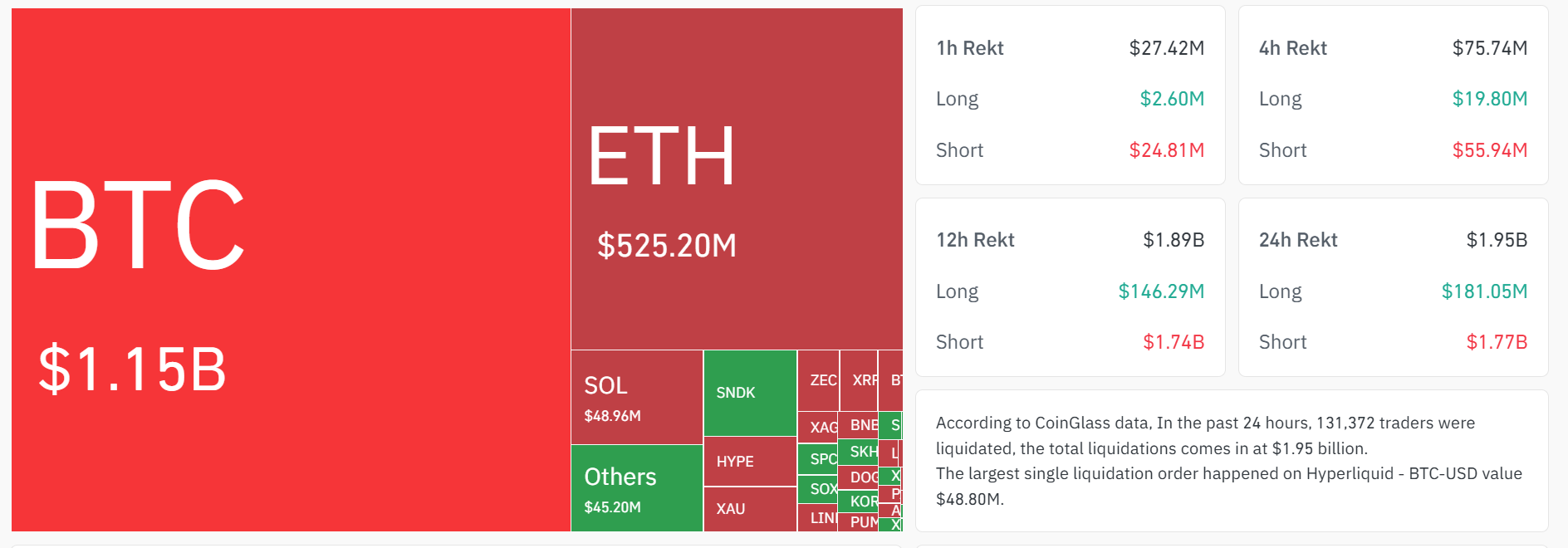
- •The advance liquidated more than $1.9 billion in leveraged positions across over 130,000 traders, with shorts absorbing $1.77 billion of losses, $1.1 billion of that in Bitcoin alone.
- •The U.S. Treasury said it will double buybacks of 10-30-year bonds at a minimum of $4 billion per operation, after the 30-year yield had reached its highest level since 2007.
- •Ethereum rose more than 8% to move back above $2,000, triggering $525 million in ETH liquidations, of which bearish traders accounted for $475 million.
- •Bitcoin's breakout now faces a key technical test near $70,000, and holding the gains will depend on continued spot demand once the forced derivatives buying subsides.
Bitcoin price surged above $69,000 on Aug. 19, climbing to its highest level in nearly three months as short liquidations accelerated and U.S. Treasury yields retreated. The move unfolded alongside heavy forced derivatives buying in the futures market, with more than $1 billion in short positions liquidated within roughly one hour.
CoinMarketCap data showed Bitcoin reaching an intraday high near $69,366 after trading around $64,111 earlier in the session. The cryptocurrency later pulled back toward the $68,000 region. The rally coincided with a major U.S. Treasury announcement and ongoing White House discussions on crypto regulation, though neither event alone establishes the cause of Bitcoin's move.
Crypto TV Host Links Bitcoin Price Movement to U.S. Treasury Actions
Although there is no clear sign of what exactly caused the surge in Bitcoin price, traders are already speculating on multiple reasons. CNBC Crypto Trader host Ran Neuner believes it stems from the U.S. Treasury's decision on bond buybacks, which he discussed in a post on X.
The U.S. Treasury announced it will double the buyback of 10-30-year bonds, with at least $4 billion per buyback. The move follows recent bond sell-offs, which pushed the 30-year Treasury yield to its highest level since 2007 and raised concerns across markets. Buybacks let the Treasury repurchase outstanding longer-dated securities, typically funded by issuing shorter-dated debt, easing supply pressure at the long end of the curve. Long-term yields are closely watched because they anchor borrowing costs across the economy, from mortgages to corporate debt, which is why a 2007-era level in the 30-year yield drew attention well beyond the bond market.
Neuner views the increased buyback as a sign that the money printer is back on, with the United States issuing debt and printing money to buy it back. He added that the significance of this move is what pushed BTC.
“Bitcoin has been coiled for 81 days in the same range. These coils land up in big moves. The bigger the coil, and this one was big, the bigger the move,” he said.
However, not everyone agreed with this position, noting that gold and silver did not see similar movement on the day. CryptoQuant data show that growth in spot and perpetuals demand over 30 days has climbed back above zero for the first time in months.
For some market watchers, the surge is tied to the planned White House meeting on crypto regulation. President Trump is meeting with executives of crypto companies, including Ripple, Coinbase, and prediction market platform Kalshi. CFTC Chair Mike Selig and SEC Chair Paul Atkins are also expected at the meeting. The two agencies have long divided oversight of U.S. crypto markets, with the CFTC regulating derivatives and commodities trading while the SEC polices securities, a split that has left many digital assets in contested jurisdictional territory.
Bitcoin Gains Trigger Nearly $2 Billion in Liquidations
Meanwhile, the rise in Bitcoin's value led to a massive liquidation event across the market, with more than $1.9 billion in positions liquidated, according to Coinglass. The wipeout affected more than 130,000 traders in total, with short traders taking most of the hit. Liquidations occur when exchanges forcibly close leveraged positions once losses exhaust a trader's margin; because closing a short requires buying, waves of forced buying can compound the very price move that triggered them, the dynamic that defines a short squeeze.
A total of $1.77 billion in short positions were wiped out, with Bitcoin alone accounting for $1.1 billion of these positions. By comparison, only $37 million in long positions were liquidated on the day. The imbalance reflects how the majority of the market did not expect an upward price movement at this point.
Interestingly, other crypto assets also experienced liquidations as Bitcoin's gains lifted the rest of the market. ETH, the second-largest cryptocurrency by market value, crossed $2,000 again after a rise of more than 8%, wiping out $525 million worth of ETH positions. Bearish traders accounted for $475 million of that total.
Bitcoin Price Faces $70,000 Test
The immediate technical test for Bitcoin now sits around the $70,000 level. Bitcoin approached that level after spending roughly 81 days inside a wider consolidation range, according to Neuner's analysis.
A sustained move above $70,000 would place BTC above a psychological resistance area that has repeatedly influenced recent trading. Failure to hold above the high-$60,000 region, meanwhile, would weaken the breakout attempt.
The quality of the move also matters. Continued spot demand would provide stronger confirmation of the move than another rise driven mainly by leveraged futures. Treasury yields remain another variable: the Aug. 19 buyback announcement pushed long-term yields lower, but renewed bond-market selling could reverse that effect.
For now, Bitcoin price has broken toward the top of its recent range while a large short squeeze amplified the move higher. Holding those gains will depend on spot demand after the forced derivatives buying subsides.

