Bitcoin Slips to $81,848 as Spot ETF Outflows Resume, Brent Oil Hits $114.3 and VIX Jumps to 20
Key Takeaways
- •Spot Bitcoin ETFs recorded more than $635 million in outflows on Thursday, bringing net monthly outflows above $174 million after inflows of $2.6 billion in September and $3.52 billion in August.
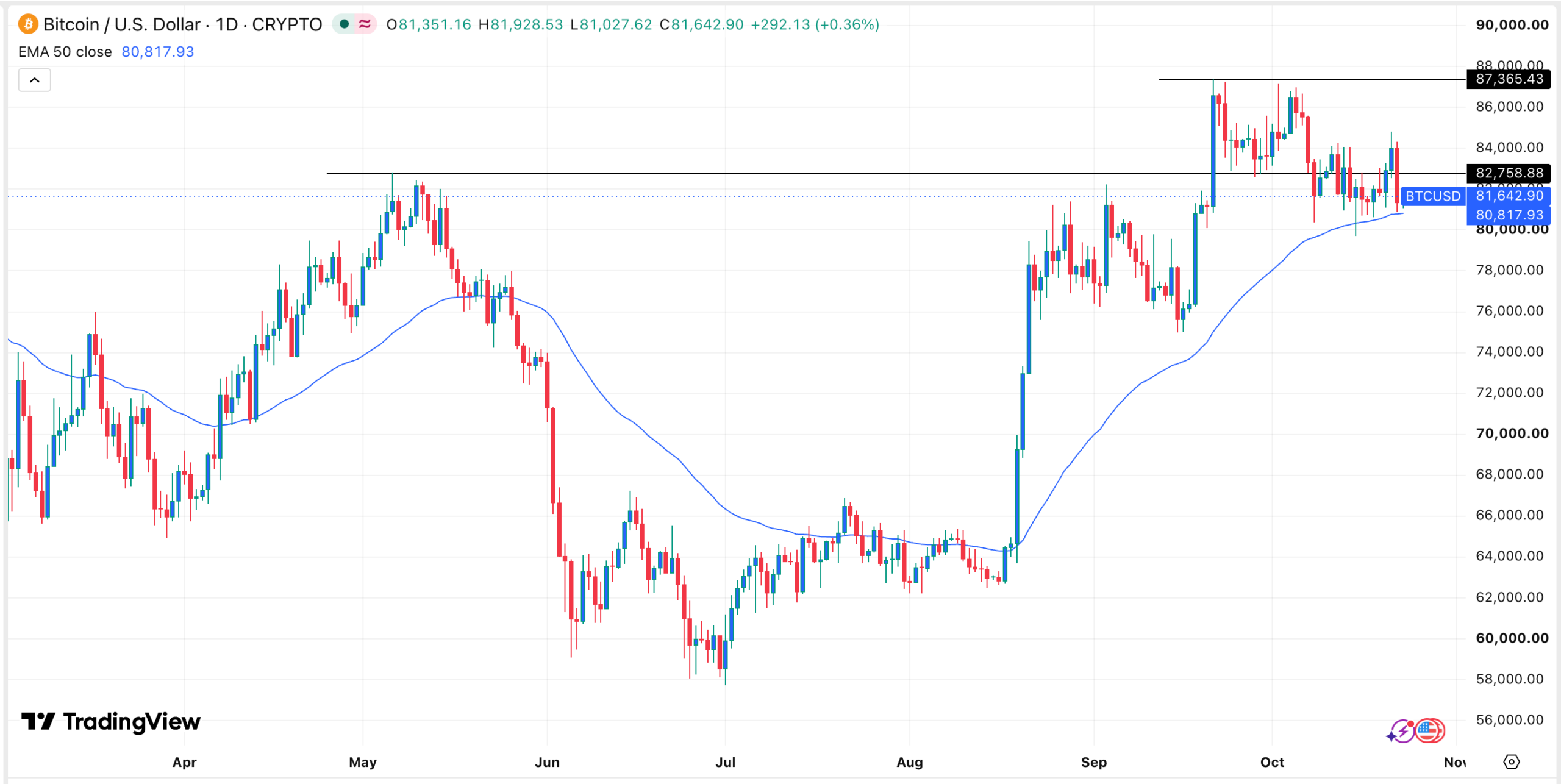
- •Bitcoin dropped to $81,848 and slipped below the key support level of $82,758, though it remains above its 50-day moving average of $80,820, keeping the near-term forecast neutral.
- •The CBOE VIX Index jumped to 20, its highest level since October 16, as AI bubble fears pushed the Nasdaq 100 down 694 points and the Dow Jones more than 100 points lower.
- •Brent crude rose to $114.3, its highest level since May, as Iran's IRGC attacked tankers crossing the Strait of Hormuz and investors anticipated a possible Middle East escalation before the election.
- •Bitcoin ETFs currently hold $104 billion in assets, with BlackRock's IBIT, the largest fund in the category, accounting for more than $65.6 billion.
Bitcoin (BTC) came under pressure over the past few days and dropped to $81,848 as risk aversion spread across financial markets, with rising crude oil prices and a jump in volatility gauges adding to the selling pressure. Brent, the global oil benchmark, climbed to $114.3, approaching its May highs, while the CBOE VIX Index jumped to 20. The cryptocurrency also declined as investors dumped spot Bitcoin exchange-traded funds (ETFs).
Spot Bitcoin ETF Outflows Resume
Investors resumed selling their Bitcoin ETFs on Thursday as risk-off sentiment spread through financial markets. SoSoValue data shows that spot Bitcoin ETFs shed more than $635 million in assets on the day, erasing some of the gains made earlier this week. Because the funds hold bitcoin directly and report their flows each trading day, these daily tallies have become a closely watched gauge of demand for the asset.
In total, the funds have recorded net outflows of over $174 million this month. That marks a sharp reversal from September, when they added $2.6 billion, and from August, when inflows reached $3.52 billion. The funds currently hold $104 billion in assets, with BlackRock's IBIT, the largest fund in the category, accounting for more than $65.6 billion. Upcoming daily flow reports will indicate whether the recent selling extends through the rest of the month.
The outflows came as investors dumped most assets amid spreading fears of an ongoing AI bubble. The tech-heavy Nasdaq 100 Index dropped 694 points, while the Dow Jones fell more than 100 points. Popular stocks such as Nvidia, AMD, and SanDisk have all dropped into a bear market. Most notably, the CBOE VIX Index, a widely followed barometer of expected U.S. equity volatility, jumped to 20, its highest level since October 16, and has surged more than 35% from its lowest level this year.
Crude Oil Rallies Ahead of Federal Reserve Decision
Bitcoin is also declining as investors track developments in the energy market, where crude oil is in a strong bull run. The rally is unfolding ahead of the Federal Reserve's upcoming policy decision. Brent, the global benchmark, has jumped to $114.3, its highest level since May this year, while West Texas Intermediate (WTI) has risen to $100.67.
Oil prices are climbing as Iran's IRGC continues to attack oil tankers attempting to cross the Strait of Hormuz, a critical chokepoint for global oil shipments. Tens of tankers have been hit in recent weeks, a move aimed at slowing the flow of oil from the region.
Prices have also jumped as investors anticipate that the Middle East crisis will escalate before the election. Secretary Pete Hegseth recently traveled to Israel for talks with Benjamin Netanyahu, and the United States and Israel have continued such operations this month. Iran has warned that any attacks will push it to launch a more severe response targeting civilian infrastructure such as airports and ports.
An escalation would likely lead to higher oil prices, given that oil inventories are highly subdued. Higher oil prices would push inflation up and pressure the Federal Reserve to hike interest rates. Bitcoin does well when the Fed cuts rates, and vice versa. A key caveat, however, is that the ongoing crude oil surge has not translated into higher bond yields: the ten-year yield has dropped below 5%, while the 30-year has fallen to 5.30%.
Bitcoin Price Technical Analysis
The daily chart shows that Bitcoin has pulled back over the past few months, dropping from a high of $87,365 in September to the current $81,680. The cryptocurrency has fallen below the key support level of $82,758, its highest level in May this year — a move that has largely confirmed the bearish breakout.
On the positive side, BTC has remained above the 50-day moving average of $80,820. The most likely forecast for now is therefore neutral. A break below the 50-day moving average would confirm the bearish breakout and point to more downside, while a rebound to $82,758 would signal more upside.
This article is for informational purposes only and does not constitute financial advice. Cryptocurrency investments carry substantial volatility and potential capital losses. Readers should conduct independent research before making investment decisions.
This article was originally published on The Market Periodical.

