Bitcoin Hits $86K as Options Leverage Rebuilds After Smaller-Holder Exit
Key Takeaways
- •Bitcoin moved above $85,000 for the first time since January and touched $86,000 as options leverage began rebuilding.
- •Santiment data showed 62,335 wallets holding 0.1 to 1 BTC and 7,159 wallets holding 1 to 10 BTC disappeared during the decline before Bitcoin reclaimed $80,000.
- •Roughly $648 million in bearish crypto positions were liquidated as Bitcoin broke above $85,000, with the short squeeze accelerating the rally.
- •Glassnode reported rising open interest put-call ratios while perpetual futures funding stayed below neutral, keeping leverage below the extremes seen near the previous top.
- •The $88,000 to $92,000 zone is the next major hurdle, and technical projections identify a possible move above $100,000 later this year if Bitcoin clears that range.
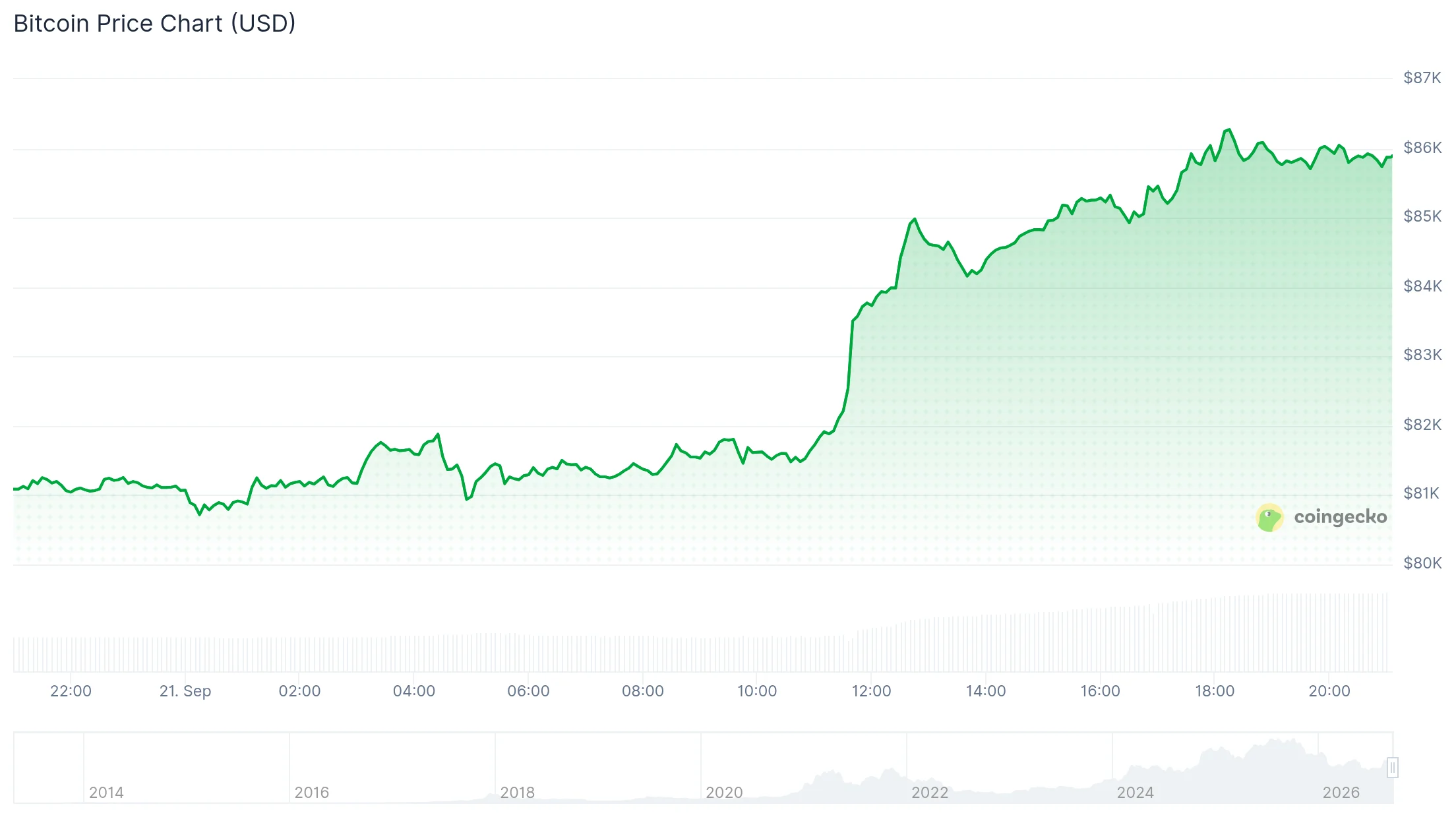
Bitcoin climbed above $85,000 and touched $86,000 as options leverage began to rebuild in derivatives markets, extending a recovery that followed a broad exit by smaller holders during the July-August market weakness. The move carried Bitcoin above $85,000 for the first time since January.
On-chain data from Santiment showed that 62,335 wallets holding between 0.1 and 1 BTC disappeared during the decline, and a further 7,159 wallets holding 1 to 10 BTC also vanished before Bitcoin reclaimed $80,000. The changes pointed to reduced exposure among smaller holders and preceded a large short squeeze in global crypto markets.
Glassnode reported that options leverage was rebuilding near $86,000, with open interest put-call ratios rising and perpetual futures funding staying below neutral. Roughly $648 million in bearish crypto positions were liquidated as Bitcoin broke above $85,000, and the $88,000 to $92,000 zone now stands as the next major hurdle.
Smaller Holders Reduced Exposure Before the Recovery
The wallet decline points to capitulation among smaller holders rather than fresh retail accumulation. Wallet counts do not prove that every address sold its coins. Some holders may have consolidated balances, transferred funds, or closed inactive addresses. Even so, the timing gives the data a clear market signal.
Santiment linked the wallet changes to the July-August shakeout. The 0.1 to 1 BTC group lost 62,335 wallets, and the 1 to 10 BTC group lost another 7,159. Together, the figures show that smaller retail and individual holders reduced their on-chain presence before Bitcoin moved higher.
Cohort-level wallet counts are a widely used on-chain lens for retail participation, and that sequence can affect supply during a rebound. Fearful holders who sold into weakness no longer control those coins, and the transferred supply may now sit with buyers, custodians, exchanges, or larger wallets. The shift does not guarantee a sustained rally, but it can reduce selling pressure from those groups.
Bitcoin then reclaimed $80,000 before pushing above $85,000. The recovery followed the reduced exposure among smaller holders, a timing that separated wallet capitulation from later momentum rather than showing that retail buying caused the breakout.
Short Squeeze Fuels the Breakout
The move above $85,000 forced bearish traders to close positions, and exchanges recorded roughly $648 million in bearish crypto liquidations during the breakout. Short liquidations can accelerate spot gains as exchanges close losing positions and buy assets to settle collateral. The squeeze added fuel for leveraged traders after Bitcoin crossed the psychological level.
Deep leverage and round-the-clock trading make crypto markets especially prone to these cascades, since losing positions can be closed automatically at any hour once margin runs thin.
Falling oil prices improved risk appetite during the move. That backdrop helped risk assets recover, although it did not remove exposure to volatility. Crypto markets can reverse quickly when derivatives positioning becomes crowded, especially after a sharp liquidation event.
Options Leverage Rebuilds While Funding Stays Below Neutral
Glassnode reported that long leverage was rebuilding in the options market as Bitcoin touched $86,000. Open interest put-call ratios, which compare bearish put contracts against bullish call contracts, moved higher, showing greater activity around both upside exposure and downside protection. The reading did not match the frothy conditions near the previous Bitcoin top.
Perpetual futures funding, the recurring payment exchanged between long and short traders that keeps perp prices anchored to spot, stayed below neutral, according to the update. Funding has not turned aggressively positive, suggesting traders had not rebuilt aggressive long exposure across perpetual contracts. That distinction separates the current recovery from rallies driven by one-sided leverage.
$88K to $92K Is the Next Hurdle
Bitcoin now faces the $88,000 to $92,000 zone as its next major test. A sustained move above that range would strengthen the 2026 market structure identified in the technical setup, while failure to clear it would leave the breakout exposed to profit-taking and another test of lower support.
Technical projections tied to the setup identify a possible move above $100,000 later this year if Bitcoin clears the range. That path depends on continued demand, stable derivatives positioning, and adequate fresh liquidity. The current data confirms that smaller holders exited before the recovery and that short sellers absorbed the first breakout pressure.
For now, options leverage remains below the extremes seen near the prior top. Bitcoin can continue higher without speculative excess, provided funding and open interest avoid a rapid surge. Traders are watching whether wallets begin to return as the market approaches the $88,000 to $92,000 band.
This article was originally published on Blockonomi.

