Bitcoin Faces a Global Rate-Hike Wall as US PCE Report Looms
Key Takeaways
- •Bitcoin rebounded above $60,000 after briefly falling to $55,181, a roughly 9% bounce that indicates buyers remain active despite the sell-off.
- •Wednesday's US PCE report, the Federal Reserve's preferred inflation gauge, is the week's key catalyst, with markets pricing more than a 90% chance of a December rate hike.
- •Traders have abandoned expectations for a 50-basis-point December hike, leaving a 25-basis-point increase as the prevailing base case.
- •The tightening cycle is broadening globally, with the Bank of Korea expected to raise rates this week and upcoming Tokyo inflation data potentially lifting Bank of Japan December hike expectations.
- •Taiwan's stock market plunged 17.5% in a single week and the Nasdaq suffered double-digit losses as investors questioned AI valuations, adding pressure to risk assets such as Bitcoin.
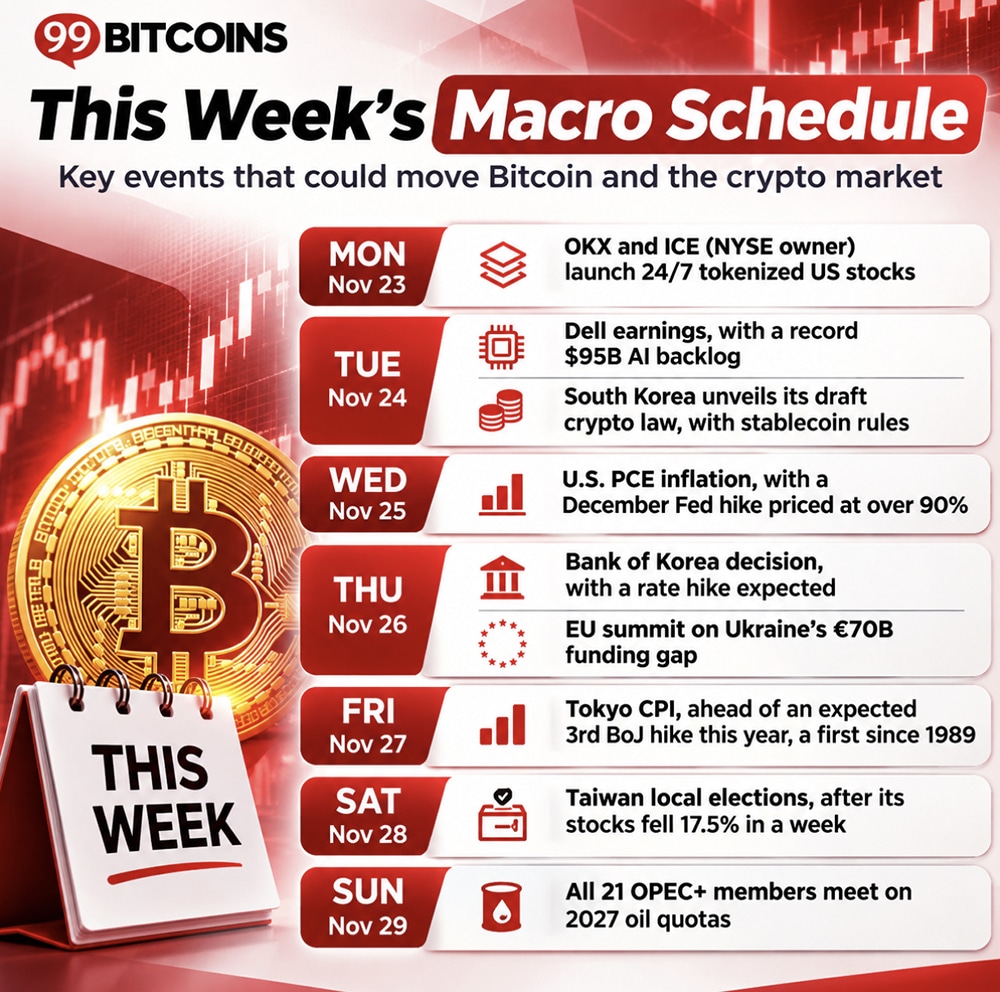
Bitcoin is attempting to recover after a brutal sell-off, but the macroeconomic calendar is about to make the road considerably harder. Bitcoin coverage this week centers on inflation, interest rates, and central banks as policymakers prepare another squeeze on global liquidity. Among the most consequential events is Wednesday's US Personal Consumption Expenditures (PCE) report, with December rate-hike bets hovering above 90%.
The danger extends well beyond Washington. South Korea is expected to deliver another rate decision, Japan is approaching another policy hike, and markets across Asia have suffered heavy losses.
Bitcoin has survived plenty of hostile macro environments before, but investors are still wrestling with whether the AI boom can justify enormous valuations amid tightening financial conditions.
Inflation Could Give the Fed Another Reason to Tighten
Wednesday's PCE report could determine how markets finish the shortened Thanksgiving trading week. The PCE index, published by the US Bureau of Economic Analysis, remains the Federal Reserve's preferred inflation gauge, and traders are looking for evidence that price pressures are cooling, with the core reading that strips out volatile food and energy prices typically drawing the closest scrutiny.
Markets are currently leaning heavily toward another 25-basis-point rate hike — a quarter of a percentage point — in December. A hotter inflation reading could reinforce those expectations, pushing Treasury yields and the dollar higher while squeezing assets that thrive on cheaper liquidity. For Bitcoin, the transmission is direct: the asset is quoted in dollars and trades around the clock, so dollar strength and rising yields feed straight into its liquidity conditions.
Bitcoin could initially take the hit. However, the market has already absorbed a significant repricing of monetary policy and a massive equities sell-off. Traders have also abandoned expectations for a 50-basis-point December move, removing one of the more frightening outcomes from the table.
That leaves a notable setup. If inflation comes in softer than expected, the dollar could lose momentum, yields could retreat, and beaten-down risk assets might get a much-needed reprieve — with Bitcoin among the first assets traders could chase in a renewed risk-on move.
The tightening cycle is also broadening. The Bank of Korea is expected to deliver a rate increase this week, ahead of Friday, while upcoming Tokyo inflation data could lift expectations that the Bank of Japan may raise rates again in December. A cycle that once seemed gradual is increasingly becoming a global story.
Can Bitcoin Turn Macro Fear Into a Rally?
The damage across global markets is already considerable. Taiwan's stock market plunged 17.5% in a single week, while the Nasdaq suffered a double-digit decline as investors questioned AI valuations, dumped technology stocks, and retreated from trades that previously seemed unstoppable.
That backdrop is undeniably ugly for Bitcoin, but selling pressure may be approaching an exhaustion point. When markets are already scrambling to reduce exposure, another wave of bad news does not necessarily produce another wave of selling.
Bitcoin's rebound above $60,000 after briefly slipping below $55,500 shows that buyers have not disappeared. Bounces like this one are how traders gauge whether dips are still being met with demand — a key tell on whether capitulation is running its course. The recovery is not confirmation of a bottom, but it gives bulls something to work with heading into this week's catalysts.
JUST IN: Bitcoin $BTC has ripped back above $60,000, after crashing to $55,181 this morning. That's a 9% bounce from today's low. pic.twitter.com/6F9fftJvbI — Coin Bureau (@coinbureau) November 21, 2026
Post: https://x.com/coinbureau/status/2124137048005361758?ref_src=twsrc%5Etfw
A softer PCE reading could become the spark. If inflation surprises lower, markets might quickly unwind some of their aggressive tightening bets. That could lift stocks, weaken the dollar, and bring sidelined capital back into crypto.
The opposite scenario remains dangerous. Sticky inflation could strengthen the case for further hikes, prolong the risk-off mood, and force Bitcoin to revisit recent lows. The sequence to watch runs from Wednesday's PCE print to the Bank of Korea's decision and Tokyo's inflation data, which together will shape the global tightening picture heading into the Fed's December meeting.
For now, Bitcoin's price is less about whether the Fed will hike and more about how much bad news markets have already priced in. The asset has been battered by tightening expectations, technology-stock panic, and investor capitulation.
Based on reporting originally published by 99Bitcoins.

