Bitcoin Open Interest Falls 17% as Binance Liquidations Reach Highest Levels Since 2021
Key Takeaways
- •Binance's Bitcoin open interest fell 17% in under a month, from $10.6 billion to $8.8 billion, dropping below its 180-day moving average of roughly $8.6 billion.
- •Binance has recorded its highest monthly liquidation totals since 2021, exceeding $1.4 billion in August, $1.1 billion in September, and about $1.3 billion in October, with November already surpassing $520 million.
- •Analyst Darkfost noted that similar deleveraging signals have often appeared near the end of corrections during bullish phases, citing June when Bitcoin traded below $60,000 before rebounding more than 45% above $87,000, though he cautioned this pattern does not guarantee recovery.
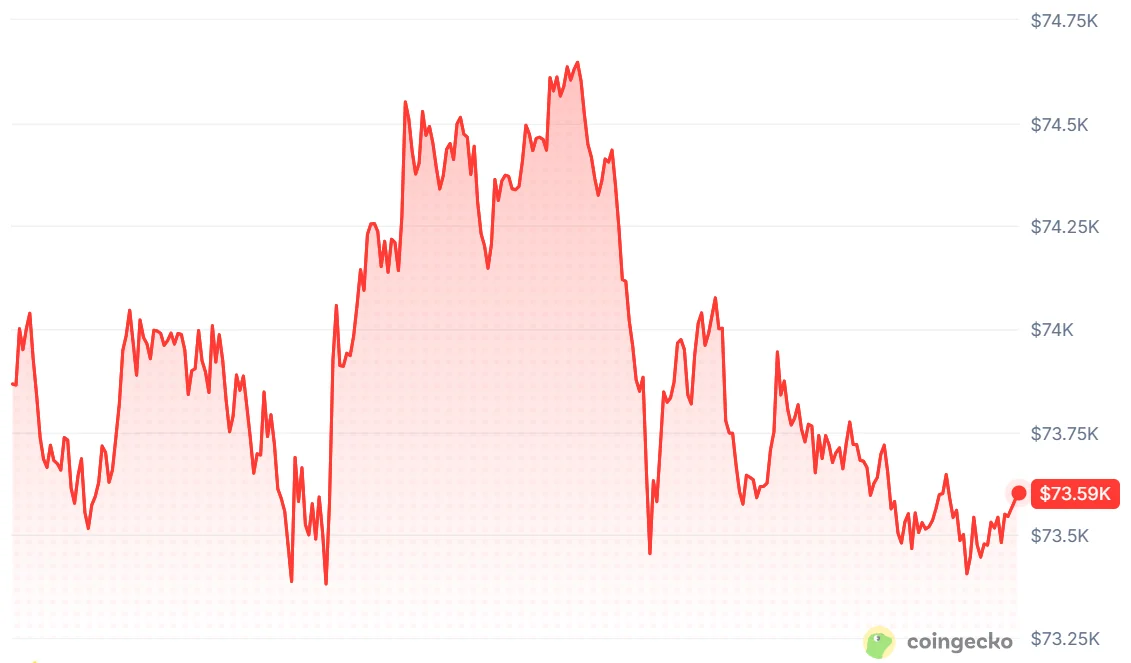
- •Bitcoin traded near $73,473 after declining 8.64% over seven days, with the $76,400 level flipping from major support to resistance and $72,700 emerging as a critical nearby support level.
- •The withdrawal of leveraged exposure may reduce the risk of cascading liquidations and allow spot-market demand to exert greater influence on Bitcoin's next major move.
Bitcoin open interest on Binance has fallen 17% in less than a month, from $10.6 billion to $8.8 billion, as the exchange records its highest monthly liquidation totals since 2021 over the past three months. November liquidations have already exceeded $520 million, following August’s record of more than $1.4 billion.
Bitcoin was trading near $73,473 and had declined 8.64% over seven days as traders monitored whether nearby support levels would hold. Resistance was identified at $76,400, while $72,700 remained a critical nearby support level.
Falling Open Interest Signals Deleveraging
Market analyst Darkfost identified the decline in open interest as a potential sign of reduced leveraged exposure. Open interest measures the total value of outstanding futures and perpetual contract positions. A decline can occur when traders voluntarily close positions or when positions are forcibly liquidated.
Binance’s Bitcoin open interest fell from $10.6 billion to $8.8 billion in less than a month. During the same period, the 180-day moving average rose from $8.4 billion to $8.6 billion. The source report described current open interest as moving below its longer-term average, presenting the change as a fresh deleveraging signal. Because a 180-day moving average reflects roughly six months of typical positioning, open interest sitting beneath it shows outstanding leverage has thinned below the norms that prevailed for most of the past half-year.
Darkfost wrote on X:
Binance’s highest liquidations since 2021 signal a fresh wave of deleveraging In less than a month, bitcoin:native open interest on Binance has fallen from $10.6 billion to $8.8 billion, a decline of 17%. Meanwhile, its 180-day moving average has risen from $8.4 billion to… pic.twitter.com/j4KV3hZunE — Darkfost (@Darkfost_Coc) November 12, 2026
X post: https://x.com/Darkfost_Coc/status/2120773945959788643?ref_src=twsrc%5Etfw
Darkfost said similar signals often emerge toward the end of corrections during bullish market phases. The analyst cited June as an earlier example, when Bitcoin traded below $60,000 before subsequently rebounding above $87,000, a gain of more than 45%.
The comparison does not guarantee another recovery. Deleveraging can also continue for months during broader bear markets, and current market conditions will determine whether reduced leverage supports stabilization or occurs alongside further weakness. From here, the data itself offers the clearest guide: whether open interest stabilizes near its long-term average or keeps shrinking, and where the November liquidation tally lands once the month closes.
Binance Liquidations Surge
The decline in Bitcoin open interest coincided with unusually heavy liquidation activity on Binance. Darkfost reported that liquidations exceeded $1.4 billion in August, reached $1.1 billion in September and totaled approximately $1.3 billion in October. November had already recorded more than $520 million in liquidations before the second half of the month.
The figures illustrate how quickly leveraged positions can disappear when market conditions move against traders. Darkfost suggested that subdued volatility may have encouraged traders to take on greater risks. Smaller price movements may have led some participants to use higher leverage in pursuit of larger returns, while sudden reversals can trigger forced closures when positions lack sufficient margin.
Bitcoin’s price structure presented an additional challenge. According to That Martini Guy, BTC continued to form lower highs and lower lows — a pattern in which each rally stalls below the previous peak, the textbook signature of a persistent downtrend. The $76,400 level, previously a major support zone, had become resistance after several unsuccessful attempts to reclaim it.
That Martini Guy wrote on X:
Bitcoin keeps making lower highs and lower lows. The $76,400 level was a major support zone. It's now acting as resistance, and BTC has failed to reclaim it on multiple attempts. We're now trading around $73,500, with the recent lows near $72,700 becoming increasingly… pic.twitter.com/rhB9ysWHXs — That Martini Guy ₿ (@MartiniGuyYT) November 12, 2026
X post: https://x.com/MartiniGuyYT/status/2120771955876065636?ref_src=twsrc%5Etfw
Bitcoin had recently traded around $73,500, with $72,700 emerging as an important nearby support level. The source report said a break below that area could expose BTC to another downward move, while reclaiming $76,400 would provide an early sign of improving market structure.
CoinGecko data placed Bitcoin at $73,473.08, with approximately $24.17 billion in daily trading volume. The asset was down 0.45% over 24 hours.
Falling open interest and heavy liquidations indicate that leveraged exposure is leaving the market. The process can reduce the risk of cascading liquidations and allow spot-market demand to influence Bitcoin’s next major move.

