Bitcoin Miners Faced Fewer Hardware Sellers in 2026 as BTC Slumped and AI Boomed
Key Takeaways
- •Cambridge Digital Mining Industry Report data from June 2024 shows Bitmain controlled 82% of the mining hardware market, with the three largest vendors together holding more than 99%.
- •Bitdeer suspended large-scale external SEALMINER sales, with Q3 2026 sales revenue falling 97% to $0.3 million as it prioritized self-mining due to limited chip fabrication capacity and bearish bitcoin prices.
- •Core Scientific paid $42 million in 2026 to cancel the remainder of its Proto order from Block, removing the U.S. vendor's only major named customer as it pivoted to AI data centers.
- •Hashprice hit an all-time low in June, and publicly listed miners averaged about $75,500 in cash cost per bitcoin in Q2 while BTC ended the quarter at $58,400, according to CoinShares.
- •Canaan released open-source firmware for its Avalon Nano 3S, including the driver for its A3197S chip, enabling independent researchers to audit mining hardware in a concentrated market.
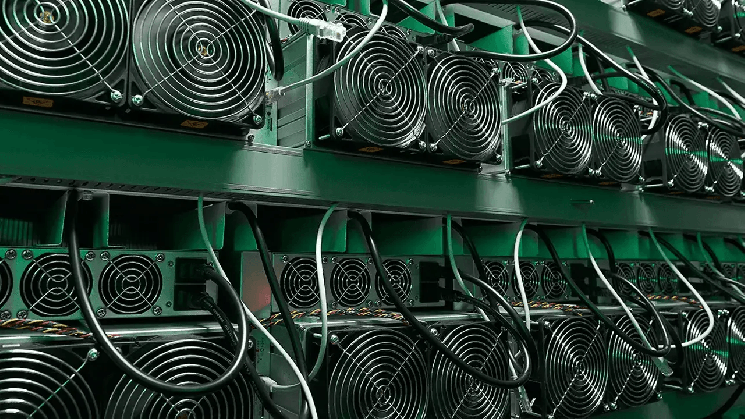
Bitcoin miners entered 2026 with a shrinking roster of hardware vendors. While mining pool concentration is the most frequently cited concern around mining centralization, a more diversified hardware market would likewise make Bitcoin more resilient. Yet companies looking to enter the business today have fewer options when choosing new machines.
Bitdeer has put large-scale external sales on hold and devotes almost all of its rigs to its own mining. Velaura AI (formerly Auradine) has redirected its focus to AI chips, and Canaan's rig sales fell 96% year over year in Q3 as it turned toward energy projects. Block's Proto, meanwhile, lost its only major named buyer. As a result, miners shopping for new rigs are mostly left with Bitmain and MicroBT, leaving buyers seeking non-Chinese hardware with limited options.
The Mining Oligopoly
According to the latest available data from the Cambridge Digital Mining Industry Report, gathered in June 2024, Bitmain held 82% of the market. Combined with the next two largest players, it controlled more than 99%. The data came from a survey of 46 mining firms that collectively accounted for up to 48% of the Bitcoin network's hashrate, or computational power.
Cambridge describes this hardware market as highly oligopolistic. That degree of concentration means that if something goes wrong with a single manufacturer, a large share of the network's machines could be affected. One example is the outcome of a U.S. national security investigation into Bitmain, which remains unknown. Bloomberg reported in November 2025 that a Department of Homeland Security-led probe was examining whether Bitmain machines could be accessed remotely for spying or to disrupt the U.S. power grid. Bitmain has denied posing any risk to U.S. national security.
The concentration runs through the hardware itself: bitcoin mining machines are built around application-specific integrated circuits (ASICs), chips engineered solely for mining, so access to advanced chip fabrication capacity is a prerequisite for any vendor.
Separately, Bitdeer, which was spun off from Bitmain in 2021, manufactures its chips at TSMC in Taiwan. Bitmain has reportedly used TSMC as well, and the foundry is already running at full capacity due to the expansion of the AI industry.
Bitcoin Bears, AI Bulls
Efforts to diversify the bitcoin mining hardware market stalled this year. Mining generated less revenue per unit of computing power than ever before, while large miners pivoted to AI data centers, cutting demand for bitcoin mining rigs. Chip factories themselves were overwhelmed with AI-related orders.
The so-called hashprice, meaning how much a miner can expect to earn per unit of computing power per day, hit an all-time low in June. The metric moves with bitcoin's price, transaction fees and the network's total computing power, so a depressed bitcoin price feeds directly into the economics of buying new machines. Publicly listed miners, as a group, also mined below cash breakeven in Q2. According to CoinShares, their average cash cost per bitcoin was about $75,500 in the second quarter, while $BTC ended the quarter at a price of $58,400.
When Will Bitdeer Resume Sales?
With chip factories busy fulfilling AI-related orders, Bitdeer CEO Jihan Wu said in May 2026 that the company was prioritizing its own mining over rig sales, partly because of limited chip fabrication capacity. For Bitdeer, keeping scarce chips for its own mining operations and earning mining revenue makes more sense than selling the rigs.
"Right now, the bitcoin price is still in its bearish situation, and if we sell the mining rigs, we will have to sell it at a very bad price," Wu said during an earnings call at the time.
In Q3 2026, Bitdeer's SEALMINER sales revenue fell 97% to $0.3 million, while its average self-mining hashrate increased.
Leo Li, Bitdeer's U.S. sales director, told Bitcoin.com News that large-scale external sales of its SEALMINERs were currently on hold, with the company prioritizing the deployment of its mining rigs across its self-mining operations and co-mining partnerships.
"We believe this approach allows us to optimize capital allocation and capture greater long-term value from our proprietary mining technology," Li said, adding that external sales might resume "based on market conditions, production capacity, and our broader business priorities."
The U.S. sales director confirmed that the "vast majority" of Bitdeer's active self-mining rigs were powered by SEALMINERs, and that TSMC remained its only foundry partner.
Pivoting to AI and Falling Sales
Auradine was the main U.S.-designed alternative to Chinese mining machines. In March, however, the company renamed itself Velaura AI and refocused on AI chips. Chief Strategy Officer Sanjay Gupta told TheEnergyMag at the time that the company would work through its existing inventory while increasingly using unsold units for its own mining at third-party facilities.
Canaan, the oldest name in the business, earned more from mining bitcoin itself than from selling machines in Q2 and expected hardware sales to decline further. They did in Q3: revenue from product sales dropped 65% from Q2 to $4.8 million, while mining revenue fell 46% to $9.5 million, mainly because Canaan operated fewer of its own machines. The company cited continued weak demand for mining equipment and intense pricing competition.
In its Q3 report, Canaan Chairman and CEO Nangeng Zhang said the company remained focused "on two complementary priorities" — expanding its access to cost-advantaged power resources for mining and compute infrastructure, while maintaining its core mining hardware technology and bitcoin mining capabilities through "disciplined, commercially driven investment."
Proto's Lost Customer and Bitcoin-Priced Deals
Jack Dorsey's Block entered the Bitcoin mining hardware market in 2024 and launched its modular Proto rigs in 2025. However, its first and biggest named customer, Core Scientific — one of the largest publicly listed bitcoin miners — paid $42 million in 2026 to cancel the remainder of its order as it pivoted to AI data centers. The exit underscores how the same AI demand thinning the vendor roster is also shrinking the pool of large rig buyers.
Proto hardware is still reaching buyers. Bitcoin.com News reported in October that bitcoin mining services provider Sazmining launched an offering that allows individual investors to buy Proto hashboards; buyers own the hashboards, while Sazmining handles operations and maintenance.
Bitmain, the biggest name in the business, was also hit by the slump and cut prices to clear inventory in December 2025. Since at least December 2024, however, Bitmain has allowed large miners to pay for machines by pledging bitcoin at a fixed price, with the option to buy the $BTC back later. Some of its largest disclosed deals were paid for this way, including American Bitcoin's $314 million deal in 2025.
Bitmain has had a U.S. production line since December 2024 and announced plans for a larger U.S. site. Bitdeer is building a SEALMINER assembly facility in Nevada, while MicroBT has already begun U.S.-based manufacturing. MicroBT is also a private company and, like Bitmain, does not publish sales results. It continues to release new machines, with its latest model, the M7D, debuting in March this year.
The Open-Source Angle
The Bitcoin mining industry therefore still depends mostly on chips designed by Chinese companies Bitmain and MicroBT, as well as Canaan, Singapore-based Bitdeer, and U.S.-based Proto. Even the growing solo mining market mostly runs on Bitmain's chips.
Beyond these companies, a community-supported initiative called the 256 Foundation is working on alternatives. The public charity says its mission is to build open-source alternatives to every closed layer of the mining stack, including hashboards, control boards and firmware. Its hashboard, the circuit board that carries the mining chips, nonetheless uses Bitmain chips. Proto also donated 256,000 Intel mining chips to the foundation, but Intel stopped making those chips in 2023.
This is why Canaan's decision to release open-source firmware for its Avalon Nano 3S, including the driver for its A3197S mining chip, is significant. With this move, Canaan is giving developers and users the ability to inspect, modify, and improve the software themselves without needing permission. In a market concentrated among a handful of vendors, open code also gives independent researchers a way to audit what the machines actually run.
"In our view there's no downside here for Canaan, only upside. Open firmware brings in developers, tinkerers, and home miners who want to understand and own their machines," the 256 Foundation said, urging other mining hardware makers to do the same.
A Temporary Phase With an Unknown End
That said, the current situation, with fewer new hardware sellers remaining in the market, might still prove temporary. If the price of bitcoin rallies and the AI pivot proves less profitable than expected, mining could become more attractive again. Demand for rigs could also increase, potentially spurring competition among manufacturers.
Canaan has already said it expects revenue to rise to $18–22 million in Q4 from $14.5 million in Q3, although it did not specify how much would come from rig sales. Also, while there are fewer sellers, the machines actually running on the network are likely more varied than they were a few years ago. Bitdeer now mines mostly with its own chips, as does Velaura AI on a smaller scale, while the latter also sells from its inventory.
Additionally, those looking to start mining bitcoin now can consider buying used rigs from miners pivoting to AI. While this does not diversify the hardware market itself, it at least gives prospective miners more purchasing options.
In either case, although the situation may be temporary, no one knows how long the current market oligopoly and its associated risks will last. What can be tracked meanwhile is concrete: the outcome of the U.S. probe into Bitmain, whether Bitdeer resumes external sales under the conditions Leo Li outlined, and the pace of new model releases from MicroBT.

