Bitcoin Holds Above $64K as Miners Shift Computing Power to AI; Bitcoin Hyper Closes $33M Presale
Key Takeaways
- •Publicly listed Bitcoin miners have cut their combined computing power by 21% in 2026 as they shift resources toward AI infrastructure.
- •CoinShares said listed miners had announced more than $70 billion in AI and high-performance computing contracts earlier this year.
- •The research firm estimated miners could get as much as 70% of their revenue from AI infrastructure by the end of 2026.
- •Bitcoin Hyper says it is building a Layer 2 using the Solana Virtual Machine to speed up BTC payments and transactions.
- •Bitcoin Hyper’s presale has raised $33 million at a token price of $0.01368, with staking advertised at 35% APY.
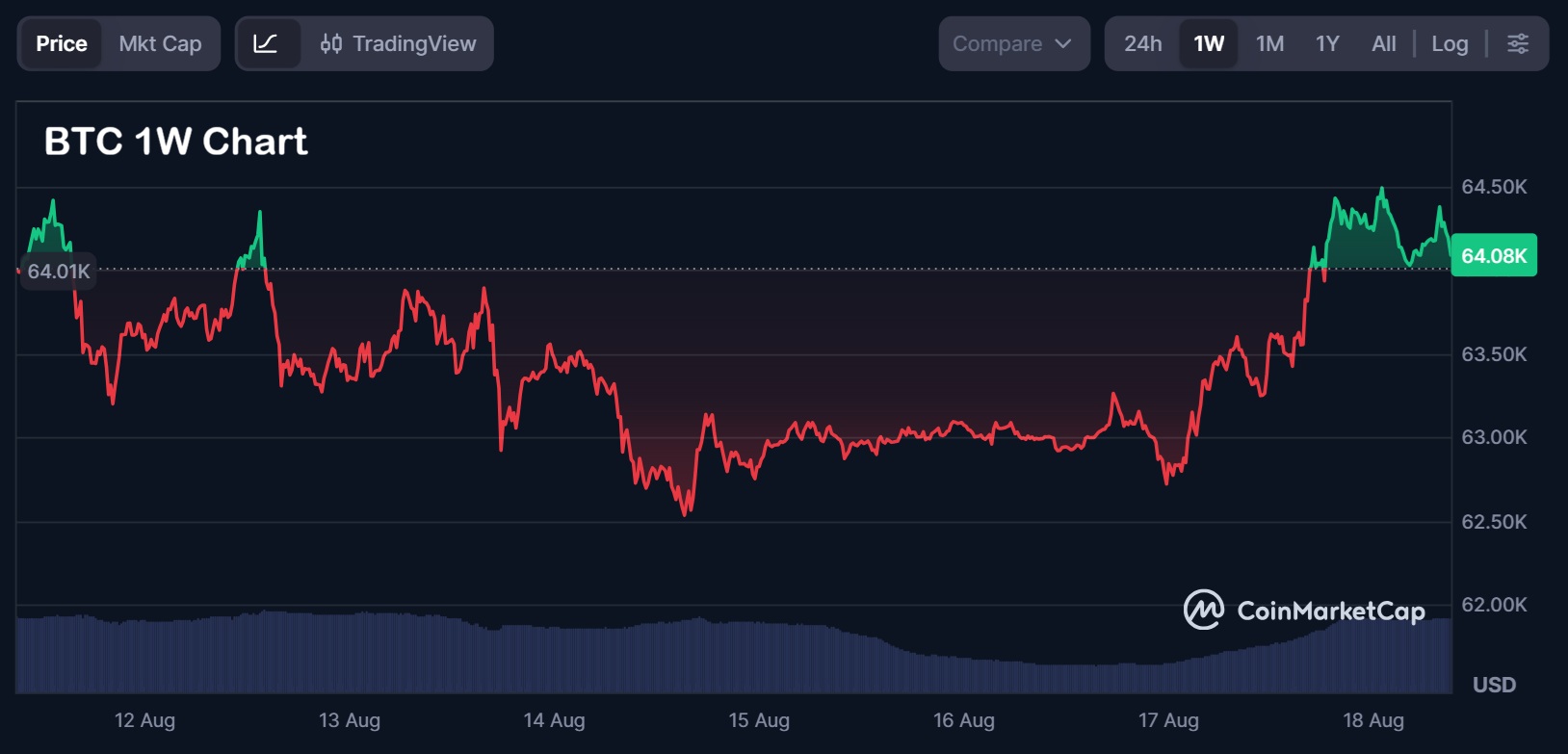
Bitcoin is back above $64,000, but the more interesting movement this week may be happening away from the BTC price chart.
Publicly listed Bitcoin miners have cut their combined computing power by 21% across 2026 as operators redirect resources toward artificial intelligence infrastructure, according to CNBC and other sources. The move reflects a simple economic calculation: power, data centers, and computing capacity that were once dedicated almost exclusively to mining Bitcoin can increasingly earn money serving AI workloads instead. The CNBC report centered on Riot Platforms' deal with Anthropic as a case in point.
Bitcoin itself has climbed back just above $64,000 after struggling around that level, but there has been no comparable breakout across the broader market. What comes next for the coin that leads the market remains an open question.
Projects around Bitcoin, meanwhile, are still capturing value. Bitcoin Hyper (HYPER) is approaching the network from another direction, building a Layer 2 around faster BTC payments and transactions. Its presale has raised $33 million so far at a price of $0.01368, with staking at 35% APY.
Bitcoin Miners Find a New Use for Their Computing Infrastructure
The move toward AI has been developing for months. CoinShares reported earlier this year that publicly listed Bitcoin miners had announced more than $70 billion in cumulative AI and high-performance computing contracts. The research firm estimated that listed miners could derive as much as 70% of their revenue from AI infrastructure by the end of 2026, up from roughly 30% at the time of its March report.
Companies including Hut 8, TeraWulf, and Cipher are increasingly resembling data-center businesses that also mine Bitcoin, as AI workloads can offer more predictable economics for infrastructure owners — especially when Bitcoin mining profitability is under pressure. That pressure is partly structural: the April 2024 halving cut the block subsidy from 6.25 BTC to 3.125 BTC, halving the baseline revenue from each newly mined block.
That does not mean Bitcoin mining is disappearing. The operation remains fundamental to Bitcoin's security, and a higher BTC price can quickly change the economics. The network is also built to absorb shifts in computing power: difficulty recalibrates roughly every two weeks, keeping block production on schedule as hash rate enters or leaves.
What is changing is the assumption that every new piece of Bitcoin-related infrastructure needs to sit at the base layer. While mining companies find other uses for computing capacity, Layer 2 developers are asking whether more of Bitcoin's transactional activity can occur off Layer 1 — a question the ecosystem has worked on for years, from the Lightning Network's payment channels to Stacks' smart contract layer.
For Bitcoin holders, that second question is especially important. BTC succeeded as an asset people want to own; making it convenient enough for frequent payments remains unfinished business.
Bitcoin Hyper Builds a Faster Route for BTC Transactions
Bitcoin Hyper is designed to leave Bitcoin's base layer largely alone, introducing a Layer 2 that uses the Solana Virtual Machine as a faster environment for moving BTC. Instead of requiring every payment or transaction to compete directly for Bitcoin block space — where only about 7 transactions per second can occur — activity can be processed on Layer 2 and later anchored back to Bitcoin.
The project bundles Layer 2 transactions, with the resulting state periodically committed to Bitcoin Layer 1.
For users, the intended result is much simpler: BTC that can move with near-instant finality — useful at the cash register — rather than at the pace of Bitcoin's base chain.
That is particularly relevant for payments. Bitcoin was introduced as peer-to-peer electronic cash, but its limited throughput makes everyday spending difficult at scale. HYPER moves these processes into the SVM environment, where rapid BTC transfers can happen along with other smart contract processes more commonly associated with Solana or Ethereum, like DeFi, lending, and borrowing.
HYPER aims to make using BTC more convenient, and the $33 million raised in presale funding suggests that buyers have responded strongly. HYPER is currently priced at $0.01368. Coinsult and SpyWolf are listed as auditors of project contracts.
HYPER Bets Bitcoin Needs More Than a Higher Price
Bitcoin holding around $64,000 is good news for miners, but the industry's pivot toward AI shows that price is no longer the only economic story surrounding the network. Bitcoin infrastructure is becoming more specialized, and Layer 2 projects attempt to take transactional workloads that Bitcoin itself was never designed to process at a consumer scale and put them somewhere faster.
The $33 million raise has closed, with the full launch and exchange listings expected in the near future. The market HYPER is targeting is already enormous: a global base of Bitcoin holders, with an asset that remains considerably easier to save than to use for frequent payments.
For readers tracking the utility side of the market, Bitcoin Hyper presents itself as a hint of what comes next. The project says Bitcoin can retain its role as the secure monetary foundation, while faster infrastructure built on top of it handles more of the everyday activity. In that sense, according to the project, HYPER is finishing the work that Satoshi started.

