Bitcoin Ends July Up Nearly 8% Despite Rate-Hike Fears, AI Sell-Off, and Coldcard Security Breach
Key Takeaways
- •Bitcoin gained nearly 8% in July 2026 despite headwinds from Federal Reserve rate hikes, a broader market sell-off, and a major security breach at hardware wallet provider Coldcard.
- •The Coldcard security breach resulted in estimated crypto asset losses of approximately $70 million according to Galaxy Research, raising concerns about self-custody wallet confidence.
- •Strategy, the largest institutional Bitcoin holder with 843,775 BTC, reported a net unrealized loss of $8.22 billion, including an $8.32 billion second-quarter loss.
- •Analysts attribute Bitcoin's relative monthly stability to the earlier flushing out of leveraged positions during the late June sell-off that drove prices below $58,000.
- •Bitfinex analysts forecast a range-bound Bitcoin in August with limited volatility, contingent on stable yields and consistent spot ETF inflows, while open interest in Bitcoin futures held static at approximately 750,000 BTC throughout July.
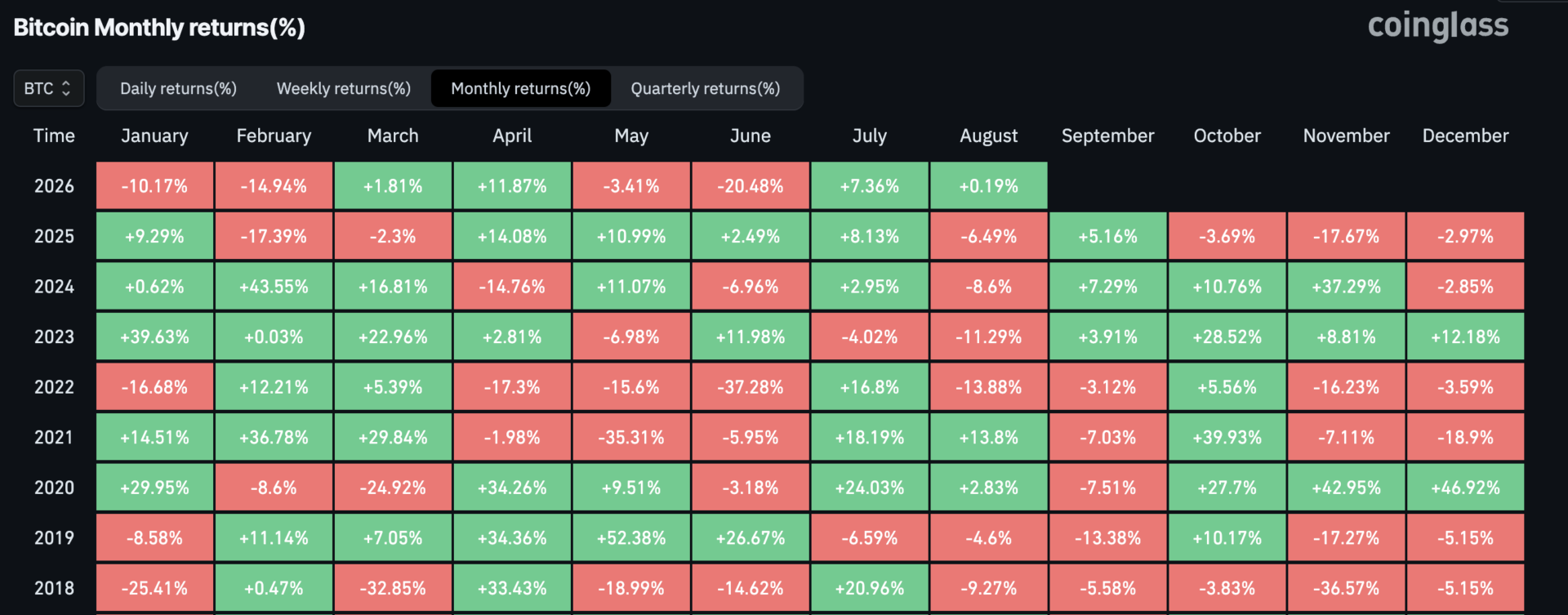
Bitcoin closed July with a gain of nearly 8 percent, weathering multiple headwinds including Federal Reserve rate-hike concerns, a broader AI-driven market sell-off, and a significant security breach at hardware wallet provider Coldcard. Despite the monthly advance, BTC remains down more than 28 percent year to date (YTD). Traders are now looking to upcoming jobs data and a potential resurgence of spot Bitcoin exchange-traded fund (ETF) inflows for directional cues.
On the final trading day of July 2026, Bitcoin's price slipped by approximately 3 percent — a decline insufficient to derail the month's overall rally. Analysts attributed Bitcoin's relative stability to diminished leveraged exposure in derivatives markets following a sharp sell-off in late June, during which the price fell below $58,000 and triggered substantial liquidations of leveraged positions. With excess leverage already flushed out, markets became less vulnerable to deeper declines even as the Federal Reserve embarked on its rate-hake cycle. Rising benchmark rates typically reduce demand for non-yielding assets like Bitcoin, making the crypto's relative resilience during such an environment notable.
Avoiding a Deeper Sell-Off
According to analyst reports, average daily liquidations since early July remained well below the peak of $400 million recorded at various points throughout the year. "Crypto fell less than levered equity themes because the forced-selling fuel was already spent," the analysts wrote.
The divergence between crypto and broader markets was also evident. On Friday, July 31 — the final day of the month — both Bitcoin and Ether declined sharply, even as South Korea's Kospi index surged over 15 percent and U.S. equity futures reached record highs.
Bitcoin demonstrated further resilience despite a major security incident involving Coldcard, one of the leading self-custody hardware wallet providers. Hardware wallets are widely regarded as the gold standard for private key protection, making a breach of this magnitude especially significant for user confidence in self-custody solutions. Initial reports indicated that the breach resulted in the theft of at least $38 million in Bitcoin. Galaxy Research subsequently estimated total losses at approximately $70 million in crypto assets.
Coinglass data shows that Bitcoin posted a red index and declined more than 14 percent during the second quarter of 2026. However, the third quarter remains in positive territory, sustaining hopes for a continued rally.
Outlook: How Long Can the Rally Last?
While the immediate outlook remains broadly positive, several analysts expressed caution, noting that markets are entering a period of heightened volatility driven by conflicting expectations regarding future rate decisions. One analyst observed that investors are caught in a tug of war between dovish and hawkish scenarios, creating downward pressure on high-beta assets. Markets are transitioning into a new volatility regime, shifting from an era of policy tightening to growing speculation about potential rate cuts. Simultaneously, concerns persist that elevated rates could dampen risk appetite.
Bitfinex analysts expect similar dynamics to persist into August, with positioning remaining net long — albeit tentatively — while a Federal Reserve rate hike continues to be priced in. "The signal for traders which has not yet fired is the institutional buying of bitcoin at aggressive levels," they wrote. They noted that open interest for Bitcoin futures remained relatively static at approximately 750,000 BTC throughout the month, reflecting traders' reluctance to build leveraged positions despite bullish onboarding of new investors.
The base case for August is a range-bound Bitcoin with limited short-term volatility, provided that yields remain stable or ETF flows turn consistently positive. A neutral outcome from the Federal Reserve would be acceptable, but persistent dollar strength, higher yields, and weak ETF inflows would exert downward pressure on prices.
Diminished Prospects for Corporate Holders
The cautious market outlook carries significant implications for corporate Bitcoin holders. Strategy, the largest institutional Bitcoin holder with 843,775 BTC as of late July, has been heavily impacted by recent price action, recording a second consecutive quarter of losses.
According to the firm's earnings report released on July 30, Strategy recorded a net unrealized loss of $8.22 billion, driven by an $8.32 billion loss in the second quarter alone. "We acquired additional bitcoin and treasury securities and reduced our convertible debt issuance during the quarter while navigating muted bitcoin prices and market conditions," said Michael Saylor, chairman of Strategy, in a statement.
For now, the focus for corporate holders appears centered on demand generation. Spot Bitcoin ETFs, which provide regulated exposure to BTC without requiring direct custody, are viewed as a key barometer of institutional appetite. "The critical test for institutional demand will come in the form of increased inflows into spot bitcoin ETFs," noted Bitfinex analysts, who observed that the ETFs' appearance in early July had failed to deliver on initial expectations.

