Bitcoin HWI Halts New Hardware and Feature Support as Project Nears Retirement
Key Takeaways
- •Bitcoin HWI will no longer accept new hardware device integrations or new feature requests, indicating the project is winding down toward retirement.
- •The tool acts as a bridge between Bitcoin wallets such as Bitcoin Core, Sparrow, and Specter and hardware wallets that keep private keys offline.
- •Maintainer Nicolas Dorier announced the policy change on X, and it was documented in the project's GitHub issue tracker.
- •Existing users' setups remain functional, but hardware wallet models that were never integrated are unlikely to receive future support.
- •Wallet software that bundles HWI may eventually need to maintain its own integrations or adopt another interface, as no successor project was named.
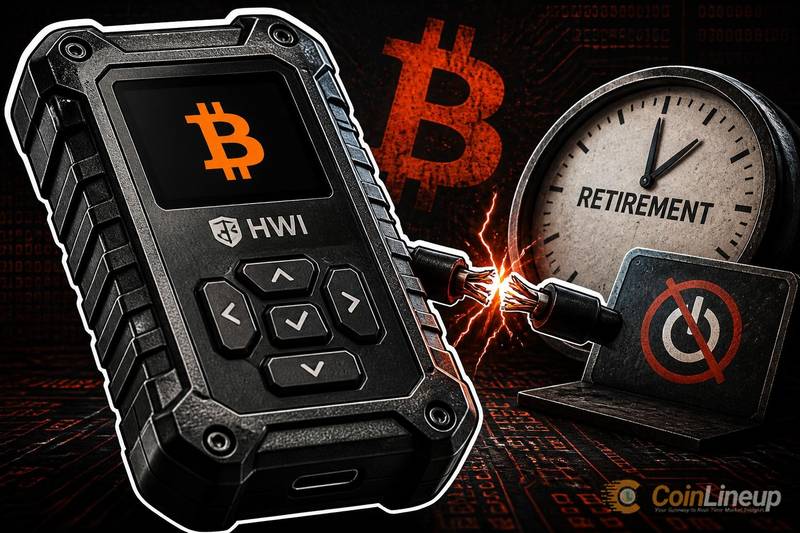
Bitcoin HWI, an open-source tool that connects hardware wallets to Bitcoin applications, has stopped accepting new hardware devices and new feature requests as the project moves toward retirement. Users who rely on the tool should not expect support for additional wallet models going forward.
What changed in Bitcoin HWI's device and feature policy
Bitcoin HWI, short for Hardware Wallet Interface, acts as a bridge that lets Bitcoin software communicate with physical hardware wallets — the small devices that store private keys offline. The project is hosted under the bitcoin-core organization on GitHub, and it has served as a standard command-line and Python library integration layer that wallet software — including Bitcoin Core's hardware wallet support and third-party wallets such as Sparrow and Specter — uses to sign transactions with keys that never leave the device.
According to the project's issue tracker on GitHub, Bitcoin HWI will no longer accept new hardware device integrations, nor will it take on new feature requests.
The distinction matters. Keeping existing functionality running is one job; adding support for brand-new wallet models or features is another. Bitcoin HWI is stepping back from the latter, with wording that points toward retirement.
Reporting on the change, CryptoSlate framed HWI as a widely used security bridge that has stopped accepting new devices. Popular Bitcoin wallets that depend on the tool could feel the effect first.
Why the move signals Bitcoin HWI is nearing retirement
When an open-source project stops adding integrations, it typically signals a shift into a maintenance-only phase: the code still runs, but the roadmap stops growing. Declining new feature requests points in the same direction, suggesting development priorities are winding down rather than ramping up.
Retirement, however, does not necessarily mean an immediate shutdown. Software can continue functioning for existing users long after new development stops. The practical takeaway is that this is a long-term support signal, not a same-day service outage. Because HWI is open source, other developers could in principle fork the codebase or build alternative bridges, though no successor project was named in the announcement.
HWI maintainer Nicolas Dorier shared the update on X, underscoring that the news came from someone close to the project rather than an outside rumor.
What current Bitcoin HWI users should watch next
If you already use a supported hardware wallet through this tool, your setup can keep working as long as current functionality stays intact. Nothing in the announcement forces existing devices offline.
The bigger question is new hardware. Wallet models that were never integrated are now far less likely to gain support under this policy. Wallets that bundle HWI may eventually need to maintain their own integrations or adopt another interface to support future devices.
Users and developers should watch for maintenance, bug-fix, and security-related updates. Those signals will indicate whether the project remains safe to use during its wind-down, or whether users should plan to migrate.
This tooling story sits alongside a broader wave of Bitcoin adoption in finance, from lenders accepting Bitcoin for home down payments to companies raising money to expand Bitcoin treasuries. As more people hold Bitcoin, the health of the infrastructure securing it matters more, including the security tooling that helps law enforcement and users trace and control funds.
For a regular holder, the immediate action is simple: keep hardware wallet firmware and companion software up to date, and track whether the tools you depend on are still being maintained.
Disclaimer: This article is for informational purposes only and does not constitute financial or investment advice. Cryptocurrency and digital asset markets carry significant risk. Always do your own research before making decisions.
