Bitcoin Reclaims $77,500 as XRP Leads Major Cryptos Higher Amid Fed Hike Odds Near 66%
Key Takeaways
- •Bitcoin rose about 1.5% over 24 hours to trade just above $77,600 despite markets pricing roughly 66% odds of a Federal Reserve hike and a 10-year Treasury yield above 4.8%, its highest close since 2023.
- •Bitfinex analysts said the average cost basis of all active bitcoin investors stood at $76,350, a level that absorbed sellers this week, but cautioned September has averaged -2.95% returns for bitcoin since 2013.
- •XRP led major cryptocurrencies higher at $1.36, up almost 3%, while most majors including ether, bitcoin, tron and XRP remain down over the past seven days.
- •On-chain and flow data were mixed: about 3,700 BTC moved to exchanges over the past week, spot ETFs lost roughly $236 million, and stablecoin supply flattened near $310 billion, which Nansen's Nicolai Søndergaard said shows the recovery lacks consistent spot-flow confirmation.
- •Options markets show downside protection between $68,000 and $75,000 around the payrolls-to-CPI window, while perpetual leverage remains well below its August peak, indicating traders are not heavily leveraged into the current move.
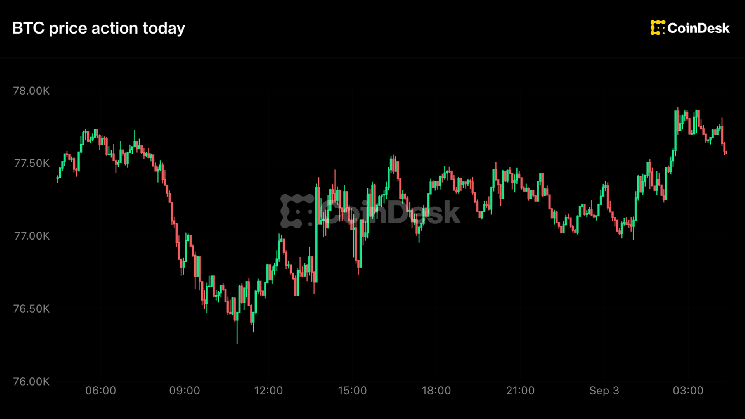
Bitcoin traded just above $77,600 during Asian morning hours on Thursday, gaining roughly 1.5% over 24 hours after dipping to a 24-hour low of $76,400 in late U.S. hours. The advance came despite a hawkish shift in rates expectations, with markets pricing the odds of a Federal Reserve hike at next week's meeting near 66%.
Among the major cryptocurrencies, $XRP led the way at $1.36, up almost 3%. BNB added nearly 2% to just under $692, while solana rose 2% to hold the $100 line. Tron climbed about 1% to roughly 33 cents, and hyperliquid's $HYPE was flat just above $82. Ether lagged the board at just under $2,400.
On a seven-day basis, ether is down almost 4%, tron about 3%, $XRP roughly 3% and bitcoin about 1%, leaving zcash at $817 and $HYPE as the only majors posting weekly gains.
Analysts at Bitfinex said in an email that the average cost basis of every active investor on the network stood at $76,350, and bitcoin came within $50 of that level before buyers stepped in. That level has been absorbing sellers who bought in February and March throughout the week, allowing them to exit at breakeven rather than at a loss. Holding above a broad average cost basis is often read as a sign that a critical mass of holders is not underwater, reducing forced-selling pressure.
The firm cautioned that a pullback could arrive in the coming weeks, citing seasonality. "September has historically been a bearish month for $BTC, with an average return of -2.95 percent since 2013," the analysts said. "With August's momentum carrying into the month, we expect that any intra-month correction leaves the odds in favour of continuation higher on the higher timeframes."
Bitcoin held its ground even as the bond market moved sharply in the opposite direction. Renewed U.S. strikes near the Strait of Hormuz pushed crude oil sharply higher and revived the inflation trade, dragging the ten-year Treasury yield to just above 4.8% — its highest close since 2023 — and firming the dollar index to just under 100. Rising yields and a stronger dollar have historically weighed on risk assets, including crypto, because tighter financial conditions reduce appetite for speculative positions, making bitcoin's resilience here notable. Equities took the move in stride, with the S&P 500 closing at 7,646 and the Dow adding roughly 277 points, while gold settled near $4,418.
On-chain and flow data painted a mixed picture. Labelled entities sent roughly 3,700 $BTC onto exchanges over the past week, spot ETFs shed about $236 million, and stablecoin supply has flattened near $310 billion after growing every day through August's advance. Flattening stablecoin supply matters because stablecoins are a common on-ramp for crypto purchases; stagnant growth can signal reduced fresh capital entering the market.
"That combination suggests the recovery still lacks consistent spot-flow confirmation," said Nicolai Søndergaard, senior research analyst at Nansen.
Looking ahead, Friday's nonfarm payrolls report settles the September meeting, and the options market is positioned around it. Downside protection sits between $68,000 and $75,000, struck for the window from the payrolls release into the CPI release on Sept. 11, 2026, at 8:30 a.m. ET, while upside exposure is held in calls above the current range and perpetual leverage remains well below its August peak — a sign that, unlike during the summer run-up, traders are not heavily leveraged into this move.

