Bitcoin–Gold Correlation Climbs to 0.50 as Nasdaq Link Hits Yearly Low
Key Takeaways
- •Bitcoin's 90-day correlation with gold reached +0.50, more than doubling since the start of 2026 and nearly matching the 2020 pandemic record.
- •Bitcoin's 90-day correlation with the Nasdaq 100 fell to roughly 0.30, its lowest level in one year.
- •The US Treasury announced on August 19 that it would double long-dated debt buybacks from $2 billion to at least $4 billion per operation.
- •Investors increasingly view Bitcoin and gold as hedges against currency debasement as US debt reaches about $40 trillion.
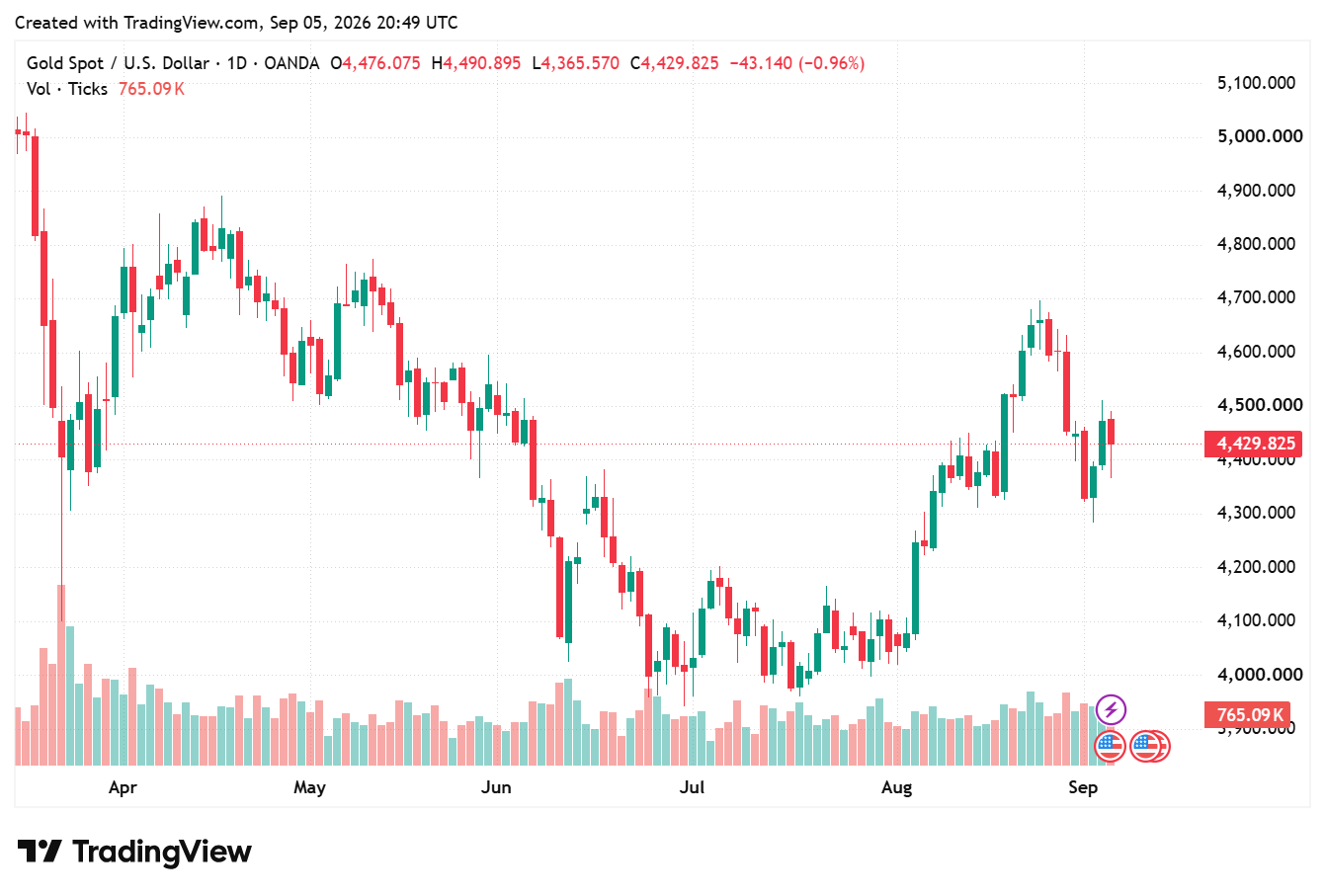
- •Gold trades near $4,430 per ounce and Bitcoin hovers around $81,000.
Bitcoin and gold are moving closer together as investors shift toward scarce assets amid growing fiscal and currency concerns. The 90-day correlation between Bitcoin and gold has reached +0.50, more than doubling since the start of 2026. A reading of +0.50 indicates a moderate positive relationship, meaning the two assets have moved in the same direction roughly half the time over the rolling 90-day window.
At the same time, Bitcoin's correlation with the Nasdaq 100 has fallen to roughly 0.30, marking a one-year low. The divergence signals a sharp change in how BTC has traded alongside traditional markets this year. Bitcoin has historically traded with a high correlation to tech-heavy equity indices, particularly during the 2020–2022 period of loose monetary policy, so the decoupling marks a notable shift in its market behavior.
Bitcoin–Gold Correlation Reaches +0.50
The Kobeissi Letter reported that Bitcoin's 90-day correlation with gold now stands at +0.50, nearly matching the record reached during the 2020 pandemic. The current reading has more than doubled from the start of 2026.
Bitcoin and gold are increasingly moving together: The 90-day correlation between Bitcoin and gold prices is up to +0.50, almost matching the all-time high set during the 2020 pandemic. This figure has more than doubled since the start of the year. By comparison, following the… pic.twitter.com/9Ag9mP7pJV — The Kobeissi Letter (@KobeissiLetter) September 5, 2026
https://x.com/KobeissiLetter/status/2096269626015629679?ref_src=twsrc%5Etfw
By comparison, after the 2022 bear market recovery, Bitcoin's 90-day correlation with gold reached only +0.30.
Bitwise and Bloomberg data through August 31 also put the Bitcoin–gold correlation at +0.50, showing the relationship has strengthened considerably in recent months.
The shift accelerated after the US Treasury announced changes to its long-dated debt buyback operations. On August 19, the Treasury said it would double buybacks from $2 billion to at least $4 billion per operation. The move came amid ongoing attention to the Treasury market, where buyback operations are used to support liquidity in long-dated securities.
Bitcoin Correlation With Nasdaq Falls to One-Year Low
Bitcoin's relationship with the Nasdaq 100 has moved in the opposite direction. The 90-day correlation has declined to roughly 0.30, according to the Kobeissi Letter — Bitcoin's lowest correlation with the Nasdaq 100 in one year. The divergence puts greater focus on BTC's relationship with gold and other scarce assets.
Investors increasingly view both Bitcoin and gold as potential hedges against currency debasement. US debt has reached about $40 trillion, adding to concerns surrounding long-term fiscal pressures. Bitcoin's fixed supply cap of 21 million coins and gold's physical scarcity are the attributes frequently cited in this framing.
Gold has also attracted central-bank demand amid geopolitical uncertainty. The Netherlands, for example, moved 86 tonnes of gold to London, reflecting continued activity around the traditional reserve asset. Central banks globally have been net gold buyers in recent years, a trend documented by the World Gold Council.
Crypto Tice separately argued that gold's recent pause could precede greater attention toward Bitcoin. Its analysis points to previous periods when profits from gold shifted toward BTC after gold reached new highs.
https://x.com/CryptoTice_/status/2096267115921891573?s=20
Gold currently trades near $4,430 per ounce, while Bitcoin hovers around $81,000. The two assets now show a much closer 90-day price relationship than earlier this year. Analysts and market observers are likely to watch whether the correlation holds, deepens, or reverses as fiscal policy developments and Treasury operations continue to unfold.

