Bitcoin Futures-to-Spot Volume Ratio on Binance Hits New All-Time High
Key Takeaways
- •Binance's futures-to-spot volume ratio has reached an all-time high of 7.82x, signaling that derivatives now dominate Bitcoin price discovery.
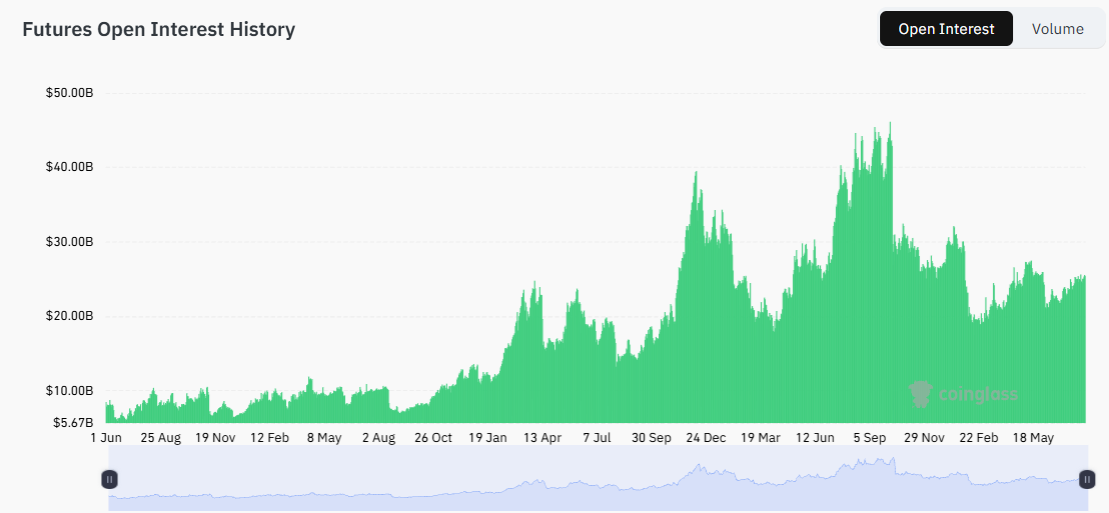
- •Binance's BTC open interest stood at $24.47 billion as of August 6, down significantly from over $44 billion in October 2025.
- •Although most Binance accounts hold long positions, the majority of allocated liquidity by total value is directed toward shorting BTC.
- •BTC spot demand has declined for ten consecutive months, with an excess supply of approximately 72,000 coins currently in the market.
- •Bitcoin volatility has fallen to 1.17%, a compressed level that has historically preceded sharper directional moves when accumulated leverage unwinds.
Bitcoin price discovery has increasingly shifted toward the futures market as spot demand continues to weaken. On Binance, the ratio of futures to spot volumes has reached a new all-time peak, underscoring the growing dominance of derivatives in BTC trading. This structural shift means that price movements are increasingly driven by leveraged positioning rather than direct ownership, a dynamic that can amplify volatility when tight trading ranges break.
According to CryptoQuant data, futures volumes are approximately 7.82 times higher than spot trading volumes. Traders increasingly rely on derivatives rather than executing direct spot purchases and sales.
As of August 6, Binance open interest for BTC stood at $24.47 billion, down from over $44 billion in October 2025, according to Coinglass. Daily futures trading volumes reached $57.82 billion, while spot volume hovered at approximately $6 billion.
BTC traded largely sideways at $64,339.89, maintaining a 56.8% dominance of the cryptocurrency market. July closed in the green, marking a relatively strong month. Based on the liquidation heatmap, BTC remained confined to a tight range between $64,000 and $65,000.
On Binance, most accounts hold long positions. However, when measured by the total value of positions, the bulk of allocated liquidity is directed toward shorting BTC. Within this narrow price band, even a relatively modest price movement could trigger significant liquidations. In previous market cycles, BTC prices often needed to move by thousands of dollars to threaten leveraged positions.
Futures-to-Spot Ratio: Bullish or Bearish?
Over recent months, futures trading volumes have expanded at a faster pace than spot volumes. This trend reflects traders' appetite for short-term market strategies, leveraged risk-taking, and efforts to capitalize on BTC's range-bound price behavior. The expansion of derivatives products across major exchanges, including perpetual swaps and options, has made leveraged exposure more accessible to both retail and institutional participants.
The elevated ratio does not clearly signal a bullish or bearish direction, though it does point to increasing speculative activity. Futures dominance allows traders to react more swiftly to rapid price shifts without being constrained by spot order execution.
Despite the prevalence of futures trading, BTC volatility has remained low, declining to 1.17%. Under such conditions, traders can sustain relatively minor liquidations while attempting to extract gains from sideways market movement. Prolonged periods of compressed volatility in heavily leveraged markets have historically resolved into sharper directional moves as accumulated leverage unwinds.
BTC Spot Volumes Continue to Weaken
Spot BTC positions are increasingly used as hedges for futures trades. In 2026, both spot and futures markets have seen diminished volumes, resulting in reduced demand for holding spot positions.
The departure of retail traders has further depressed spot BTC buying, leaving whales and professional traders to assume greater risk through futures instruments.
According to analyst @darkfrost on X, BTC spot demand has been declining for the past ten months, still feeling the effects of the October 10 crash. In June, an additional 273,000 BTC entered the market, while the current excess supply stands at 72,000 BTC.
As Cryptopolitan reported, this prolonged period of weak demand coincided with Strategy's emerging pattern of selling BTC on a weekly basis. Treasury-focused companies may also withdraw as potential buyers, as Strategy's business model appears to unravel.
The combination of weak spot demand and short-term derivative trading suggests that BTC currently has fewer conviction positions. At its prevailing price range, BTC is not experiencing significant accumulation, continuing to raise questions about whether the market has reached a bear-market bottom. Among the indicators market participants are watching are spot ETF flow trends, exchange reserve levels, and the futures basis premium for signals about whether the current derivatives-heavy equilibrium will persist or give way to a more decisive directional move.

