Bitcoin Annual Losses on Track for First Back-to-Back Streak in 18 Years
Key Takeaways
- •Bitcoin fell 6.34% in 2025 and has dropped another 15.65% in 2026, trading near $74,107 on November 11 according to CoinGecko data.
- •To avoid back-to-back annual losses for the first time, Bitcoin must climb above its roughly $87,500 opening price for 2026 before December 31, a rebound of about 17.6% from the November 11 price.
- •Every negative calendar year since the network launched in January 2009 has been followed by a positive one, and even the 2018 and 2022 bear markets did not produce consecutive annual declines.
- •The roughly 21% compounded loss across 2025 and 2026 is far smaller than Bitcoin's 73.56% plunge in 2018 and 64.27% drop in 2022, and follows a 2024 gain of more than 120%.
- •Measured from its October 2025 peak of about $126,000 to a 2026 low below $58,000, Bitcoin's drawdown exceeds 50%, with analysts citing institutional investors, spot exchange-traded funds, and deeper liquidity as possible reasons for the smaller bear-market declines.
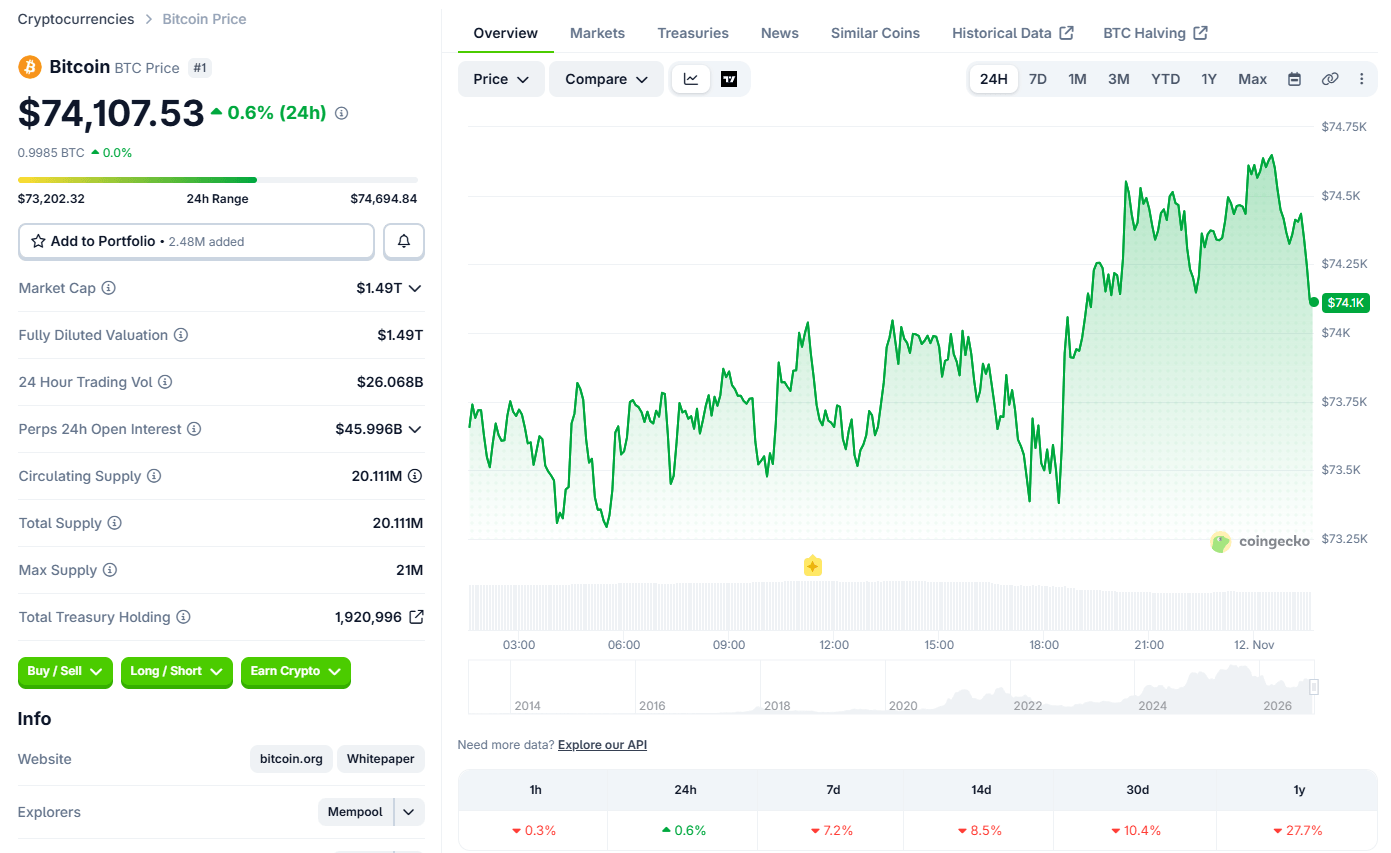
Bitcoin is on track to post annual losses in back-to-back years for the first time in the asset's 18-year trading history, an outcome that would be unprecedented for the largest cryptocurrency by market value. The cryptocurrency fell 6.34% in 2025 and has dropped another 15.65% in 2026. It traded near $74,107 on November 11, according to CoinGecko data, after changing hands near $73,850 as of November 10.
To avoid a second consecutive red year — a calendar year that closes below its opening price — Bitcoin must climb above its 2026 opening price of roughly $87,500 before December 31. Only 50 days, roughly seven weeks, remain for the market to complete that recovery this year. At the November 11 price, Bitcoin needs a gain of about 17.6% to finish 2026 in positive territory, a level that matches the annual opening price; measured from the November 10 price, the required rebound stood at roughly 18.5%.
Back-to-Back Losses Would Break an 18-Year Pattern
Historical data shows that every negative calendar year for Bitcoin has been followed by a positive one, a record that spans every year since the network launched in January 2009. Even the 2018 and 2022 bear markets did not produce consecutive annual declines. The pattern has held throughout the asset's existence, which makes the current setup unusual.
A finish below $87,500 would end that streak. Bitcoin opened 2026 near that price after the 2025 decline. If the price falls short, the two-year losing streak becomes official on December 31. In that case, Bitcoin's annual losses would stretch across 2025 and 2026, starting from the year in which the asset ended 6.34% lower. Such a streak would be new in Bitcoin's trading record.
A third consecutive decline in 2027 would extend the streak further. However, that scenario remains hypothetical at this stage.
Two Red Years Look Mild Beside Past Crashes
The combined decline from Bitcoin's annual losses in 2025 and 2026 comes to roughly 21% after compounding. By comparison, Bitcoin plunged 73.56% in 2018 and fell another 64.27% in 2022. Those crashes erased most of investors' holdings in each year, and both were far steeper than any decline in the current streak.
Bitcoin's 2024 performance adds context. The cryptocurrency surged more than 120% that year. As a result, investors who bought at the start of 2024 would still hold substantial gains, even after the decline since then. The roughly 21% combined loss also remains smaller than either individual crash year.
Past rebounds have followed deep losses as well. Bitcoin gained roughly 92% in 2019 after the 2018 collapse. It then rose more than 155% in 2023 following the 2022 downturn. Each rebound arrived in the year right after the crash. Thus, a bad year has not led to a prolonged downturn so far. Both of those recoveries, however, followed a single down year. A red close in 2026 would leave any rebound that follows without a precedent in Bitcoin's own record, because the asset has never before needed to recover from consecutive annual losses.
Peak-to-Trough Drop Paints a Deeper Picture
The picture changes when losses are measured from the market peak rather than the calendar year. Bitcoin reached about $126,000 in October 2025. It then fell below $58,000 during 2026, a move that represents a decline of more than 50%. TradingView price data illustrates the gap between the peak and the lows.
That figure is far larger than the roughly 21% combined loss shown across the two annual candles. The annual candlesticks capture only the movement between each January and December. Streak length and loss severity also differ, since a market can decline slowly across several years without ever suffering one catastrophic year.
Analysts have cited institutional investors, spot exchange-traded funds, and deeper liquidity as features of the current market. These factors may explain the smaller bear-market drawdowns. However, they have not removed major price crashes. As a result, Bitcoin's current cycle looks different from earlier ones.

