Strategy Reaffirms BTC Ambition Near $65K as Fed Rate-Hike Signals and Security Audit Findings Converge
Key Takeaways
- •Federal Reserve Bank of Cleveland President Beth Hammack signaled that the central bank may need to raise interest rates to bring inflation back to its 2% target, creating headwinds for Bitcoin as a non-yielding asset.
- •US-listed Bitcoin ETFs experienced approximately $4 billion in net outflows in June 2026, the largest monthly redemption since the products launched, contributing to a temporary drop to a 21-month low near $57,742.
- •A 16-person volunteer team called Bitcoin Red Team identified 4,962 potential issues across 390 open-source Bitcoin projects, with 720 classified as high or critical severity and 21.4% confirmed as genuine vulnerabilities.
- •The findings followed a Coldcard hardware wallet exploit that drained over $100 million from users, with Galaxy Research reporting that at least 15 attackers were involved in exploiting a flaw in the wallet's pseudo-random number generator.
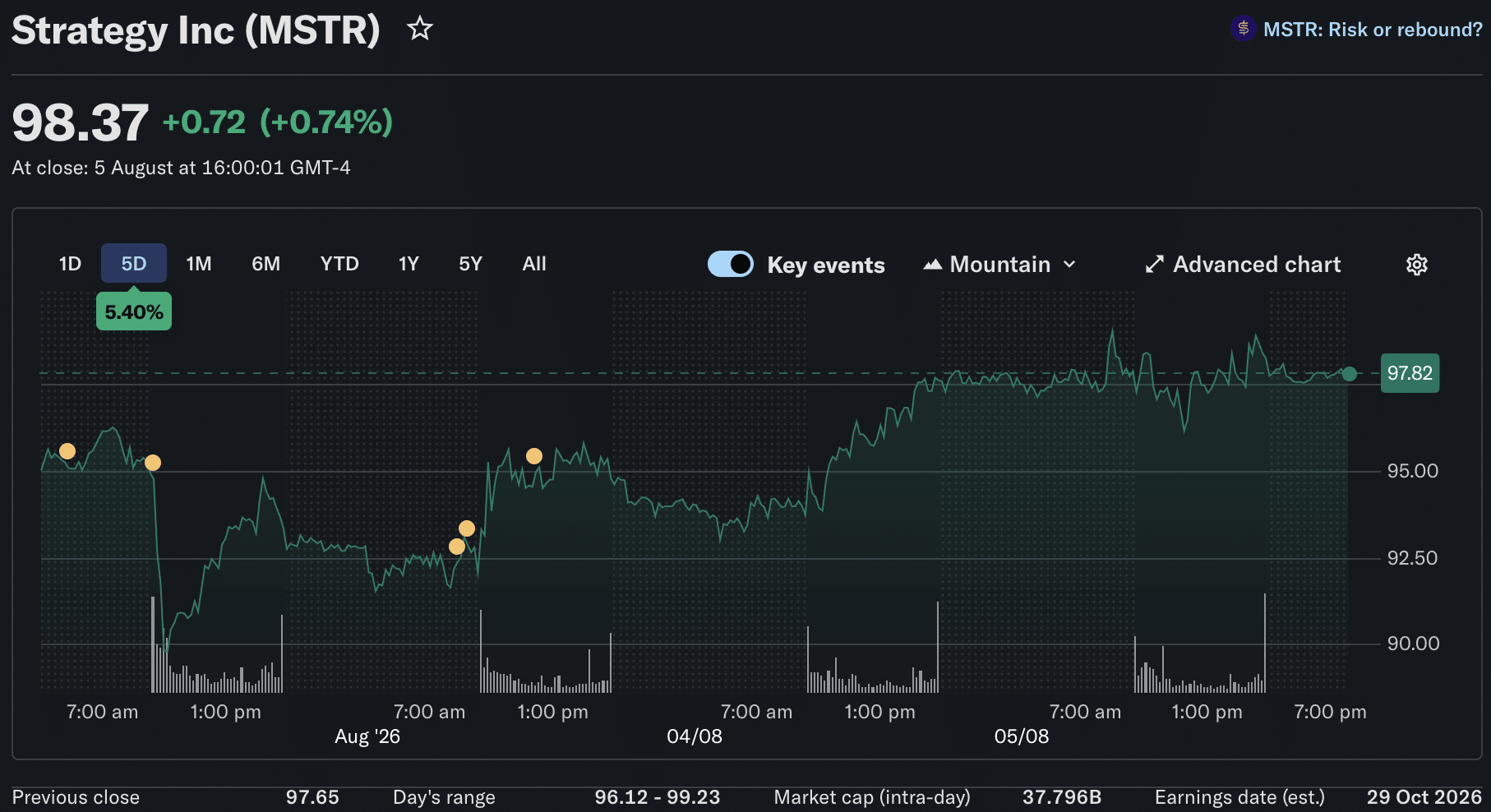
- •Strategy Inc. holds 842,138 BTC representing 4.01% of Bitcoin's total supply, with a market capitalization of $38.1 billion, and aims to become the world's largest company by market cap despite needing to close roughly an 80-fold gap with current leaders.
BTC is trading near $64,800 as three distinct forces converged this week to reshape the asset's risk and opportunity profile. A Federal Reserve official signaled openness to a rate hike, a volunteer security team published nearly 5,000 vulnerability findings across the Bitcoin ecosystem, and Michael Saylor reaffirmed Strategy's ambition to become the world's largest company by market capitalization. One of the most institutionally committed BTC buyers in history is doubling down precisely as macro headwinds and software-security concerns intensify.
The broader crypto market is up 1.6% over the past 24 hours, with total market capitalization at $2.29 trillion and daily trading volume at $55.1 billion.
The Macro Overhang and the Rate-Hike Warning
Federal Reserve Bank of Cleveland President Beth Hammack told CNBC that the central bank may need to raise interest rates to bring inflation back to its 2% target. The hawkish signal follows a broader pattern of Fed officials flagging upside inflation risks tied to tariffs, oil prices, and persistent services inflation.
Bitcoin is acutely sensitive to this dynamic. When the cost of capital rises, non-yielding assets face a structural headwind, as investors can earn higher returns by parking funds in Treasuries or money-market funds. This sensitivity has only intensified since the January 2024 approval of US spot Bitcoin ETFs, which tied BTC more directly to traditional portfolio flows and rate expectations.
US-listed Bitcoin exchange-traded funds saw roughly $4 billion in net outflows in June 2026, the largest monthly redemption since spot Bitcoin ETFs launched approximately two years ago. BTC briefly dropped to a 21-month low near $57,742 during that stretch before partially recovering to current levels.
Traders are now pricing a meaningful probability of a September or October rate increase, with each upcoming Consumer Price Index (CPI) release — the government's primary inflation gauge — functioning as a Bitcoin event as much as a macro one.
The Security Wake-Up Call: Bitcoin Red Team's 5,000 Findings
When the dust settles, we'll have to talk about the fact that not a single vulnerability was found by a US frontier model. Instead, we're spending $10k a day on open weights models like Kimi K3 and Qwen 3.8 to find vulnerabilities in Bitcoin infrastructure. It's a disaster. pic.twitter.com/7KSoqGnDOc
— calle (@callebtc) August 6, 2026
Just days after the Coldcard hardware wallet exploit drained over $100 million in Bitcoin from users, a 16-person volunteer group called Bitcoin Red Team launched a rapid AI-assisted review of open-source Bitcoin-related repositories — the publicly accessible codebases underlying wallets, libraries, and infrastructure tools across the ecosystem.
The group identified 4,962 potential issues across 390 projects in its first 29.8 hours of operation. Of those, 720 were classified as high- or critical-severity, and 21.4% had been reproduced and confirmed as genuine vulnerabilities.
Bitcoin developer Calle, one of the group's members alongside AnchorWatch CEO Rob Hamilton, noted the team was averaging approximately one critical exploit finding per hour per person.
The Coldcard incident involved attackers exploiting a flaw in the wallet's pseudo-random number generator (PRNG) — the code responsible for generating cryptographic keys — demonstrating that wallet-layer security can fail independently of Bitcoin's core protocol. According to Galaxy Research, the Coldcard PRNG vulnerability involved at least 15 attackers. The Red Team audit is a direct institutional response to that breach.
The findings do not indicate that Bitcoin's base layer, the core consensus protocol, is compromised. What they reveal is widespread fragility in the surrounding software stack: the wallets, libraries, and tooling that most users interact with daily. The distinction matters as institutional adoption deepens — ETF providers and corporate treasuries typically rely on qualified custodians rather than consumer hardware wallets, but the long tail of self-custodied BTC remains exposed to exactly the class of vulnerabilities the Red Team surfaced.
Strategy's BTC Bet: The Numbers Behind the Ambition
In an August 5 post on X, Strategy Inc. — formerly MicroStrategy, the enterprise software company that adopted a bitcoin treasury strategy in August 2020 and rebranded in 2025 — reaffirmed its ambition to become the world's largest company by market cap, as outlined in its Q2 2026 financial results.
The company reported holding 842,138 BTC — 4.01% of Bitcoin's total supply — along with a $58.4 billion gross reserve and a $36.3 billion net reserve. Its market cap stands at $38.1 billion, with $6.75 billion in debt and 5.06% net leverage. To put the ambition in perspective, the world's largest publicly traded companies currently exceed $3 trillion in market capitalization, meaning Strategy would need to close roughly an 80-fold gap.
Strategy's capital structure combines BTC as a reserve base, STRC as a capital-raising tool for income-oriented investors, and MSTR common stock for equity investors. The company targets STRC sales of 10% to 20% of BTC reserves and aims to double bitcoin per share within seven years.
CEO Phong Le has described Strategy as the "JPMorgan of the crypto economy," highlighting its bitcoin-focused capital market approach. Since adopting its bitcoin standard in August 2020, MSTR has delivered a 42% annualized return, surpassing Bitcoin's 32%.
However, the financing overhaul introduced in 2026 raised concerns about the firm becoming a more opportunistic accumulator of BTC, affecting market perception and contributing to BTC's mid-2026 weakness. Recent STRC buyback initiatives provide insight into these balance-sheet decisions.

