Fed and Bank of Japan Rate Decisions Put Focus on Bitcoin, Oil and the Yen
Key Takeaways
- •The Federal Reserve has held its target rate range at 3.5% to 3.75% since December 2025, and another hold would mark its fifth straight pause.
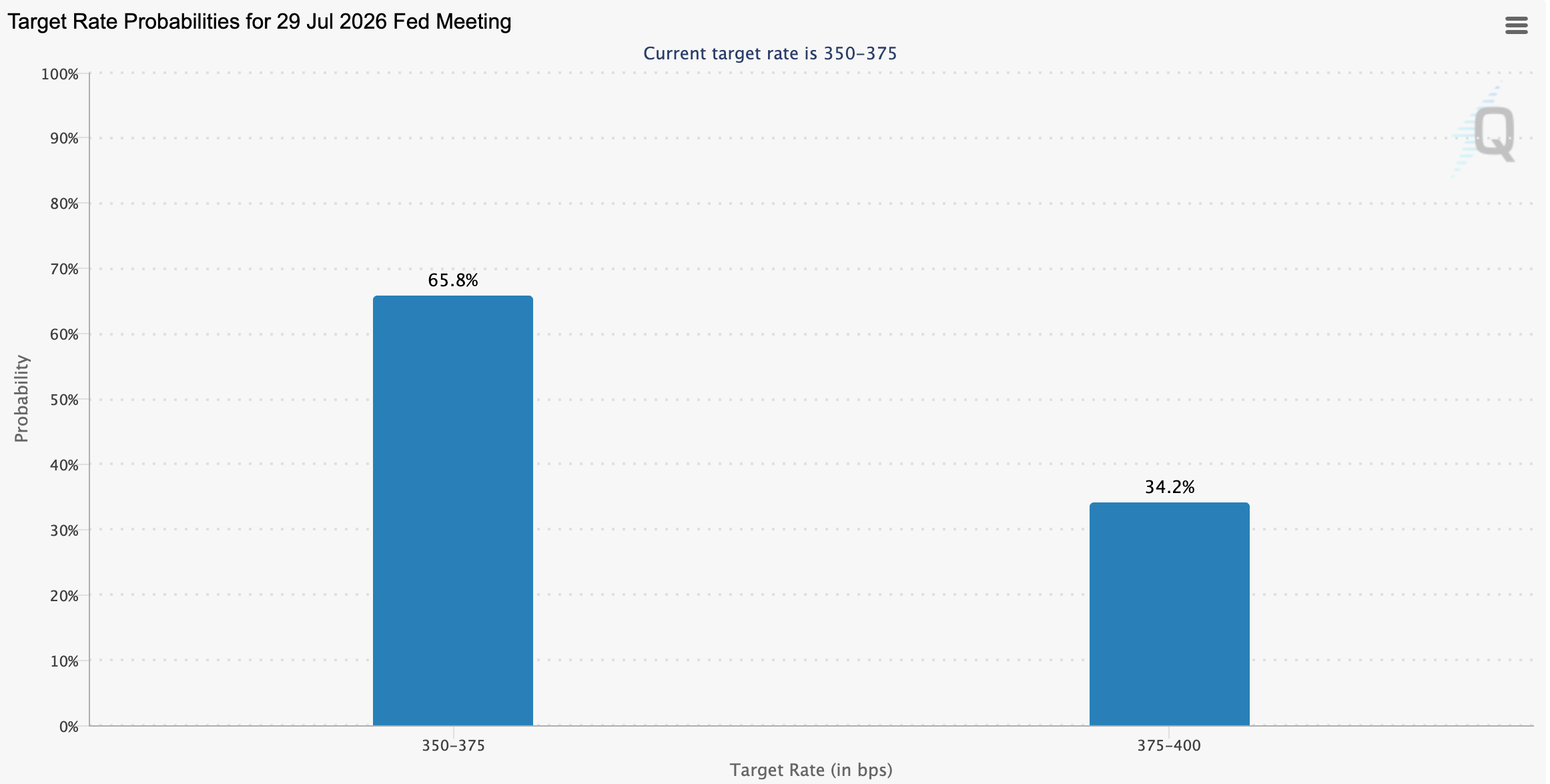
- •CME FedWatch pricing put the chance of a July Fed rate hike at 34.2% after reaching about 38% on July 23.
- •Brent crude’s move above $100 a barrel has raised concern that July inflation could rebound despite June consumer prices falling 0.4% month over month.
- •The Bank of Japan is expected to keep its policy rate at 1% on July 31 as the yen trades near its weakest level in four decades.
- •A Reuters poll found that 86% of 87 economists expect the Bank of Japan to raise rates to 1.25% by the end of December.
The Federal Reserve and the Bank of Japan are both scheduled to announce interest rate decisions next week, with the two meetings two days apart. Bitcoin (BTC) enters the pair of events trading near $64,000.
Markets broadly expect both central banks to leave rates unchanged. The main uncertainty is in Washington, where roughly one-third of futures pricing still points to the possibility of a rate increase.
For Bitcoin and other risk assets, the two meetings matter less as isolated rate decisions than as signals on global liquidity, funding costs and currency volatility. A hawkish Fed can support the dollar and keep real yields elevated, while a shift in Japanese policy can affect one of the world’s largest funding currencies.
Fed Hike Odds Rose as Oil Prices Rebounded
The Federal Reserve has kept its target range at 3.5% to 3.75% since December 2025. If policymakers hold rates steady on Wednesday, it would mark the fifth consecutive pause.
Market pricing shifted quickly during July. The CME FedWatch Tool placed the probability of a July rate hike near 38% on July 23, up from 12% one week earlier.
The move was driven largely by oil. Brent crude settled above $100 a barrel on July 23, its first close above that level since May. Those odds have since eased to 34.2%, leaving a hold as the majority outcome in futures pricing.
June inflation data had suggested a different path. Consumer prices fell 0.4% month over month, reducing the annual inflation rate to 3.5% from 4.2%.
That relief may not persist. Renewed hostilities and the surge in oil prices could lift July inflation. Energy prices feed directly into headline inflation and can also influence expectations for future price pressures, which makes the Fed’s language on inflation risks important even if rates are unchanged. The next inflation reading is scheduled for August 12.
The Fed’s July meeting will not include a Summary of Economic Projections. As a result, the central bank’s policy statement and press conference will be the only formal outputs from the meeting, putting more weight on any changes to the inflation, labor-market and risk-balance language.
Yen Pressure Is a Key Variable for Bitcoin
In Japan, Nikkei reported that the Bank of Japan is expected to keep its policy rate at 1% on July 31. Even so, the yen remains the main pressure point. The currency slid past 163 per dollar last week, its weakest level in four decades.
Japanese officials have become more vocal about the exchange rate. Finance Minister Satsuki Katayama said the government was prepared to enter the market if necessary.
“Our stance has not changed at all. If there is a need for it, we will take decisive action appropriately at any time,” Katayama told reporters, according to Reuters.
A Bank of Japan hold on Friday would not send a clear directional signal to Bitcoin by itself. Rates would remain unchanged, and the cost of yen funding would stay the same.
The larger rate risk comes later in the calendar. Reuters reported that 86% of 87 economists it polled expect the Bank of Japan to raise rates to 1.25% by the end of December. Among those who identified a specific month, 53% chose December and 35% selected October.
Kazutaka Maeda of Meiji Yasuda Research Institute, who expects a move in October, said the central bank may have room to move more quickly.
“The pace of rate hikes, which until now has been roughly once every six months, may accelerate somewhat due to the need to counter inflationary and yen-selling pressure,” he said.
Japanese monetary policy matters for crypto markets because of its effect on borrowing costs. Investors can borrow yen cheaply and use those funds to buy higher-yielding assets abroad, including crypto.
A stronger yen can disrupt that trade. Yen-denominated loans become more expensive to repay, margin calls can follow, and traders may sell liquid assets first. Bitcoin is among the assets exposed to that dynamic and trades around the clock, meaning it can absorb selling before equity markets open.
“Any hint of aggressive rate hikes or intervention from the BOJ could pump the yen, causing a massive carry trade unwind. Remember August 2024? The next unwind could be even more brutal,” Crypto Rover said on X: https://x.com/cryptorover/status/2081110236878843949
For that reason, the Bank of Japan’s Friday meeting may matter less for the headline rate decision than for the signals in its Outlook Report and Governor Kazuo Ueda’s comments on the yen. Traders will also be watching whether Japanese officials pair verbal warnings with action in currency markets, because intervention risk can change funding conditions even without an immediate rate hike.

