Bitcoin Slips Below $79,000 as XRP Leads Losses on Fed Rate-Hike Bets
Key Takeaways
- •Bitcoin fell below $79,000 in spot market trading as the broader crypto market moved lower.
- •XRP led losses among major tokens and dropped more sharply than Bitcoin during the sell-off.
- •The decline followed a shift in trader expectations toward a possible Federal Reserve interest rate hike.
- •Higher rate expectations can make cash and bond investments more attractive than speculative assets such as crypto.
- •The article says the move reflects macro-driven price pressure rather than a problem inside crypto itself.
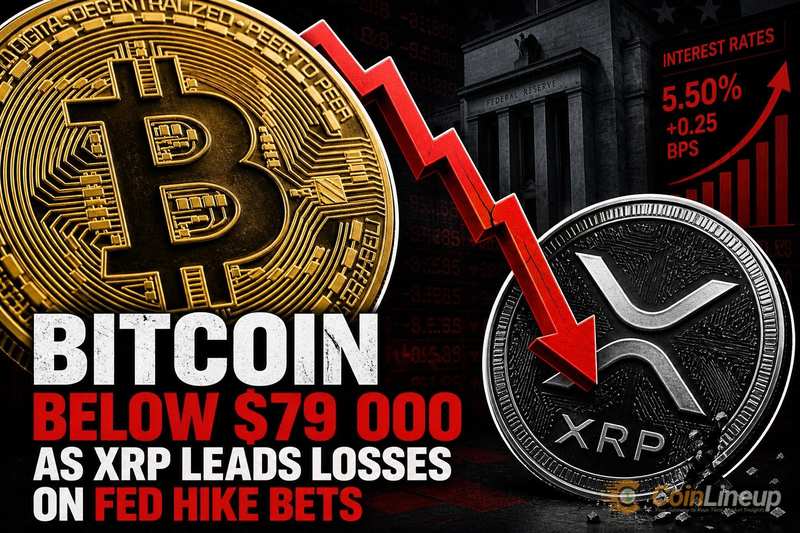
Bitcoin fell below $79,000 in spot market trading, with XRP leading losses among major tokens, as some traders shifted to betting the Federal Reserve could raise interest rates rather than cut them. The move was a short-term reaction to changing rate expectations, not a change in crypto's long-term story, and other major tokens turned lower alongside the largest cryptocurrency.
For someone holding a small amount of Bitcoin on an exchange like Coinbase, the value of that holding fell. Nothing about the coins changed — the price buyers were willing to pay simply dropped.
For related coverage, see Bitcoin Rainbow Chart Falls Below "Fire Sale" Level and Aethir Contains Bridge Hack While Losses Stay Below $90K.
Why XRP fell faster than Bitcoin
XRP, the token linked to payments company Ripple, led losses among the majors, falling more sharply in percentage terms than Bitcoin during the same sell-off.
Smaller tokens like XRP often move more violently than Bitcoin when markets turn cautious. When traders want less risk, they tend to sell their riskier holdings first, and that selling pressure hits altcoins harder. A similar pattern appeared in an earlier session when Bitcoin held firm while altcoins dropped.
An altcoin is simply any cryptocurrency other than Bitcoin. Because these tokens are usually smaller and less liquid, the same amount of selling can move their prices further.
Traders reprice the odds of a Fed hike
The trigger was a shift in expectations about the U.S. Federal Reserve. Some traders began positioning for a possible interest rate hike, a move the central bank uses to slow the economy and cool inflation. The rate at issue is the federal funds rate, which the Fed adjusts at meetings of its Federal Open Market Committee (FOMC), and traders price the odds of those adjustments in interest-rate futures markets.
Higher interest rates make safe, income-paying investments like savings accounts and government bonds pay more. That makes speculative assets such as crypto look less attractive by comparison, which can pull money out of the market. The Fed's most recent policy meeting minutes remain the key official document traders are reading for clues on its next step.
Crypto's sensitivity to Fed policy is a relatively recent feature of the market. Bitcoin was once pitched as an asset that would trade independently of central bank policy, but in recent years it has moved more in line with other risk assets, such as technology stocks, whenever rate expectations shift — which is why a repricing of Fed odds can pull the entire crypto market lower at once.
It is important to be clear: a rate hike is not confirmed. Traders are repricing the odds, and that repricing alone was enough to pressure prices. Those odds can shift again in either direction as new inflation or employment data arrives before the Fed's next meeting. The actual decision rests with the Fed.
Falling prices also push more wallets underwater, meaning holders who bought higher are now sitting on paper losses. Earlier this cycle, the number of Bitcoin addresses in loss topped 13 million, showing how quickly sentiment can turn during a drop.
What a regular holder should watch
The practical takeaway is simple: this sell-off is being driven by macro expectations, not by a problem inside crypto itself.
Two things matter from here — what the Fed actually signals about rates, and whether Bitcoin holds nearby support levels. In past pullbacks, traders watched closely as Bitcoin defended key support to gauge whether selling was slowing.
For a newcomer considering a first purchase, the lesson is that crypto prices react fast to interest rate news, sometimes within hours. Understanding that link matters more than trying to time any single dip.
Disclaimer: This article is for informational purposes only and does not constitute financial or investment advice. Cryptocurrency and digital asset markets carry significant risk. Always do your own research before making decisions.
