Bitcoin Falls to $78.4K as Fed's Warsh Downplays Soft Inflation Data
Key Takeaways
- •Bitcoin dropped to approximately $78,400 after Fed official Kevin Warsh downplayed recent soft inflation readings.
- •Warsh's remarks cooled trader expectations that the Federal Reserve would soon shift toward easier monetary policy.
- •Lower interest rates generally support Bitcoin by encouraging investors toward riskier assets, so hawkish Fed commentary tends to pressure the price.
- •Bitcoin previously climbed above $77,500 when Fed rate-hike odds fell, illustrating the tight link between Fed expectations and the cryptocurrency.
- •Traders will monitor whether other Fed policymakers echo Warsh's caution and how institutional flows, including Bitcoin ETF demand, influence sentiment.
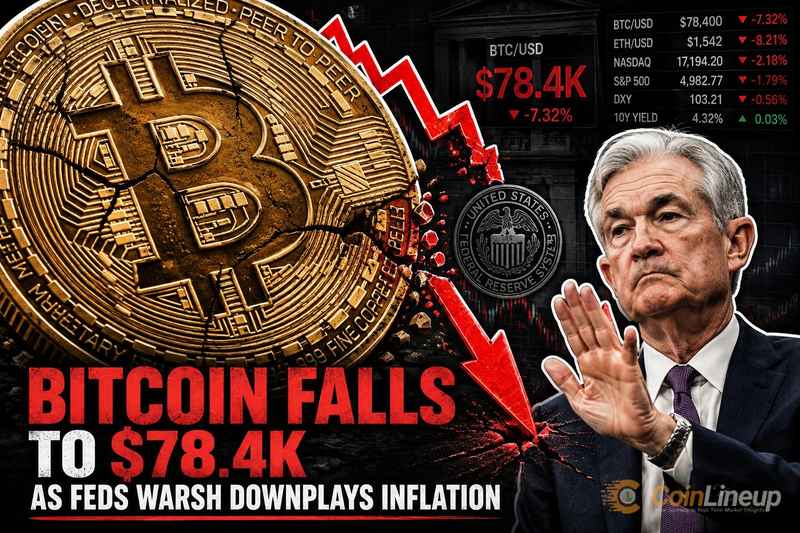
Bitcoin slid to around $78.4K after Federal Reserve official Kevin Warsh played down recent soft inflation data, cooling expectations that easier monetary policy was near. The decline highlights how quickly a single Fed comment can move the world's largest cryptocurrency.
Bitcoin Drops to $78.4K as the Market Reacts
Bitcoin's price fell to about $78.4K, a level that caught the attention of traders watching for macro cues, as reported by NFT Plazas. The move came just as Fed commentary hit the wires.
The pullback matters because Bitcoin often reacts quickly to signals from the Federal Reserve. When central bank talk turns cautious, risk assets like Bitcoin frequently feel the pressure first.
This is a story about one asset and one catalyst. It is not a general explainer on inflation, and the focus stays on Bitcoin's slide rather than the wider crypto market.
Why Warsh's Inflation Remarks Mattered for Bitcoin
Kevin Warsh is a Federal Reserve figure whose views carry weight with markets, in part because he has long been associated with a more hawkish, inflation-focused approach to monetary policy. He downplayed the latest soft inflation data in official Fed remarks. That stance surprised traders who had leaned toward easier policy.
"Soft inflation data" simply means recent readings showed prices rising more slowly than before. Traders usually interpret that as a reason for the Fed to consider lower interest rates. The Fed's policy decisions ripple through markets because interest rates set the baseline cost of money across the financial system, shaping how willing investors are to hold riskier assets.
Lower rates tend to help Bitcoin, since cheaper money often pushes investors toward riskier bets. By dismissing the softer numbers, Warsh signaled that rate cuts may not come as soon as hoped, and Bitcoin sold off in response.
Bitcoin has moved on Fed expectations before. It recently climbed back above $77,500 as lower Fed hike odds lifted majors, showing how tightly the two are linked.
What the $78.4K Move Signals for Traders Next
In the near term, traders will watch whether Warsh's tone reflects a wider shift among Fed officials. Fed policy is set collectively, so a single official's remarks matter most if they signal an emerging consensus. If more policymakers echo his caution, pressure on Bitcoin could continue.
The key question is whether macro commentary keeps outweighing the softer inflation reads. As long as Fed voices sound hawkish, positive inflation surprises may struggle to lift the price.
Institutional flows are also worth watching. Recent coverage showed Bitcoin ETFs rebounding while Ethereum and XRP streaks ended, a reminder that fund demand can shift sentiment quickly.
For someone holding a little Bitcoin, the practical takeaway is simple. Short-term swings like this one are often tied to Fed messaging, not to any change in Bitcoin itself. Watching Fed commentary can help explain why the price moves the way it does.
Disclaimer: This article is for informational purposes only and does not constitute financial or investment advice. Cryptocurrency and digital asset markets carry significant risk. Always do your own research before making decisions.
