Bitcoin ETFs Post $389M Outflows as Whales Buy $7B Worth of BTC in Q4
Key Takeaways
- •U.S. spot Bitcoin ETFs posted $389 million in net outflows on November 27, marking their eighth consecutive trading day of withdrawals.
- •Ethereum ETFs logged $69.27 million in daily outflows, extending their redemption streak to ten straight sessions, with BlackRock's ETHA accounting for $57.27 million.
- •BlackRock's IBIT led Bitcoin fund redemptions at $327.2 million, and none of the U.S. spot Bitcoin ETFs recorded net inflows during the session.
- •Wallets holding 1,000 to 10,000 BTC purchased 121,117 coins worth over $7 billion between September 30 and November 21, a departure from their selling in seven of the previous nine fourth quarters.
- •ETF investors are withdrawing capital while large holders add direct positions, leaving the market's direction dependent on whether fund outflows ease.
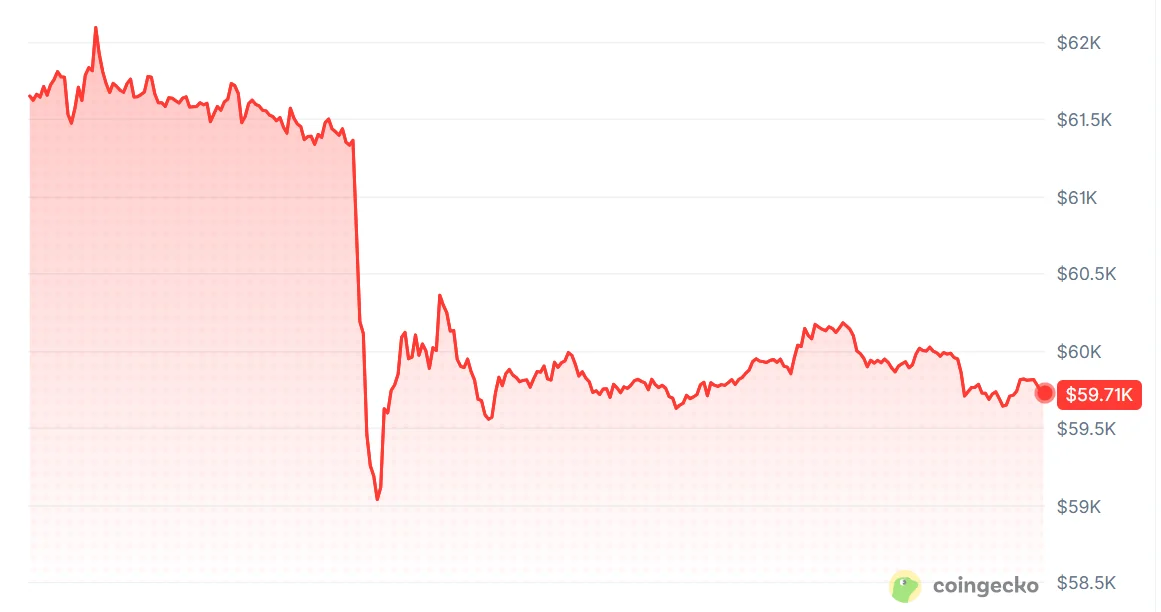
U.S. spot Bitcoin exchange-traded funds recorded $389 million in net outflows on November 27, extending their withdrawal streak to eight consecutive trading days. Ethereum ETFs logged $69.27 million in outflows the same session, marking their tenth straight trading day of net withdrawals.
BlackRock's IBIT drove the Bitcoin fund redemptions with $327.2 million in outflows, while the firm's Ethereum product ETHA lost $57.27 million. Bitcoin traded at $59,762.10, down 2.97% over 24 hours, according to CoinGecko. Even so, large holders kept accumulating, adding 121,117 BTC worth more than $7 billion between September 30 and November 21.
Bitcoin ETF Outflows Deepen as Institutional Demand Weakens
Data from SoSoValue showed $389 million in net withdrawals from U.S. spot Bitcoin ETFs on November 27, another down session for a product category that only began trading in January 2024. Farside Investors figures placed IBIT at $327.2 million in outflows, followed by Grayscale's GBTC at $23 million. Fidelity's FBTC lost $20.8 million, BITB recorded $12.3 million in withdrawals, and ARKB registered another $5.7 million. No fund in the group recorded net inflows; BTCO, EZBC, BRRR, HODL, BTCW, MSBT, and BTC all reported zero flows for the session.
𝗕𝗶𝘁𝗰𝗼𝗶𝗻 𝗘𝗧𝗙 𝗙𝗹𝗼𝘄 (𝗨𝗦$ 𝗺𝗶𝗹𝗹𝗶𝗼𝗻) – 2026-11-27
TOTAL NET FLOW: -389
IBIT: -327.2 FBTC: -20.8 BITB: -12.3 ARKB: -5.7 BTCO: 0 EZBC: 0 BRRR: 0 HODL: 0 BTCW: 0 MSBT: 0 GBTC: -23 BTC: 0 pic.twitter.com/amP9OA0YHN
— Farside Investors (@FarsideUK) November 28, 2026
Ethereum ETFs, which arrived in July 2024, faced parallel selling pressure. Their $69.27 million daily outflow extended the withdrawal streak to ten trading sessions, with BlackRock's ETHA accounting for $57.27 million of the total, indicating concentrated selling in the segment's largest product.
Continued ETF withdrawals can weaken institutional demand for Bitcoin and Ethereum. These products allow investors to gain exposure to the assets without directly holding the underlying cryptocurrencies, and sustained redemptions may force issuers to reduce their holdings, potentially adding selling pressure during market downturns.
Bitcoin Whales Accumulate as Traders Watch Recovery Signals
Despite the fund outflows, Bitcoin whales continued expanding their positions. Analyst Quinten reported that wallets holding between 1,000 and 10,000 BTC accumulated another 121,117 BTC in the fourth quarter. Their combined purchases exceeded $7 billion even as Bitcoin fell nearly 30% since the end of September.
The accumulation contrasts with historical behavior. The same whale cohort reportedly reduced its holdings in seven of the previous nine fourth quarters, making the current buying a notable break from past patterns. The activity could indicate confidence in Bitcoin's longer-term valuation despite short-term weakness.
Meanwhile, analyst Killa pointed to Bitcoin's historical recovery patterns following previous bear-market bottoms. Bitcoin recovered its 2018 decline within six months after bottoming in December, and the 2022 cycle produced an even faster recovery after November's low.
If you look at every $BTC cycle, we've bottomed in Q4 2/3 times. The only cycle that didn't bottom in Q4 was 2014, when BTC bottomed in January.
But back then, BTC had a market cap of around 2B, which I don't think is comparable to a 1.5T market now.
In fact, we can see from… pic.twitter.com/5tUhJbYO2e
— Killa (@KillaXBT) November 27, 2026
Killa suggested that if this pattern continues, Bitcoin could recover toward $95,000 within six months. Historical cycles, however, do not guarantee similar outcomes, particularly as today's market structure differs considerably from earlier eras.
Conflicting Signals as ETF Selling Meets Whale Buying
Bitcoin now faces two opposing currents. ETF investors are withdrawing capital through regulated products, while large holders are accumulating aggressively through direct purchases. The divergence between institutional fund flows and on-chain whale activity has become the market's central signal as BTC attempts to stabilize.
Whether whale buying can offset institutional selling remains uncertain. The market's direction from here depends on whether ETF outflows ease and broader demand strengthens. The next daily flow reports from SoSoValue and Farside Investors will offer the first indication of whether the outflow streaks are breaking; until then, the two groups are moving in opposite directions, one reducing exposure through fund redemptions and the other adding to direct positions.
Source: Blockonomi

