Bitcoin ETF Inflows Rise as Coldcard Hack Fuels Custody Debate
Key Takeaways
- •U.S. spot Bitcoin ETFs recorded approximately $620 million in inflows after the Coldcard exploit, though no evidence directly ties affected wallet users to those flows.
- •The Coldcard breach reportedly affected 5,200 addresses with an estimated 1,816 BTC worth about $116 million stolen, making it the third-largest crypto hack of 2026.
- •TRM Labs reported that attackers have deposited 64.9 BTC and 200 ETH into the Wasabi and Tornado Cash mixers, while the majority of stolen funds remain under consolidation.
- •Bloomberg analyst Eric Balchunas argued that large traditional finance institutions running crypto ETFs may inspire greater customer trust than small hardware wallet developers in the wake of security breaches.
- •TRM Labs noted that the Coldcard incident demonstrates that self-custody shifts risk rather than eliminating it entirely, a point echoed by broader industry commentary on the custody debate.
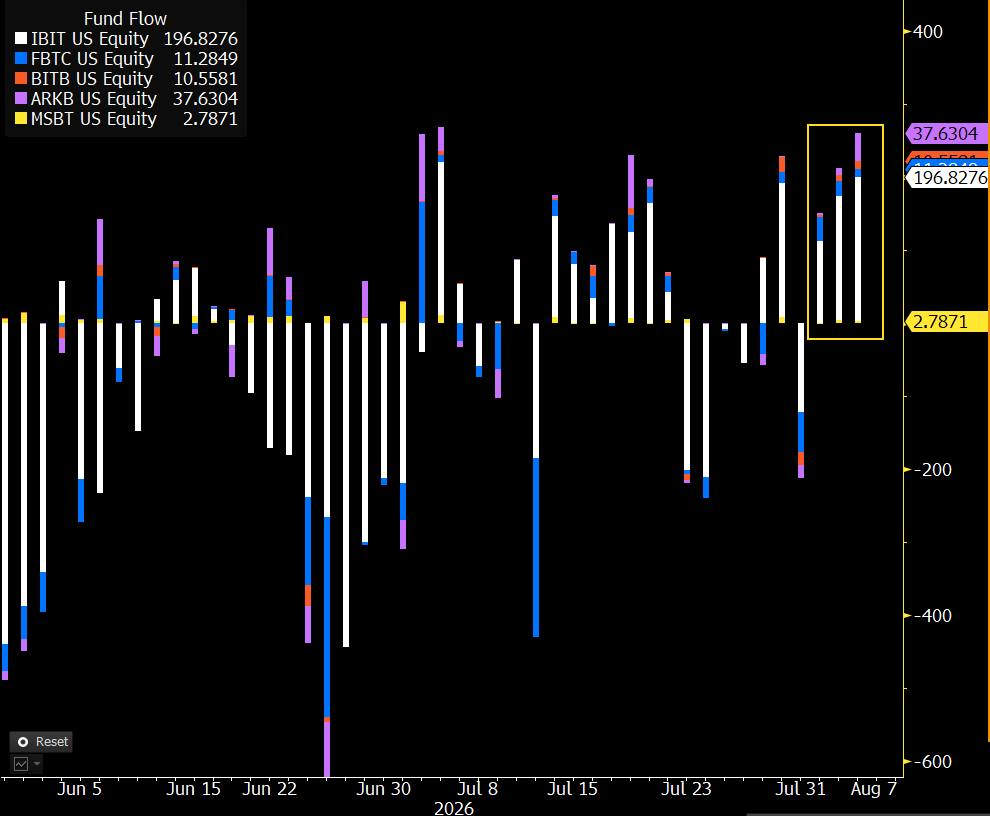
U.S. spot Bitcoin exchange-traded funds recorded about $620 million in inflows after the Coldcard hardware-wallet exploit, according to Bloomberg Senior ETF Analyst Eric Balchunas.
Coldcard, produced by Canada-based Coinkite, is a popular hardware wallet among Bitcoin holders who prioritize self-custody. The exploit has drawn fresh attention to a long-standing tension in the crypto community between managing one's own private keys and relying on regulated intermediaries. Since U.S. spot Bitcoin ETFs launched in January 2024, they have offered investors BTC exposure without personal key management — a model that some view as a safer alternative in light of the breach.
Balchunas pointed to the timing in a post on X and suggested the two developments could be connected. However, there is no evidence that Coldcard users directly caused the ETF inflows. The inflow figure reflects flows recorded after the exploit, not transfers traced to affected wallet holders.
Balchunas previously argued that security concerns could lead some Bitcoin holders to reconsider self-custody and move toward crypto ETFs. Crypto entrepreneur Nic Carter also said some users may shift toward institutional custody. At the same time, strong Ethereum ETF inflows during the same period suggest that broader institutional demand may also have supported the trend.
Balchunas links Bitcoin ETF demand to Coldcard hack
Balchunas said the move toward a Bitcoin ETF instead of self-custody is likely to be driven mainly by security concerns. He argued that traditional finance institutions running crypto ETFs are large businesses that may inspire more customer trust than cold wallet developers.
“Who are you gonna trust to not screw up the security of your bitcoin (or get it back if some scumbag does mess with it): a 5-man boutique in Canada or this guy and his 25,000-employee, $15T by-the-book empire?” he wrote.
He also defended crypto ETFs, saying they do not conflict with Bitcoin's anti-establishment ethos. Balchunas described ETFs as “lean and mean,” distinct from Wall Street even though they still operate within the traditional financial system. In his view, using a Bitcoin ETF does not amount to selling out.
The custody debate has surfaced repeatedly in the crypto industry, particularly after high-profile failures of centralized platforms such as FTX in 2022 and the collapse of exchange-operated custodians that left users unable to recover funds. These events previously pushed many users toward self-custody solutions like hardware wallets — the same category now at the center of the Coldcard incident.
Still, he said crypto ETFs are only suitable for basic long-term investing. According to him, a Bitcoin ETF does not help people using BTC to bypass censorship or make transactions, which he also views as important use cases.
Coldcard hackers begin laundering stolen funds
While there is no data yet to confirm Balchunas' theory, some of the actors behind the Coldcard incident appear to have begun laundering stolen funds. According to TRM Labs, 64.9 BTC and 200 ETH have been deposited into the crypto mixers Wasabi and Tornado Cash, respectively.
That represents only a small portion of the estimated 1,816 BTC, worth about $116 million, that have been reported stolen from 5,200 addresses. The exact amount stolen remains unclear, but the incident is already the third-largest hack of 2026.
TRM Labs said most of the funds are still being consolidated, indicating the hackers are likely deciding how to move them. The firm noted that this differs from professional hacking groups, which typically begin laundering funds within hours or days of the theft.
The blockchain security company also said the incident further shows that self-custody only shifts risk rather than eliminating it entirely.
This article is provided for informational purposes only and does not constitute financial or investment advice. Cryptocurrency markets are highly volatile. Readers should conduct independent research and consult a licensed financial advisor before making investment decisions.

