Bitcoin Slips Below $64,000 as Strategy Liquidates 1,690 BTC to Fund Share Repurchases
Key Takeaways
- •Strategy sold 1,690 BTC between August 3 and 9 at an average price of $64,262 per coin, reducing its holdings to 840,447 BTC.
- •The $108.6 million raised from the bitcoin sale was used to repurchase 1,152,020 STRC shares, Strategy's Series A Perpetual Stride Preferred Stock.
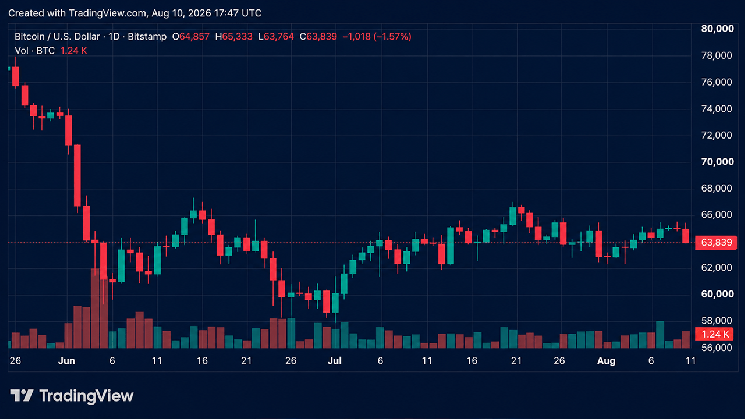
- •Bitcoin fell below $64,000, declining nearly 2% to roughly $63,770 and erasing more than $20 billion from its market capitalization in under four hours.
- •Over the preceding 24 hours, long leveraged positions exceeding $47 million were liquidated alongside short liquidations surpassing $12 million.
- •Strategy has now sold approximately 3,328 BTC over two weeks, representing less than 0.4% of its total holdings but enough to attract scrutiny from market participants.
Bitcoin Slips Below $64,000 as Strategy Liquidates 1,690 BTC to Fund Share Repurchases
Price Action and Liquidations
Bitcoin ($BTC) fell below $64,000 on Monday afternoon, ending a multi-day streak of modest gains after Strategy—the rebranded MicroStrategy and the largest publicly traded corporate holder of bitcoin—sold 1,690 BTC to finance preferred stock repurchases. Because Strategy holds over 840,000 BTC, even modest reductions in its treasury can function as a visible market signal, and the timing of the sale added selling pressure to an already fragile market. The decline coincided with broader regulatory and technical headwinds, including controversy over the CLARITY Act—a proposed U.S. bill that would define regulatory boundaries between the SEC and CFTC for digital assets—and a BIP-110 chain split.
Hours before the drop, bitcoin had appeared poised to mirror the price action that pushed it above $65,000 on Aug. 7. The cryptocurrency reached an intraday high of $65,416 shortly after 6 p.m. EST on Sunday and maintained the $65,000 level into the early hours of Aug. 10.
Support broke shortly after 8 a.m. EST, sending bitcoin to just under $63,770—a daily decline of nearly 2%. The sell-off erased more than $20 billion from bitcoin's market capitalization, which fell from $1.3 trillion to $1.28 trillion in under four hours. Over the preceding 24 hours, long leveraged positions worth over $47 million were liquidated, while short liquidations exceeded $12 million during the same period.\n
Strategy's BTC Sales
As reported earlier by Bitcoin.com News, Strategy sold 1,690 BTC between Aug. 3 and Aug. 9 at an average price of $64,262 per coin. Following the sale, Strategy's bitcoin holdings declined to 840,447 coins, with an average purchase price of $75,385 per coin. The $108.6 million generated from the sale was used to repurchase 1,152,020 STRC shares—Strategy's Series A Perpetual Stride Preferred Stock, which pays a quarterly dividend and trades separately from the firm's common stock (MSTR).
The sales mark a notable shift for a company that has historically been a net accumulator of bitcoin, having spent billions over the past several years building what is by far the largest corporate treasury position in the asset. Prior to this transaction, Strategy disclosed that it had sold 1,638 BTC between Jul. 27 and Aug. 2 for approximately $104.7 million, bringing the two-week total to roughly 3,328 BTC sold—less than 0.4% of total holdings, but enough to draw scrutiny from market participants already navigating thin summer liquidity.
Strategy CEO Phong Le commented on the latest sale:
"Our USD Reserve and Duration are now at all-time highs. In 2.5 months, we added nearly $3.8 billion and grew both more than 5X. This is the Digital Credit Capital Framework at work."
Community Reactions
While Le and Strategy Chairman Michael Saylor portrayed the move positively, critics within the crypto community remained skeptical. Peter Schiff, who has repeatedly characterized Strategy as a Ponzi scheme, questioned the rationale for buying or holding the company's common stock.
In an X post replying to Saylor, Schiff wrote: "You have now reduced the Bitcoin YTD yield by 87% since May 25th (QTD it's minus 6.4%). At this rate, by next week the yields will be negative. How much Bitcoin per share are you willing to destroy to keep your STRC Ponzi scheme going? Why should any Bitcoiner own MSTR common."
The "Bitcoin yield" metric Schiff references is a key performance indicator Strategy introduced to track the percentage growth of its bitcoin holdings relative to its diluted shares outstanding—a measure designed to show whether the company is increasing bitcoin ownership per share over time.
Pushing back against critics, macro strategist Dan Hillery posted on X framing Strategy's move as a disciplined balance sheet optimization. Hillery argued that selling a small portion of bitcoin to repurchase STRC shares trading at a discount, or to bolster preferred dividend reserves, represents an accretive capital management step—one that lowers the company's long-term cost of capital and reinforces its financial runway.
In follow-up responses, Hillery addressed concerns regarding the decline in MSTR's "Bitcoin yield," stating that optimizing capital structure and securing preferred obligations during market volatility takes priority over short-term per-share yield metrics, ultimately protecting equity value over a longer time horizon. The debate underscores a broader tension among bitcoin investors: whether corporate treasury managers like Strategy should function as passive bitcoin holders or actively manage their capital stack, even if that means periodically selling portions of their BTC reserves.

