Bitcoin Dip Buying Coincides With Dollars Leaving Crypto, Exchange Data Shows
Key Takeaways
- •Zerocap's November 16 weekly report showed clients buying BTC and ETH while selling smaller positions, including Polkadot, into fiat and off-ramping USDT and USDC.
- •Binance's rolling 30-day ERC-20 stablecoin contraction reached $10.1 billion as of November 15, the deepest since 2020 and 50.7% larger than February's $6.7 billion drawdown.
- •All-exchange ERC-20 stablecoin reserves fell to $49.2 billion, roughly 19% below mid-October, after losing about $8.4 billion in the five days to November 2.
- •Bitcoin trades above its February levels near $63,750 even though the current cash drain is half again as deep as the February episode.
- •Rei Researcher stated that a return of tracked reserves above $51 billion would ease the early warning that heavy selling faces fewer standing bids.
Key Takeaways
- BTC buying coincided with altcoin sales and cash-outs.
- Exchange stablecoin reserves fell 19% and have not rebuilt.
- Bitcoin holds above its February lows despite deeper outflows.
- A return of reserves above $51 billion would change the picture.
Bitcoin has kept drawing bids in recent weeks even as dollars and stablecoins drain out of the crypto market. Desk-level reporting and exchange reserve data published on November 16 point to a narrowing of investor portfolios rather than a wave of fresh capital: clients kept or added Bitcoin and Ether, sold smaller tokens, and moved part of the proceeds into fiat.
One Desk, Two Directions in the Same Week
Zerocap's November 16 weekly report described its clients as net buyers of BTC and ETH during the decline, while the same desk saw smaller positions, including Polkadot, sold into fiat and net off-ramping in both USDT and USDC, the two largest dollar-pegged stablecoins.
Read on its own, the Bitcoin line is the kind of detail that gets reported as dip buying. Read next to the other two, it looks different. Clients kept or added the largest asset, cut the smaller ones and moved part of the proceeds out of crypto entirely. That is a portfolio getting narrower, and a narrower portfolio can hold more Bitcoin than it did before.
Zerocap covers one trading desk, and the report does not say whether the same clients bought BTC and withdrew dollars, or how large each flow was relative to the others. What it does establish is that, at least at this desk, demand for the biggest coin and a preference for fiat ran at the same time. Reporting only the first half would miss the decision investors were actually making.
More Bitcoin Inside Less Crypto
The arithmetic is simple. If an investor spends part of a stablecoin balance on BTC and sends the rest to a bank account, their Bitcoin holding and Bitcoin's share of what they keep in crypto both rise, while their total crypto exposure falls. Three things that usually get reported as one bullish signal — buying BTC, raising BTC's weight and committing new capital — split apart, with the third moving in reverse.
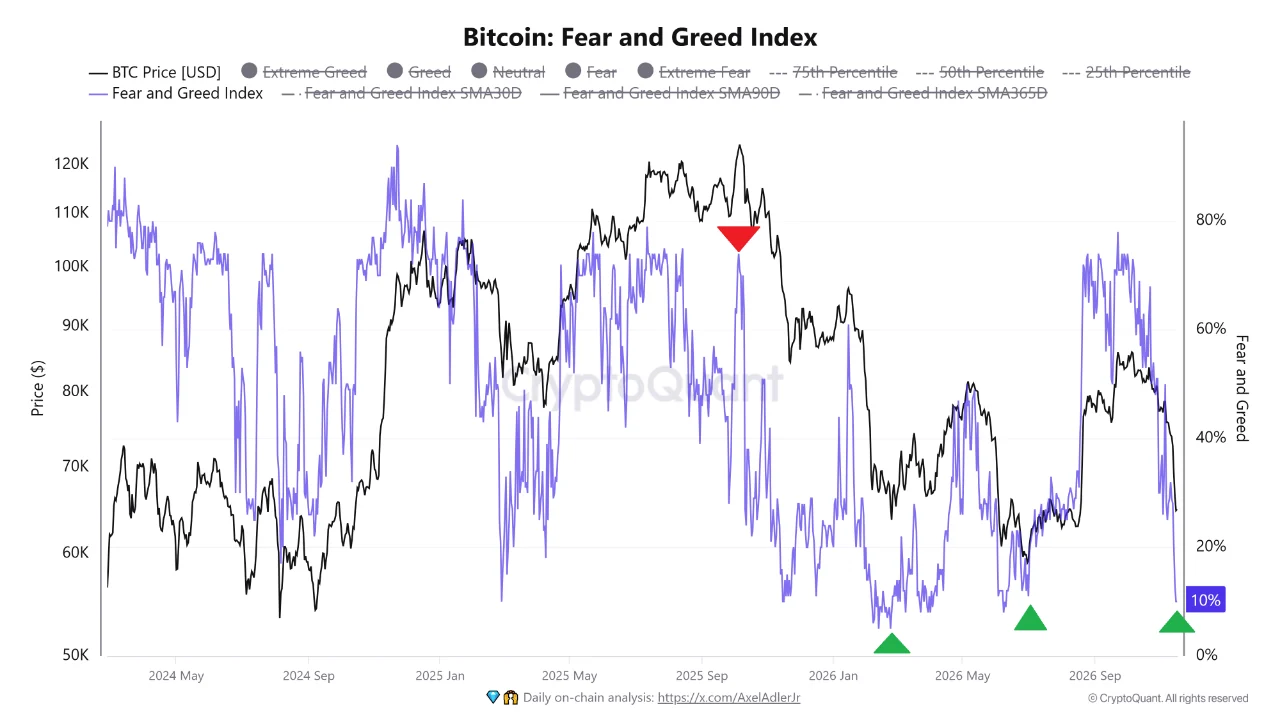
Market-wide data from the past month has that shape. In his November 16 CryptoQuant post, analyst Amr Taha put Binance's rolling 30-day ERC-20 stablecoin contraction — dollar-pegged tokens issued on Ethereum — at $10.1 billion as of November 15, the deepest since 2020 and 50.7% larger than the $6.7 billion drawdown recorded on February 16. The February episode came with Bitcoin near $63,750; the June 7 low in sentiment came near $61,000. Taha's point is that Bitcoin now trades slightly above both levels even though the cash drain is half again as deep.
A larger outflow paired with a price that has not made a new low is what concentration looks like from the outside. Money leaving the exchange cushion while Bitcoin holds is consistent with buyers funding BTC from inside crypto — from altcoins and stablecoins they already held — rather than with fresh demand arriving from outside.
The Cushion That Left and Stayed Gone
Rei Researcher's companion analysis tracks the same ERC-20 series across all exchanges. Reserves held between $59 billion and $60.8 billion from October 16 to 28, then lost about $8.4 billion in the five days to November 2. Since then the line has sat near $49 billion to $50 billion, with the latest reading at $49.2 billion, roughly 19% below mid-October. Stablecoins already sitting on exchange wallets can be spent on coins without any new deposit arriving, which is why analysts read the level as the market's ready buying power.
Two caveats belong next to those numbers. Taha's Binance figure sits inside Rei's all-exchange total, so the two cannot be stacked into a bigger outflow. And CryptoQuant's metric counts only ERC-20 tokens on tracked exchange addresses, so a transfer to self-custody or to another chain registers as an exit even when no dollars left crypto. Rei flags the same limitation. Zerocap's off-ramping is the one piece of this picture that explicitly involves fiat, and it comes from a single desk.
The sentiment backdrop makes the pattern easier to miss. Taha notes the Fear & Greed Index at 10 on November 16 — on a 0-to-100 scale where readings below 25 are classed as extreme fear — close to the 8 printed in February and the 12 in June, and reads the combination of extreme fear and a record contraction as a possible capitulation phase that still needs confirmation of seller exhaustion. Rei reads the same reserve chart as an early warning: fewer standby dollars on exchanges means heavy selling meets fewer bids. One analyst tagged the week bullish, the other cautionary.
Three Reports, One Explanation
| Source | Reading | Detail |
|---|---|---|
| Zerocap desk | Net BTC and ETH buying | Alongside altcoin sales and USDT/USDC off-ramping |
| Rei Researcher | Early warning | Thinner cushion leaves fewer bids under heavy selling |
| Amr Taha | Possible capitulation | Record contraction plus extreme fear, pending seller exhaustion |
These readings only conflict if every Bitcoin purchase counts as new money. Treat the buying as a reallocation and all three fit. Investors retreating from smaller tokens and from stablecoin balances would thin the exchange cushion exactly as Rei describes. The same investors parking what they keep in BTC would hold its price above the February lows exactly as Taha observes. And a desk serving those investors would log BTC bids next to altcoin sales and fiat withdrawals, which is what Zerocap reported.
None of that makes Bitcoin a safe asset. Whoever bought it still owns its price risk. They own less of the rest of the market, though, and less of the market overall, which is a different decision from the one "dip buying" usually implies.
What Would Change the Reading
Rei gives a specific line: a return above $51 billion in tracked reserves would ease the warning. That matters more than any improvement in the 30-day contraction figure, because a rolling window gets less negative when an old withdrawal drops out of it, whether or not a new deposit came in. A rising balance means money arrived; a shrinking contraction may only mean time passed.
Beyond the reserve level, the signal that would separate reshuffled money from new money is funding that shows up on both sides: stablecoin balances growing while fiat on-ramps, not off-ramps, dominate desk flows. Coindoo's earlier look at the contraction in crypto's cash supply covered how that backdrop deteriorated; the same series reversing would be the first evidence that the retreat has ended.
The other direction is just as concrete. Reserves staying flat near $49 billion while Bitcoin loses the February lows would mean the concentration trade ran out of assets to sell, with no outside bid to replace it. Until one of those happens, each round of Bitcoin buying is best read next to what the same investors sold and withdrew.
This article was originally published on Coindoo.

