Bitcoin Recovers to $64K as Coldcard Exploit Raises Questions About Self-Custody Security
Key Takeaways
- •Bitcoin gained 1.3% over 24 hours to near $64,000, yet remains down 2.2% on a weekly basis with the recovery largely driven by equity market tailwinds rather than crypto-native demand.
- •A Coldcard hardware wallet exploit resulted in the theft of 1,367 BTC, approximately $87 million, in under an hour, targeting a device manufactured by Coinkite that was widely regarded as highly secure.
- •The Fear & Greed Index reads 28, placing market sentiment firmly in 'Fear' territory and slightly below the prior week's reading of 30.
- •The Coldcard breach has intensified debate over whether open-source firmware transparency benefits security review or provides malicious actors with a roadmap to vulnerabilities.
- •Hardware wallet manufacturers such as Ledger and Trezor are expected to face heightened scrutiny regarding firmware security, potentially shifting the competitive landscape toward companies that can demonstrate robust protections.
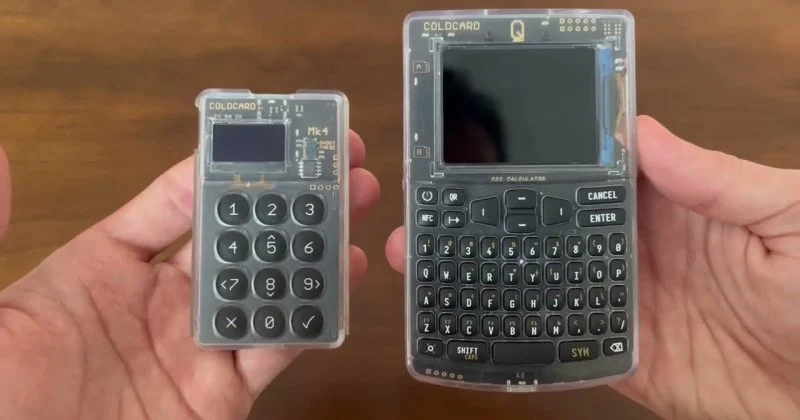
Bitcoin came close to dropping below $62,000 late Sunday before recovering to near $64,000 by Monday morning, posting a 1.3% gain over 24 hours.
The rebound tracked a broader risk-on sentiment in traditional markets, where the Nasdaq rose nearly 2%. However, the price recovery is sharing headlines with a more troubling development: a Coldcard hardware wallet exploit that resulted in the theft of 1,367 BTC — approximately $87 million at current prices — in under an hour last week.
Market Recovery in Context
Bitcoin's 24-hour gain of 1.3% appears reassuring on its own. On a weekly basis, however, BTC remains down 2.2%.
Ethereum followed a similar trajectory, recording a 0.9% daily gain while trading below $1,900. Solana rose 1.0%, pushing toward $74. None of these movements indicate a decisive breakout; rather, they suggest resilience amid ongoing uncertainty.
The Fear & Greed Index stands at 28, firmly in "Fear" territory and only slightly below last week's reading of 30. According to CoinGecko data, the top-performing category over the past seven days was DeFi, which registered a 0.0% change — meaning the best performer was simply the category that did not lose value.
A 2.2% weekly drawdown is not unusual by cryptocurrency standards. Bitcoin has weathered steeper declines. However, the current recovery appears fragile because it is driven primarily by equity market tailwinds rather than crypto-native demand.
The Coldcard Exploit and Its Implications
Hardware wallets are marketed as the most secure method for storing cryptocurrency — offering cold storage, air-gapped architecture, and full user control of private keys. The Coldcard, manufactured by Coinkite, has long been regarded as one of the most trusted devices in the Bitcoin-only hardware wallet sector.
The exploit, which allowed an attacker to drain 1,367 BTC in under an hour, has ignited a significant debate within the Bitcoin community. While the $87 million loss is substantial, it remains smaller than the largest exchange hacks in cryptocurrency history — including the 2014 Mt. Gox breach that resulted in the loss of approximately 850,000 BTC and the 2022 Ronin Network exploit of roughly $625 million. What distinguishes the Coldcard incident is that it targets the layer of infrastructure that is supposed to be most resistant to exactly this type of attack.
Coldcard's firmware is open-source, allowing anyone to inspect the code for vulnerabilities. The longstanding argument in favor of open-source security is that transparency enables broad review, making it more difficult for bugs to remain undetected.
The counterargument, now gaining traction, holds that open-source firmware also provides attackers with a detailed roadmap. If anyone can read the code, that includes malicious actors searching for weaknesses — analogous to publishing a bank vault's blueprints and relying on ethical actors to identify flaws before criminals do.
Open-source software underpins much of the internet's critical infrastructure; Linux powers the majority of web servers. However, a hardware wallet serves a fundamentally different purpose — it functions as a personal vault. When that vault is compromised, the fact that the code was publicly auditable offers little consolation to those who have suffered substantial losses.
The cryptocurrency community has long advocated self-custody as a fundamental principle. The phrase "not your keys, not your coins" has become a central tenet. Yet self-custody depends on the reliability of the tools used. When a leading hardware wallet is exploited at this scale, it undermines the broader narrative that individuals can safeguard their own assets more effectively than institutions.
Broader Consequences
The immediate market impact of the Coldcard hack has been limited on price charts. Bitcoin recovered, and trading continued. However, the second-order effects may prove more consequential.
First, hardware wallet manufacturers across the industry — including Ledger, Trezor, and others — are likely to face intensified scrutiny regarding their firmware security. Such scrutiny could prove constructive, accelerating competition on security features and rewarding manufacturers that can demonstrate robust protections. It also comes at a time when regulators in the United States and Europe have been increasing their focus on digital asset custody standards, including the SEC's Custody Rule amendments and the EU's Markets in Crypto-Assets (MiCA) framework, both of which impose stricter requirements on entities holding cryptographic assets on behalf of clients.
Second, the incident may drive some holders toward institutional custody solutions or multisig configurations — which require multiple independent key holders to authorize a transaction, such as a "two-of-three" arrangement where any two designated signers must approve a transfer — that distribute risk across multiple devices and signers. The irony is notable: a self-custody failure potentially pushing users toward the very custodians Bitcoin was designed to bypass. Nevertheless, with $87 million in stolen Bitcoin, the case for redundancy is compelling.
Third, the combination of a Fear & Greed Index reading of 28 with a high-profile security incident creates a sentiment environment that has historically preceded either capitulation or accumulation phases. When market participants are already fearful and receive an additional reason for concern, the pool of potential panic sellers tends to diminish.
For traders monitoring the charts, the $62,000 level that held over the weekend serves as a key support threshold. A decisive break below that level on significant volume could indicate that the Coldcard incident is weighing on broader market confidence. Conversely, a sustained hold above $64,000 — particularly without continued support from equity markets — would suggest that Bitcoin's demand remains intact despite the security scare.
The competitive landscape for hardware wallet manufacturers is poised to shift. Companies that can credibly address the vulnerability class exposed by this exploit are likely to command premium pricing and customer loyalty. Those that cannot or will not may face difficult questions — potentially of a legal nature.

