Bitcoin Network Splits as BIP-110 Soft Fork Struggles to Gain Miner Support
Key Takeaways
- •BIP-110 supporters triggered a chain split at block height 961,632 by rejecting a block from Antpool that did not signal support for the proposal.
- •The BIP-110 proposal seeks to impose a one-year ban on processing non-financial data on Bitcoin and requires 55% miner support within a two-week activation window.
- •The fork chain trails the main network by over 100 blocks with only 1.2 EH/s of hashrate, meaning each block would take approximately five days to mine at the current pace.
- •Approximately 99.85% of Bitcoin's total hash power remained on the main network, and the cryptocurrency held steady around $65,000 following the split.
- •Roughnecks, the miner that produced the fork's alternative block, announced it would cease operations and advised others on the BIP-110 chain to halt mining until further notice.
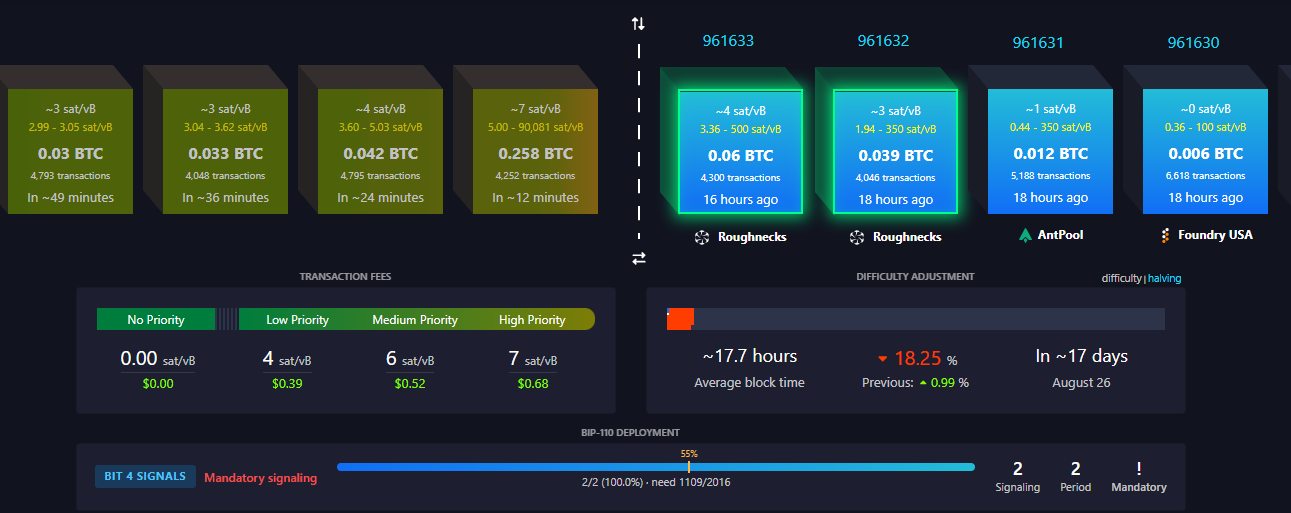
The Bitcoin network experienced a chain split on Saturday after supporters of the BIP-110 proposal initiated a soft fork at block height 961,632. The split occurred when BIP-110-supporting nodes rejected a block mined by Antpool, prompting Roughnecks — a miner within the Ocean mining pool — to mine an alternative block instead.
BIP-110 is a controversial proposal that seeks to impose a one-year restriction on the Bitcoin network from processing non-financial data — a category that has grown substantially since the introduction of Ordinals inscriptions and BRC-20 tokens in 2023, which allow users to embed data such as images and text directly onto the Bitcoin blockchain. Supporters argue that allowing non-financial data on the network enables spam and drives up transaction costs for ordinary users. Opponents, however, contend the proposal amounts to an attempt to censor transactions and represents a philosophical overreach into what the network should be permitted to process.
The proposal requires 55% miner support within a two-week window to activate. That threshold is notably lower than the de facto activation targets of prior Bitcoin soft forks — SegWit in 2017, for instance, originally sought 95% miner signaling — reflecting the unusually contested nature of this initiative. A small group of miners began enforcing BIP-110 rules at block 961,632 by rejecting blocks that did not signal support for the proposal.
BIP-110 Chain Trails Main Network by Over 100 Blocks
The BIP-110 split chain produced a second block at height 961,633 but now lags significantly behind the main Bitcoin network, which has advanced to block height 961,733. The gap is largely because the fork inherited Bitcoin's mining difficulty without commensurate hashrate — a dynamic that Bitcoin's proof-of-work design is specifically structured to resolve, as the chain with greater accumulated computational work is recognized as the canonical network.
According to on-chain data, the hashrate from the Ocean pool supporting BIP-110 stands at 1.2 EH/s. At this rate, it would take approximately five days to mine each block. With roughly 2,014 blocks remaining before the next difficulty adjustment, it would take an estimated 27 years to produce them at the current pace.
Luke Dashjr, creator of Bitcoin Knots and a long-time Bitcoin Core contributor who has been a vocal critic of Ordinals and inscription activity, continues to insist the effort has not failed. In a post on X, he stated: "bad actors are once again spreading lies about the death of BIP-110."
Meanwhile, Roughnecks, the miner that produced the split block, has announced it will cease mining operations under that name. The group stated this was not a defeat for the BIP-110 movement but advised anyone mining on the BIP-110 chain under the current algorithm to stop until further notice.
Opponents Declare Victory as Bitcoin Price Holds Steady
Stakeholders who opposed BIP-110 view its failure as validation of their position. Strategy chairman Michael Saylor had previously argued that consensus rules should focus only on security threats, not on perceived purpose. Following the fork's inability to gain traction, Saylor said the Bitcoin network worked as intended, noting that 99.85% of Bitcoin hash power remained on the main network.
Saylor added that while anyone can create a Bitcoin fork, it is "security, utility, capital, and users" that ultimately render a fork irrelevant.
Blockstream founder and early Bitcoin developer Adam Back similarly attributed BIP-110's failure to a lack of consensus. Back rejected the notion that those who opposed the proposal supported spam, arguing instead that they opposed it because it is mathematically impossible to censor Bitcoin.
The market reaction to the fork has been neutral. Bitcoin has remained stable over the past 24 hours, trading at approximately $65,000 with slight gains.

