Bitwise CIO Matt Hougan Says Bessent Has Made Bitcoin's Best Case This Year
Key Takeaways
- •Bitwise CIO Matt Hougan said Treasury Secretary Scott Bessent has unintentionally made Bitcoin's strongest investment case of the year.
- •Hougan argued that bond market intervention signals currency debasement while expanded Iran sanctions show the U.S. dollar can be used as a geopolitical tool.
- •The debasement argument draws on U.S. federal debt exceeding $36 trillion and repeated debt-ceiling standoffs that have kept fiscal policy at the center of market debate.
- •Since Russia's 2022 invasion of Ukraine, the U.S. and allies have immobilized hundreds of billions of dollars in Russian central bank reserves, a step Bitcoin advocates cite as evidence that dollar holdings carry political risk.
- •Bitcoin's fixed supply of 21 million coins and the January 2024 approval of spot Bitcoin ETFs have underpinned its macro narrative and widened institutional access to the asset.
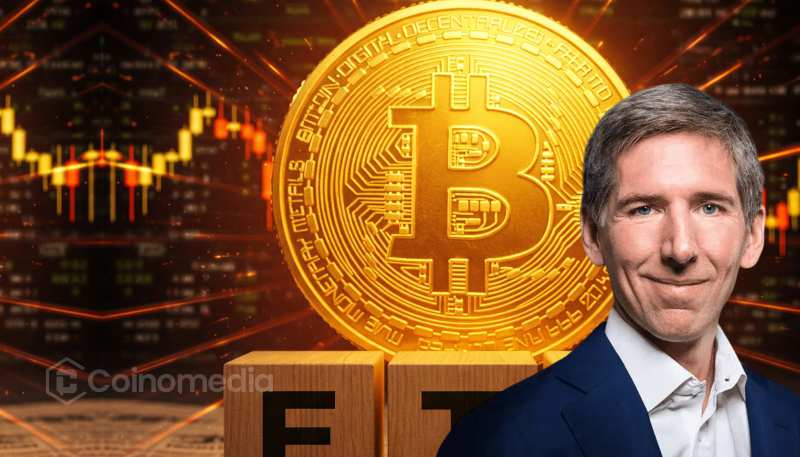
Bitwise Chief Investment Officer Matt Hougan says U.S. Treasury Secretary Scott Bessent has unintentionally made Bitcoin's strongest investment case of the year, pointing to two recent developments that he argues highlight the cryptocurrency's appeal as an alternative store of value.
Bitwise Asset Management is among the largest U.S. crypto index fund managers and one of the issuers of a spot Bitcoin exchange-traded fund, and Hougan has repeatedly framed Bitcoin as a macro asset in his commentary to investors.
Hougan pointed to government intervention in the bond market and expanded sanctions targeting Iran. In his view, both events underscore why investors may increasingly look to Bitcoin as a store of value outside the traditional financial system. His comments reflect a broader debate over Bitcoin's role in the global economy.
Bond Intervention and Sanctions Highlight Bitcoin's Appeal
According to Hougan, intervention in the bond market raises concerns about currency debasement, while the expanded Iran sanctions demonstrate how the U.S. dollar can be used as a geopolitical tool. Together, he argues, these factors strengthen the investment thesis for Bitcoin, which he describes as a neutral, scarce asset that operates independently of government monetary policy and international financial restrictions.
The debasement argument is not new. U.S. federal debt has climbed past $36 trillion, and repeated standoffs over the debt ceiling have kept fiscal policy at the center of market debate. Sanctions, meanwhile, have become a central instrument of U.S. foreign policy since Russia's 2022 invasion of Ukraine, when the United States and its allies immobilized hundreds of billions of dollars in Russian central bank reserves — a step frequently cited by Bitcoin advocates as evidence that dollar-based holdings can carry political risk.
Bitcoin supporters have long argued that the asset's fixed supply — the Bitcoin protocol caps issuance at 21 million coins — and decentralized design make it attractive during periods of monetary expansion and geopolitical uncertainty.
Cointelegraph summarized the argument in a post on X on August 26, 2026:
LATEST: Bitwise CIO Matt Hougan says Bessent just made bitcoin's best case this year. His bond intervention signals debasement, and his Iran sanctions blitz shows the dollar can be weaponized, pointing towards a neutral, scarce asset like bitcoin. pic.twitter.com/cNBcv62J5S
— Cointelegraph (@Cointelegraph) August 26, 2026
Bitcoin's Macro Narrative Gains Attention
Hougan's latest comments add to the growing macroeconomic case for digital assets. Since U.S. regulators approved spot Bitcoin ETFs in January 2024, institutional access to the asset has widened considerably, giving traditional investors a regulated route into a market once dominated by retail traders and offshore venues. As investors continue to assess inflation, fiscal policy, and geopolitical risks, Bitcoin's role as a potential hedge remains a key topic of discussion. Whether that narrative translates into sustained demand, however, will likely depend on broader market conditions, institutional participation, and continued adoption — and on how the Treasury's approach to debt management and sanctions evolves from here.
