Bitcoin's Rare 12% Crash Through Its 200-Week Average Has a Bullish Track Record
Key Takeaways
- •Bitcoin declined 12.6% over the week to close just above $65,000, falling below its 200-week simple moving average, which sits near $68,000.
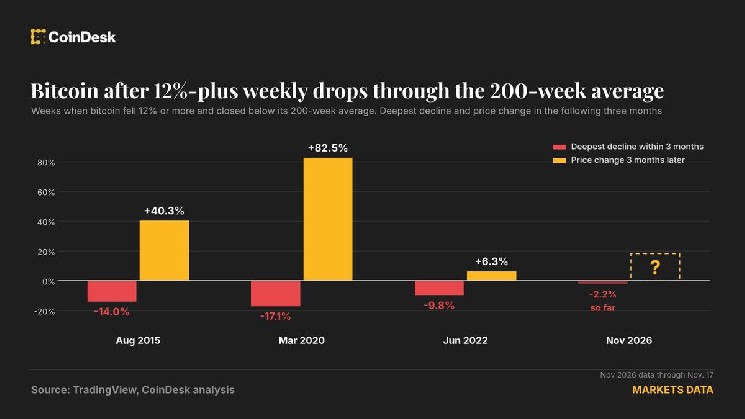
- •Before last week, the combination of a 12%-plus weekly drop and a break of the 200-week average had occurred only three times since 2013, and those episodes were followed by three-month gains of 40.3%, 82.5%, and 6.3% respectively.
- •In each of the three prior cases, Bitcoin fell an additional 10% to 17% before recovering, which from last week's close would imply a trough of roughly $54,000 to $59,000 — in line with Wintermute's forecast of prices in the $50,000s.
- •The 2022 episode's modest gain did not hold after the FTX collapse in November 2022, which erased billions in investor funds and drove Bitcoin down to about $15,500.
- •Persistent outflows from Bitcoin ETFs and rising bond yields could keep prices under pressure for more than three months, despite the historically bullish track record of such breakdowns.
Bitcoin (BTC, trading at $64,299.75) suffered a double-digit weekly decline last week that pushed the asset through a key long-term support level. The move has stoked fears in the crypto community of a deeper slide and an extended spell of weak prices. Historical data, however, suggests the breakdown may not be as bearish as it looks.
The cryptocurrency fell 12.6% over the week to close just above $65,000, according to TradingView data. The drop took the price below its 200-week simple moving average, which now sits near $68,000 and is calculated from roughly the past four years of weekly closing prices. Traders treat the level as long-term support and a broad gauge of momentum, and a fall beneath it is often read as a sign that a downtrend is deepening.
Losing that level has made analysts — including those at crypto market maker Wintermute — wary of a deeper decline. Current market data backs up that caution, and so does the historical record of past 12%-plus weekly drops that broke through the average.
A 12%-plus weekly crash that breaks through the average is a rare occurrence, because it requires two conditions to coincide: first, a weekly decline of 12% or more, and second, a drop that pushes Bitcoin below its 200-week moving average. Before last week, the combination had occurred only three times since 2013, when the average first became available, according to data analyzed by CoinDesk.
In August 2015, bitcoin was up 40.3% three months later. After the Covid crash of March 2020, it was up 82.5%. Following the June 2022 break, it was up 6.3% — a gain that failed to hold after FTX, formerly one of the largest cryptocurrency exchanges, collapsed in November 2022, wiping out billions of dollars of investor funds and sending bitcoin down to about $15,500.
There is a catch, though: in each of the previous cases, the rebound did not come right away. Each time, bitcoin first fell another 10% to 17% before turning higher. A similar drop from last week's close would put the price between roughly $54,000 and $59,000, broadly in line with Wintermute's call for prices in the $50,000s. That follow-through phase — the extra leg lower that preceded every prior recovery — is the piece of the historical pattern most relevant to watch in the weeks ahead.
The takeaway is that 12% crashes taking prices below the 200-week average have tended to appear near the end of bear markets, rather than at the start or the middle. That said, three cases do not make a rule, and broader macroeconomic conditions still matter: persistent outflows from bitcoin exchange-traded funds, which give conventional brokerage accounts a stock-market route into the asset, and rising bond yields, which lift the return on traditional fixed-income holdings, could keep prices under pressure for more than three months.
Big weekly drops, moreover, are nothing new for bitcoin. The asset has recorded 77 weeks with losses of 12% or more since 2009, though such declines have become rarer, with just four since the start of 2023.

