Peter Schiff Calls Bitcoin's Break Above $72,000 a False Breakout as Bulls Point to Fresh Cycle Signals
Key Takeaways
- •Bitcoin traded around $71,447 on Thursday after reaching an intraday high of roughly $72,397, its highest level since May 31.
- •Peter Schiff attributes the rally to the U.S. Treasury's plan to double long-term bond buybacks from $2 billion to at least $4 billion per operation, and recommends selling Bitcoin in favor of gold.
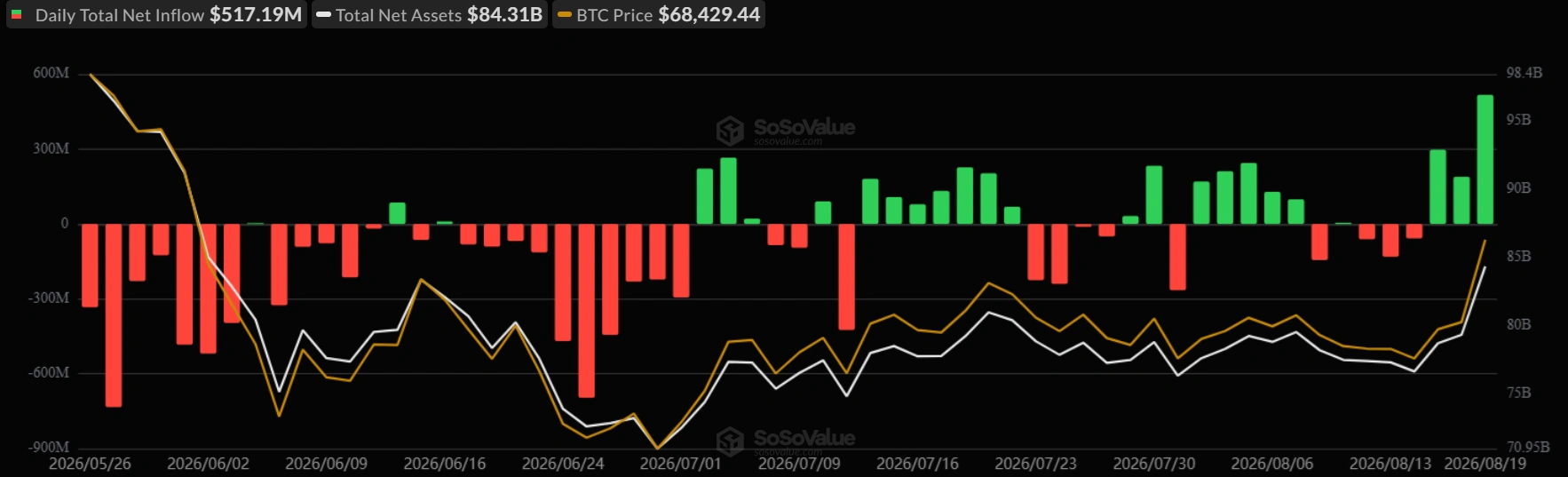
- •U.S.-listed spot Bitcoin ETFs attracted more than $1 billion between Monday and Wednesday, reversing $389.7 million in outflows the previous week.
- •Ki Young Ju of CryptoQuant said Bitcoin demand turned positive across both spot and perpetual futures for the first time since the October 2025 all-time high.
- •President Trump's meeting with executives from Coinbase, Payward, and Blockchain.com raised expectations that the stalled Clarity Act could advance, with the Senate expected to discuss it in mid-September.
Peter Schiff, a longtime Bitcoin critic, said on Thursday that BTC's climb above $72,000 is a false breakout built on a one-off move by the U.S. Treasury. Bullish analysts, by contrast, read the same week's data as the start of a fresh cycle for Bitcoin, with ETF inflows, whale accumulation, and derivatives positioning all pointing to renewed interest in the asset.
Market snapshot
Bitcoin traded around $71,447 on Thursday, up about 9% over 24 hours. The price reached an intraday high of roughly $72,397, its highest level since May 31, according to CoinMarketCap.
Schiff's case: a Treasury-driven fakeout
Schiff, who has long been critical of BTC, told his followers to "Sell Bitcoin" and buy gold instead, arguing that the recent rally is due to a surprise announcement from the U.S. Treasury.
The Treasury announced it would double its long-term bond buybacks, raising the limit for each operation from $2 billion to at least $4 billion. The move caused the 30-year bond yield to drop from over 5.34% — its highest in 19 years — to about 5.196%.
In a follow-up post, Schiff said Treasury yields have already started climbing again and that the buyback announced so far is too small to change that. Stopping the trend, he argued, would take a much larger buyback plus an official quantitative easing program from the Federal Reserve.
"Got gold?" he added, reinforcing his view that any weakening of the dollar helps gold more durably than it helps Bitcoin. In early October 2025, Schiff declared that Bitcoin was in a bear market.
The bull case
Ki Young Ju of CryptoQuant pointed out that Bitcoin demand has turned positive across both spot and perpetual futures for the first time since the October 2025 all-time high. He said that if the pattern holds for another month, it would be fair to conclude a new bull cycle has begun (post).
Adam Back is even more optimistic, saying he believes BTC can hit $1 million. He sees that price as the point where Bitcoin's total value would match gold's. Back plans to explain his reasoning in person at the Bitcoin Treasuries Conference on September 28.
Institutional flows also support the bulls for now. U.S.-listed spot Bitcoin ETFs pulled in more than $1 billion between Monday and Wednesday, a complete reversal from $389.7 million in outflows the prior week, according to SoSoValue. BTC whales have added roughly $2.75 billion worth of the token over 60 days, adding another sign that larger holders have been active during the rebound.
Investor confidence also got a boost after President Donald Trump met with executives from Coinbase (NASDAQ: COIN), Payward, and Blockchain.com. The meeting raised hopes that the stalled Clarity Act might move forward again. The Senate is expected to discuss it again in mid-September, giving traders a policy event to watch alongside price and flow data.
Derivatives positioning
Data from Deribit showed that traders held $1.5 billion worth of BTC call options at the $70,000 price level. They also held $1.4 billion in put options at the $60,000 level.
Background
Bitcoin's highest price was above $126,000 last October. After that, it dropped sharply, which started the current bear market.

