CryptoQuant Says Bitcoin Rally Was Fueled by Binance Short Squeeze
Key Takeaways
- •A CryptoQuant analyst concluded that Bitcoin's latest rally was driven mainly by short covering on Binance rather than fresh organic demand.
- •The analyst described the event as the strongest short squeeze since November 2024, occurring on the world's largest cryptocurrency exchange by trading volume.
- •CryptoQuant warned that pullback risk remains because a rally built on forced buying can lose momentum once trapped short positions are unwound.
- •The note framed the surge as a possible bear market rally, distinguishing forced short covering from durable spot demand.
- •Analysts suggest monitoring futures data, since falling open interest alongside rising prices indicates positions being closed rather than new leveraged bets.
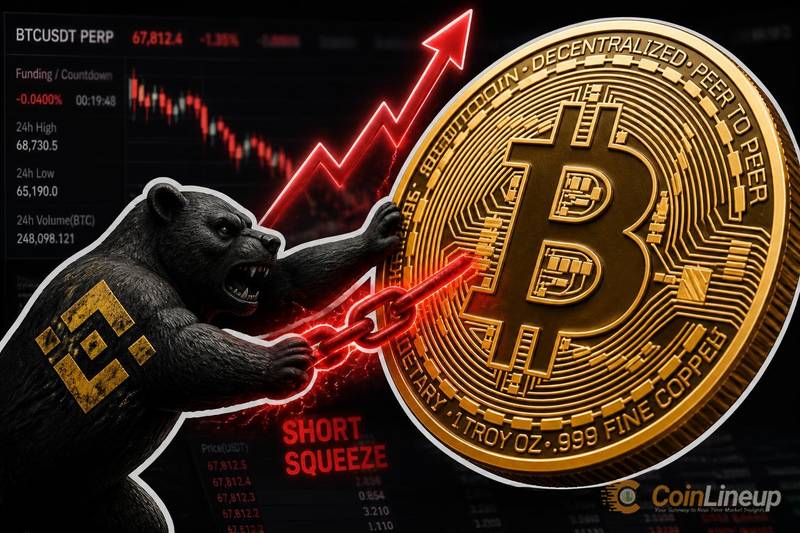
A CryptoQuant analyst says Bitcoin’s latest rally was driven mainly by a short squeeze on Binance, and warns that pullback risk still remains even after the surge. In plain terms, traders betting against Bitcoin were forced to buy back in, and that buying helped push the price higher.
Why CryptoQuant Ties the Bitcoin Rally to a Binance Short Squeeze
The core claim is straightforward: a CryptoQuant analyst reviewed recent market activity and concluded that the move higher was driven by short covering rather than fresh organic demand. CryptoQuant is an on-chain and market-data analytics firm, and its analysts regularly publish interpretive commentary drawn from exchange data. For related coverage, see Bitcoin Network Activity Hits Highest Level Since 2024 as Price Struggles.
A short squeeze occurs when many traders bet that a price will decline. If the price rises instead, those traders are forced to buy back assets to close their positions. That forced buying can push the price higher still. On exchanges that offer leveraged futures, forced closures register as liquidations, a mechanic that can amplify the speed of the move.
The analysis points to Binance, the world’s largest cryptocurrency exchange by trading volume, as the venue associated with the squeeze. The analyst described the move as the strongest squeeze since November 2024.
This remains an interpretation rather than a confirmed sole cause. The analyst is drawing a conclusion from positioning data, so it should be treated as one expert view rather than a settled fact. That positioning data typically includes futures open interest, funding rates, and liquidation volumes — the standard gauges analysts use to measure how much leverage sits on each side of the market and to detect when forced closures are accelerating a price move. The view also comes amid broader debate over whether Bitcoin still needs $1 trillion for its next bull run.
What the Short Squeeze Signal Means for Traders
Rallies driven by short squeezes can be fast and abrupt. When bearish positions are forced to close at the same time, the resulting buying pressure can lift prices sharply over a short period. Squeeze-driven moves are a recurring feature of leveraged crypto trading, where derivatives turnover on major exchanges often exceeds spot activity, so positioning-led rallies are a recognized pattern rather than a one-off anomaly.
However, the same fuel can fade quickly. CryptoQuant’s note frames the move as a possible bear market rally, meaning the forced buying could stop once trapped short positions are unwound.
The distinction between forced buying and durable demand is important. A move led by short covering is not the same as steady spot buying from investors entering the market. That difference matters in the context of previous cycles, when Bitcoin whales accumulated large amounts of BTC, reflecting a different and slower form of demand.
Why Pullback Risk Still Remains After the Bitcoin Surge
The analyst’s explanation of the rally comes with a caution: pullback risk remains, because a move built on short covering can lose momentum once the forced buying ends.
A strong rally does not automatically confirm a lasting trend change. Bitcoin has experienced sharp reversals before, including a drop below $60,000 after support failed. Momentum from a squeeze does not eliminate the possibility of resistance or renewed volatility.
Some analysts argue that the broader picture can still be constructive even during choppy market phases, a view echoed in the idea that Bitcoin’s quiet cycle may be healthier than it looks. That does not remove the near-term caution, but it provides context.
For regular holders, the practical takeaway is simple: a fast rally does not always mean the trend has changed. Futures data offers one way to monitor this in real time, because open interest that falls while prices rise points to positions being closed rather than new leveraged bets being opened. The key signal to watch is whether steady spot buyers step in after the squeeze, or whether the price slips back once the forced buying subsides.
Disclaimer: This article is for informational purposes only and does not constitute financial or investment advice. Cryptocurrency and digital asset markets carry significant risk. Always do your own research before making decisions.

