Bitcoin ATM Machines: How to Find, Use and Compare Fees
Key Takeaways
- •Bitcoin ATMs are physical kiosks that allow users to buy Bitcoin with cash and, at machines that support selling, exchange Bitcoin for a cash payout.
- •Fees vary by operator and location and may include a service fee, an exchange-rate markup and a blockchain network fee, so users should review the final quote before confirming any transaction.
- •Cash withdrawals are only possible at machines that explicitly support selling Bitcoin, and confirmed cryptocurrency transfers are generally difficult or impossible to reverse.
- •The U.S. Federal Trade Commission warns that scammers use Bitcoin ATMs to steal money from victims, and no genuine government agency or bank will require someone to deposit cash into such a machine.
- •A report based on Coin ATM Radar data recorded 27,945 tracked cryptocurrency ATMs worldwide as of July 8, 2026, though machine counts change as operators install, relocate or remove units.
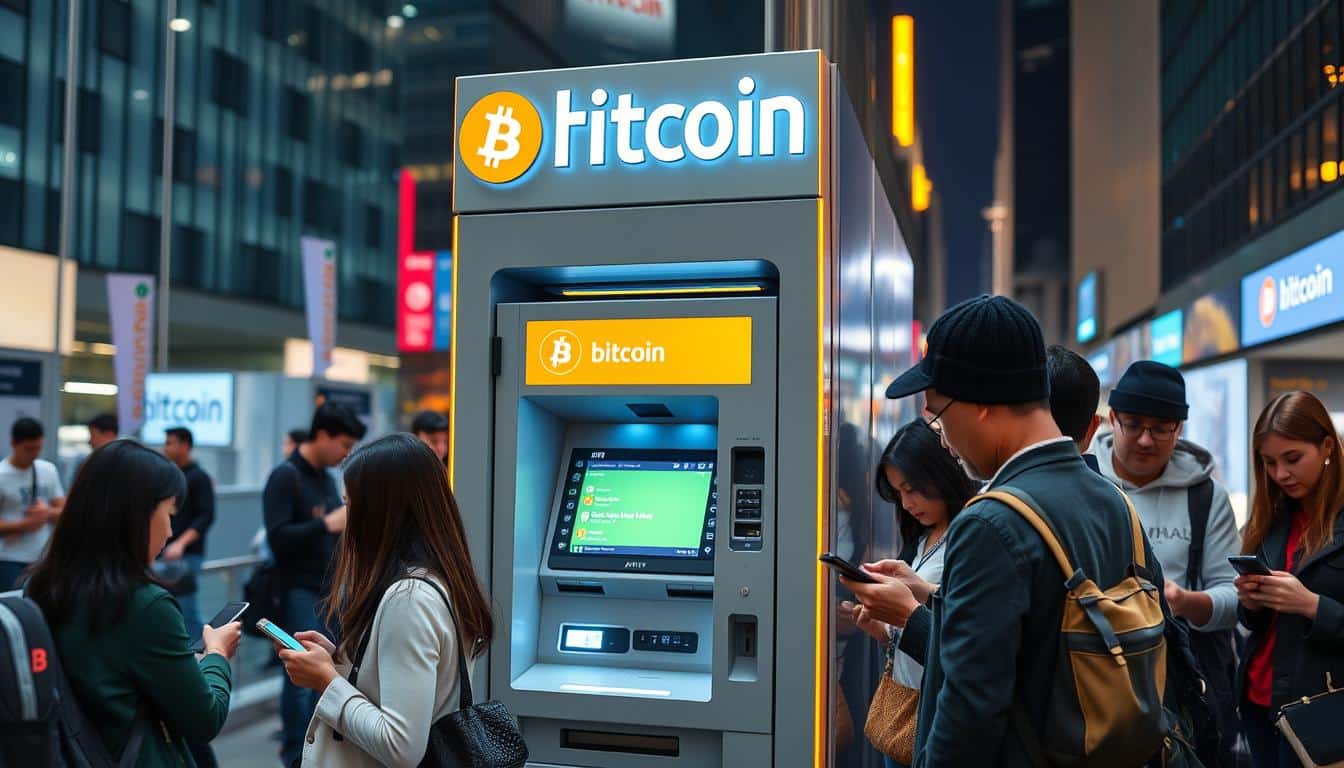
Bitcoin ATM machines make it possible to buy Bitcoin with cash and, at some machines, to sell Bitcoin in exchange for cash. To use one, find a machine that supports the intended transaction, check its fees and identity-verification requirements, scan the receiving QR code of a cryptocurrency wallet, and follow the on-screen instructions.
Not every Bitcoin ATM supports cash withdrawals, and transaction fees, purchase limits, supported cryptocurrencies and operating hours vary by provider and location. Users should always review the final quote before confirming a transaction.
What Is a Bitcoin ATM Machine?
A Bitcoin ATM — also called a Bitcoin automated teller machine or BTM — is a physical kiosk that allows users to exchange cash for Bitcoin or, at certain machines, sell Bitcoin for cash. Unlike a conventional bank ATM, a Bitcoin ATM generally does not dispense cash from a bank account. Instead, it connects the customer with a cryptocurrency transaction service, and the purchased Bitcoin is typically delivered to a cryptocurrency wallet.
Bitcoin ATMs are commonly found in convenience stores, gas stations, shopping centers and other retail locations. Their availability, features and operating hours depend on the operator and on the business hosting the machine.
How Is a Bitcoin ATM Different From a Bank ATM?
A traditional bank ATM provides services such as cash withdrawals, balance inquiries and bank-account transactions. A Bitcoin ATM, by contrast, facilitates cryptocurrency purchases or sales. The main differences are:
- Payment method: Bitcoin ATMs may accept cash or other payment methods specified by the operator.
- Destination: Purchased cryptocurrency is sent to a compatible wallet rather than deposited into a bank account.
- Fees: Bitcoin ATM pricing may include a service fee, an exchange-rate markup and a blockchain network fee.
- Verification: The operator may require identity checks, depending on the transaction and applicable rules.
- Availability: Some machines allow only purchases, while others support both purchases and cash withdrawals.
A Bitcoin ATM is not necessarily operated by a bank, and using one does not make a cryptocurrency investment risk-free.
How Do Bitcoin ATM Machines Work?
Bitcoin ATMs facilitate transactions between a customer and a cryptocurrency service provider. The machine displays the transaction terms, collects the required payment or directs the customer to send cryptocurrency, and processes the transaction through the operator's system. The exact steps vary by machine, but most transactions follow one of two processes.
How to Buy Bitcoin at a Bitcoin ATM
To buy Bitcoin at a Bitcoin ATM, a user generally pays the displayed amount and provides a compatible Bitcoin wallet address where the cryptocurrency can be delivered. The typical steps are:
- Locate a suitable ATM. Check the operator's locator to find a machine that sells Bitcoin and is accessible at the planned time of visit.
- Select Bitcoin. Choose BTC on the screen and enter the amount to purchase.
- Complete verification. Follow any required identity or phone verification steps.
- Scan the wallet QR code. Open the wallet and display its Bitcoin receiving address, confirming that the address and network are correct.
- Review the quote. Check the exchange rate, service fee, network fee, total payment and the amount of Bitcoin to be received.
- Insert cash or use the accepted payment method, following the machine's instructions.
- Confirm the purchase and keep the receipt and transaction reference while the transfer is processed.
The Bitcoin may appear in the wallet before the transaction receives its final network confirmation, depending on the wallet and operator. Processing time varies with the operator, blockchain conditions and the required number of confirmations.
How to Sell Bitcoin for Cash at a Bitcoin ATM
Selling Bitcoin for cash requires a machine that explicitly supports selling or cash withdrawals. A purchase-only Bitcoin ATM cannot be used to withdraw cash from a Bitcoin wallet. The typical process is:
- Find a Bitcoin ATM that supports selling Bitcoin for cash.
- Select the sell or cash-withdrawal option.
- Enter the requested amount and review the payout quote.
- Follow the instructions to send Bitcoin from the wallet to the address provided by the operator.
- Wait for the operator's required transaction confirmation or processing step.
- Collect the cash when the machine authorizes the payout, and keep the receipt.
Some machines issue a redemption code or require an additional step before cash can be collected; follow the instructions displayed by the specific operator. Before sending Bitcoin, verify the destination address, the amount and the payout terms. If a transaction is sent to the wrong address or to a fraudulent recipient, recovery may not be possible.
How to Find a Bitcoin ATM Near You
The easiest way to find a Bitcoin ATM is to use a reputable ATM locator, such as Coin ATM Radar or the official locator provided by the machine's operator. A locator can help identify nearby machines, their listed addresses and the services they advertise. However, a listing does not guarantee that a machine is working, has sufficient cash or is accessible at the time of a visit.
How to Use a Bitcoin ATM Locator
- Open a Bitcoin ATM locator or the official website of a provider.
- Enter a city, postal code or preferred search area.
- Review nearby locations on the map or in the results list.
- Check whether each machine supports buying Bitcoin, selling Bitcoin or both.
- Verify the host location's opening hours and any transaction restrictions.
- Review the operator's published fees and contact details before traveling.
Coin ATM Radar lists Bitcoin ATM locations, and each operator typically offers its own official location finder.
What to Check Before Visiting a Bitcoin ATM
- Location and access: Check the exact address and whether the machine is inside a business with limited hours.
- Transaction type: Confirm that the machine supports the purchase or cash withdrawal needed.
- Supported cryptocurrency: Make sure the machine supports the intended coin and a compatible network.
- Identity verification: Review the operator's requirements for the transaction amount and location.
- Fees and limits: Check minimum and maximum transaction amounts and the final exchange quote.
- Machine status: Look for recent operator updates or contact the provider if availability is uncertain.
- Customer support: Keep the operator's official contact information in case a transaction is delayed or fails.
Not every Bitcoin ATM operates 24 hours a day. A machine inside a convenience store, laundromat or shopping center may be accessible only while that business is open.
How Much Do Bitcoin ATM Machines Charge?
Bitcoin ATM fees vary by operator, location, transaction amount, payment method and market conditions. The total cost may include a service fee, a difference between the quoted exchange rate and the market rate, and a blockchain network fee. Some operators advertise fees as a percentage of the transaction, while others incorporate some costs into the exchange rate. Compare the final amount of cryptocurrency received rather than relying on a headline fee alone.
Example: Calculating a Bitcoin ATM Fee
Suppose a user wants to buy $500 worth of Bitcoin and the operator charges a 10% service fee. In this simplified example, $450 remains for the Bitcoin purchase before any additional fees or exchange-rate markup. The actual amount of Bitcoin received depends on the operator's quote and how it applies its charges. The example is illustrative and is not a claim about the current pricing of any specific operator.
How to Compare Bitcoin ATM Fees
Before confirming a purchase or sale, compare:
- The exchange rate offered by the ATM.
- The stated service fee or transaction commission.
- Any additional network or processing fees.
- The total cash required for a purchase.
- The net cash payout for a sale.
- Any minimum transaction amount or additional charges.
For some users, an online cryptocurrency exchange may be less expensive, while a Bitcoin ATM may offer a more convenient cash-based option. The better choice depends on the actual total cost, available payment methods, verification requirements and personal circumstances. A Bitcoin ATM should never be assumed to be cheaper simply because the machine displays a simple transaction process.
Which Cryptocurrencies Do Bitcoin ATMs Support?
Bitcoin ATMs primarily support Bitcoin (BTC), but some cryptocurrency kiosks also offer other digital assets. Availability varies by operator and individual machine. Common examples include:
- Bitcoin (BTC): The cryptocurrency most closely associated with Bitcoin ATMs.
- Litecoin (LTC): Supported by some operators and machines.
- Ethereum (ETH): Available at certain cryptocurrency ATMs, depending on the operator.
- Dogecoin (DOGE): Offered by some providers but not universally supported.
- Bitcoin Cash (BCH): Available at certain machines.
A provider's overall list of supported cryptocurrencies does not guarantee that every machine in its network offers every asset. Before completing a transaction, check the specific coin, wallet address and blockchain network supported by the machine. Sending an asset to an incompatible address or network can result in lost funds.
Are Bitcoin ATM Machines Safe?
Bitcoin ATMs can be used for legitimate cryptocurrency transactions, but they are not risk-free. Safety depends on the operator's practices, the transaction details, the security of the user's wallet and the user's ability to recognize fraud. Some operators use identity verification, transaction monitoring, security controls and customer-support procedures. These measures can reduce certain risks, but they cannot guarantee that a transaction is safe or recover cryptocurrency sent to a scammer.
Common Bitcoin ATM Risks
- Irreversible transfers: Cryptocurrency transactions are generally difficult or impossible to reverse once confirmed.
- Scams and impersonation: Fraudsters may pose as government officials, bank employees, technical-support agents, relatives or businesses and instruct victims to deposit cash into a Bitcoin ATM.
- Fees and exchange rates: A transaction may cost more than expected if the service fee or exchange-rate markup is overlooked.
- Incorrect wallet details: Sending cryptocurrency to the wrong address or an incompatible network can result in permanent loss.
- Privacy and identity checks: Operators may collect personal information, transaction details or identification documents when required by their procedures and applicable laws.
How to Avoid Bitcoin ATM Scams
The U.S. Federal Trade Commission (FTC) warns that scammers use Bitcoin ATMs to steal money from victims. Recommended precautions include:
- Never use a Bitcoin ATM to pay someone who claims money is at risk and must be moved immediately.
- Never send cryptocurrency to a wallet address supplied by an unexpected caller or message.
- Do not believe anyone who claims a Bitcoin ATM can protect a bank account, resolve a government investigation or secure savings.
- Verify unexpected claims independently using official contact details.
- Check the wallet address and transaction amount before confirming.
- Keep the receipt and transaction ID.
- Contact the ATM operator through its official support channel if a transaction fails or the machine behaves unexpectedly.
A genuine government agency or bank will not require a person to deposit cash into a Bitcoin ATM to protect their funds. Anyone who suspects fraud should contact their financial institution and the appropriate local consumer-protection or law-enforcement authority promptly. The FTC's Bitcoin ATM scam warning provides additional guidance.
Do Bitcoin ATMs Require ID?
Bitcoin ATM identity-verification requirements depend on the operator, transaction amount, jurisdiction and applicable regulations. A machine may request a phone number, government-issued identification or other information before allowing a transaction.
There is no single global identification threshold that applies to every Bitcoin ATM, and claims that a particular amount can always be purchased anonymously should not be relied upon. In the United States, operators may have obligations under federal and state rules, including requirements that apply to money services businesses. Other countries have their own regulatory frameworks. Users should review the operator's official verification policy before visiting and should not attempt to bypass required checks.
What Are the Benefits and Limitations of Bitcoin ATMs?
Bitcoin ATMs provide an alternative way to access cryptocurrency, especially for people who prefer cash-based transactions. Their convenience must be weighed against transaction costs and other limitations.
Benefits
- Cash access to cryptocurrency: Eligible machines let users exchange cash for Bitcoin without first funding an online exchange account.
- Physical access: Machines may be available in familiar retail locations.
- Guided transactions: On-screen instructions help users navigate the transaction.
- Alternative transaction method: Some machines support selling Bitcoin for cash.
- Flexible access: Certain machines are available outside conventional banking hours, depending on their host location.
Limitations
- Potentially high costs: Service fees and exchange-rate markups may exceed those of some online alternatives.
- Verification requirements: Transactions may require personal information and identification.
- Limited asset support: Not every machine supports every cryptocurrency.
- Transaction delays: Network confirmations and operator processing can take time.
- Scam exposure: Fraudsters may exploit the familiarity of a physical kiosk to pressure victims into sending cryptocurrency.
- Limited cash availability: A machine that supports selling may not always have enough cash to fulfill a withdrawal.
Bitcoin ATMs are best evaluated as a payment and access option, not as a guarantee of lower costs, greater privacy or investment returns.
Where Are Bitcoin ATMs Located Worldwide?
Bitcoin ATMs operate in multiple countries, but availability is uneven. The United States has historically accounted for a large share of tracked installations, while other countries have smaller and more geographically concentrated networks. Machines may be located in convenience stores, shopping centers, gas stations and specialist retail outlets, and the services available depend on the country, operator and local rules.
How Many Bitcoin ATM Machines Are There?
The number of tracked cryptocurrency ATMs changes as operators install, remove, relocate or deactivate machines, and different trackers may report different totals because their coverage and measurement dates differ. For context, a report based on Coin ATM Radar data recorded 27,945 tracked cryptocurrency ATMs worldwide on July 8, 2026. This is a dated snapshot, not a guaranteed current count; readers should consult a live tracker for the latest available listings.
When citing a machine count, it is important to distinguish among:
- The number of machines tracked worldwide.
- The number of machines tracked in a particular country.
- New installations during a defined period.
- The net change after installations and removals.
- The number of machines that are currently operational and accessible.
These figures describe different things and should not be used interchangeably.
How to Find Bitcoin ATMs in the United States
In the United States, Bitcoin ATMs may be found in urban centers, smaller towns and retail locations, with availability varying considerably by state and city. A location finder is preferable to an old list of addresses or a static table of store hours. Check the current listing for the specific machine and verify whether it supports purchases, cash withdrawals or both. Also review the operator's transaction limits, fees, identification requirements and customer-support information.
Are Bitcoin ATMs Available 24/7?
Some Bitcoin ATMs are accessible around the clock, but others are available only during the host business's opening hours. A machine advertised as being in a convenience store or shopping center may not be accessible when the building is closed. Confirm access hours before traveling, particularly when a transaction requires an in-person visit or a cash withdrawal.
How Do You Start a Bitcoin ATM Business?
A Bitcoin ATM business can involve hosting a machine operated by another company or owning and operating a machine outright. Each model carries different financial, operational and compliance responsibilities. Potential revenue comes from transaction activity and the commercial terms agreed with the operator or service provider, and revenue is not the same as profit.
Option 1: Host a Bitcoin ATM
Under a hosting or revenue-sharing arrangement, a business provides space for an operator's machine. Depending on the agreement, the host may receive a fixed payment, a share of transaction revenue or another form of compensation. Potential advantages include:
- Less responsibility for operating the cryptocurrency service.
- The possibility of earning additional income from existing premises.
- Potential additional customer visits.
- Reduced need to manage the machine directly.
The host should still review the agreement, space requirements, security responsibilities, insurance, maintenance arrangements and payment terms.
Option 2: Own and Operate a Bitcoin ATM
Owning a Bitcoin ATM may provide greater control over placement, pricing and operations, but it also requires more capital and operational oversight. Potential expenses include:
- Machine purchase or leasing.
- Installation and site preparation.
- Cash management and cash-flow requirements.
- Cryptocurrency liquidity.
- Software, connectivity and maintenance.
- Transaction processing and customer support.
- Compliance, licensing, insurance and professional services.
- Site rental or revenue-sharing payments.
Actual costs depend on the country, hardware, business model and regulatory requirements. Profitability should not be estimated from a generic machine purchase price or an advertised transaction fee alone.
What Affects Bitcoin ATM Profitability?
A useful business assessment should estimate net operating profit rather than simply multiplying the transaction fee by the number of transactions. A simplified calculation is:
Net operating profit = transaction revenue − transaction-related costs − fixed operating costs
Transaction-related costs may include payment processing, cash handling, cryptocurrency acquisition and liquidity expenses, while fixed costs may include rent, software, insurance, maintenance and compliance. Before investing, estimate realistic transaction volumes, model different fee and cost scenarios, investigate local licensing requirements, and assess whether the proposed location has sufficient demand.
What Regulations Apply to Bitcoin ATM Operators?
Regulation depends on the country and the operator's activities. In the United States, certain businesses exchanging or transmitting convertible virtual currency may be subject to federal money-services-business requirements, along with applicable state laws. FinCEN provides guidance on the application of U.S. financial regulations to convertible virtual currency activities, and operators should consult qualified legal and compliance professionals before launching a business. Other countries may impose their own registration, licensing, identity-verification, anti-money-laundering and consumer-protection requirements, and registration in one jurisdiction does not automatically authorize operation in another.
Frequently Asked Questions About Bitcoin ATM Machines
What is a Bitcoin ATM machine used for?
A Bitcoin ATM machine is used to buy Bitcoin with cash or, if the machine supports selling, to exchange Bitcoin for cash. The specific services, payment methods and transaction limits depend on the operator.
Can you withdraw cash from a Bitcoin ATM?
Yes, but only from a Bitcoin ATM that supports selling Bitcoin for cash. The user generally needs to send the required Bitcoin from their wallet and complete the operator's process before receiving the cash payout.
How do I find a Bitcoin ATM near me?
Use a cryptocurrency ATM locator such as Coin ATM Radar or the official locator of a provider. Check the address, operating hours, supported transactions, fees and verification requirements before visiting.
How much does it cost to use a Bitcoin ATM?
The cost varies by operator, location and transaction. It may include a service fee, an exchange-rate markup and a network fee. Review the final quote and compare the amount of Bitcoin received or cash paid out before confirming.
Do Bitcoin ATMs require identification?
Some require identification or other verification, and the exact requirements depend on the operator, transaction and local regulations. Check the machine's current rules rather than assuming that all ATMs have the same threshold.
How long does a Bitcoin ATM transaction take?
The on-screen process may take only a few minutes, but the complete transaction can take longer. Blockchain confirmations, operator processing and identity verification may affect when Bitcoin appears in a wallet or when cash becomes available.
Which cryptocurrencies can I buy at a Bitcoin ATM?
Bitcoin is the primary cryptocurrency offered by these machines. Some operators also support Litecoin, Ethereum, Bitcoin Cash or Dogecoin. Check the individual machine's supported assets and networks before transacting.
Are Bitcoin ATM transactions reversible?
Generally, no. Once a cryptocurrency transfer is confirmed on the blockchain, it usually cannot be reversed by the sender. Contacting an operator may help with a technical issue, but it does not guarantee recovery of funds sent to the wrong address or to a scammer.
Are Bitcoin ATMs available 24 hours a day?
Some are, but availability depends on the location and host business. Confirm the operating hours of the specific machine before visiting.
Are Bitcoin ATMs better than online exchanges?
Neither option is universally better. Bitcoin ATMs may suit users who prefer cash transactions and physical access, while online exchanges may offer different payment methods, features and pricing. Compare the total cost, verification requirements, security measures and convenience for individual circumstances.
Can I make money by owning a Bitcoin ATM?
A Bitcoin ATM may generate revenue through transaction activity, but profitability depends on actual usage, fees, cash handling, liquidity, equipment, rent, maintenance and compliance costs. Revenue is not guaranteed, and operators should assess local demand and legal requirements before investing.
This article first appeared on Cryptsy and was written by Ethan Blackburn.

