Global Bitcoin ASIC Miner Benchmark 2026: Efficiency and Rack Density Compared Across Leading Models
Key Takeaways
- •Bitdeer's SEALMINER A4 Pro Air leads the selected air-cooled group in both hashrate and power efficiency on published standard settings, ahead of the Antminer S21 XP and the Avalon A16XP.
- •The Antminer U3S23H delivers the highest single-machine output at 1,160 TH/s, but the A4 Ultra Hydro achieves greater rack density at roughly 443 TH/s per rack unit versus about 387 TH/s/U for the U3S23H.
- •The A4 Ultra Hydro's 2U chassis and 21 kg net weight translate to roughly 21 metric tons less equipment mass than the 42 kg U3S23H across a 1,000-unit deployment, affecting freight, installation and RMA handling.
- •At $0.06/kWh, narrowing efficiency from 17.8 to 9.45 J/TH saves about $4,389 per PH/s in annual electricity cost, whereas the gap between 9.45 and 9.5 J/TH amounts to only about $26 per PH/s annually.
- •The SEALMINER platform offers Low Power, Normal and High-Performance modes for demand-response and tariff management, and the A4 Ultra Hydro's published 886 TH/s rating, not its 1 PH/s High-Performance result, serves as the procurement baseline.
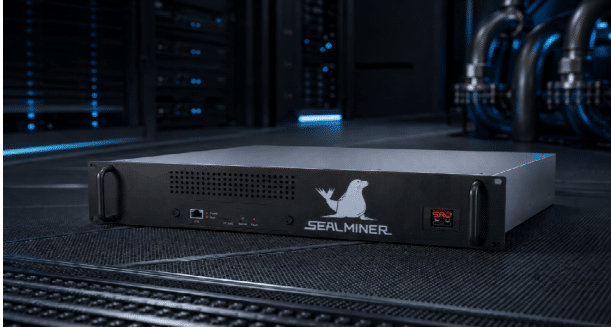
In 2026, nameplate hashrate is no longer enough to judge Bitcoin mining hardware. As hashprice — the revenue a machine earns per unit of hashing power — compresses and network difficulty, which retargets every 2,016 blocks (roughly every two weeks), continues to climb, ASIC efficiency increasingly decides how long a machine can stay above its shutdown price: the point at which a machine's electricity cost overtakes the mining revenue it earns. The margin math tightened further when the April 2024 halving cut the block subsidy from 6.25 BTC to 3.125 BTC. Yet J/TH, the joules of energy consumed per terahash of computing work, is only the starting point: the power efficiency ratio drives miner-side electricity demand, while mining rack density determines how much usable hashrate a facility can extract from limited power, cooling capacity and rack space.
This benchmark compares selected air- and hydro-cooled miners using published standard-mode specifications, then translates those figures into electricity cost and infrastructure burden. Purchase price, site-level PUE, uptime, batch variation and service coverage sit outside the calculation and should be assessed separately.
Air Cooling Economics Begin with the Existing Site
For an established air cooling farm, a sensible upgrade adds hash rate without forcing a site redesign. Standard ratings provide the cleanest comparison. The M70S+ power range is calculated from its published hash rate and efficiency.
On published standard settings, the A4 Pro Air leads this selected group in both hashrate and power efficiency. The Antminer S21 XP remains an important market reference because of its established deployment base, while the Avalon A16XP comes closer on hashrate but draws more power. Purchase price, delivery timing, firmware maturity and service coverage may still alter the final procurement decision.
Hydro Cooling Moves Rack Space onto the Balance Sheet
Hydro cooling shifts the constraint. As per-rack power has climbed, liquid-cooled models have spread across the major hardware brands compared here, and coolant flow, rack power and chassis height can cap a build before floor area does, so each miner must be read as part of a system.
The Antminer U3S23H leads the group in absolute output at 1,160 TH/s, making it the strongest single-machine performer in the comparison. Rack-level economics produce a different order. The A4 Ultra Hydro delivers approximately 443 TH/s per rack unit (U, the standard 1.75-inch increment of chassis height), compared with about 387 TH/s/U for the U3S23H, 256 TH/s/U for the WhatsMiner M73 and 230 TH/s/U for the Avalon A1566HA.
The A4 Ultra Hydro also combines its 2U format with a net weight of 21 kg. Compared with the 42 kg U3S23H, that represents approximately 21 metric tons less equipment mass across a 1,000-unit deployment. The difference can affect freight planning, installation labor, rack loading and RMA handling. It should not be mistaken for total site capacity, however. CDU capacity, coolant flow, branch-circuit limits, pipe pressure and maintenance clearance still determine how much of the theoretical rack density can be used in practice.
Operating Modes Add Flexibility Beyond Nameplate Efficiency
Nameplate efficiency is only part of the operating case when electricity prices change by hour or season. The SEALMINER platform, Bitdeer's ASIC line, supports Low Power, Normal and High-Performance modes, allowing operators to reduce power draw during demand-response events — programs in which grid operators compensate large power users for curbing consumption at peak times — or high-tariff periods and increase output when electricity is abundant.
For the A4 Ultra Hydro, the reported 1 PH/s result belongs to High-Performance Mode and should be treated as a mode-specific test, while the published 886 TH/s rating remains the appropriate procurement baseline.
Electricity Turns Ratios into Cash Cost
At $0.06/kWh, electricity cost per PH/s shows the margin effect. Site PUE, pumps, pool fees and downtime are excluded.
At $0.06/kWh, the difference between 9.45 and 9.5 J/TH is about $26 per PH/s annually, too small to determine a hydro-cooling purchase on its own. At this efficiency level, rack density, unit power, cooling design, serviceability and operating flexibility are likely to have greater influence on deployment economics.
Larger efficiency gaps are more consequential. Moving from 12.8 to 10.9 J/TH lowers annual miner-side electricity cost by roughly $999 per PH/s, while the gap between 17.8 and 9.45 J/TH is about $4,389. At fleet scale, such differences can materially affect shutdown thresholds and the amount of hashrate that remains viable during weaker market conditions. These figures exclude purchase price, facility PUE, cooling loads, uptime and maintenance, all of which remain essential to a complete cost assessment.
Final Assessment
The SEALMINER A4 series addresses three deployment priorities. Pro Air fits established air cooling sites, Pro Hydro supports a measured transition to hydro cooling, and Ultra Hydro targets operations constrained by power and rack space. The series does not lead every specification, while price, batch performance, uptime and market conditions will still determine payback.
Its broader value lies in how it reframes fleet planning. SEALMINER places less emphasis on headline hash rate alone and more on useful output per watt, rack unit and kilogram. That balance may help mining operations preserve a longer operating runway when hashprice weakens and seemingly minor infrastructure costs begin to shape profitability.
Primary sources: SEALMINER product page, SEALMINER product page, FinTechZoom
