Bitcoin Faces Macro Pressure as Yen Slides Past 160 and Oil Climbs on Gulf Tensions
Key Takeaways
- •Bitcoin fell less than 1% to around $78,500 as the yen breached 160 per dollar and a U.S. strike on Iran's Larak Island added bearish pressure.
- •Hawkish remarks from Warsh at Jackson Hole lifted expectations for a Federal Reserve rate hike, weighing on risk assets.
- •U.S. Treasury Secretary Scott Bessent said recent yen moves were contained and did not warrant joint U.S.-Japan intervention.
- •Strait of Hormuz oil flows fell from about 18 million barrels per day before the conflict to 4.8 million bpd in July and roughly 2 million bpd in August, per Kpler data cited by Reuters.
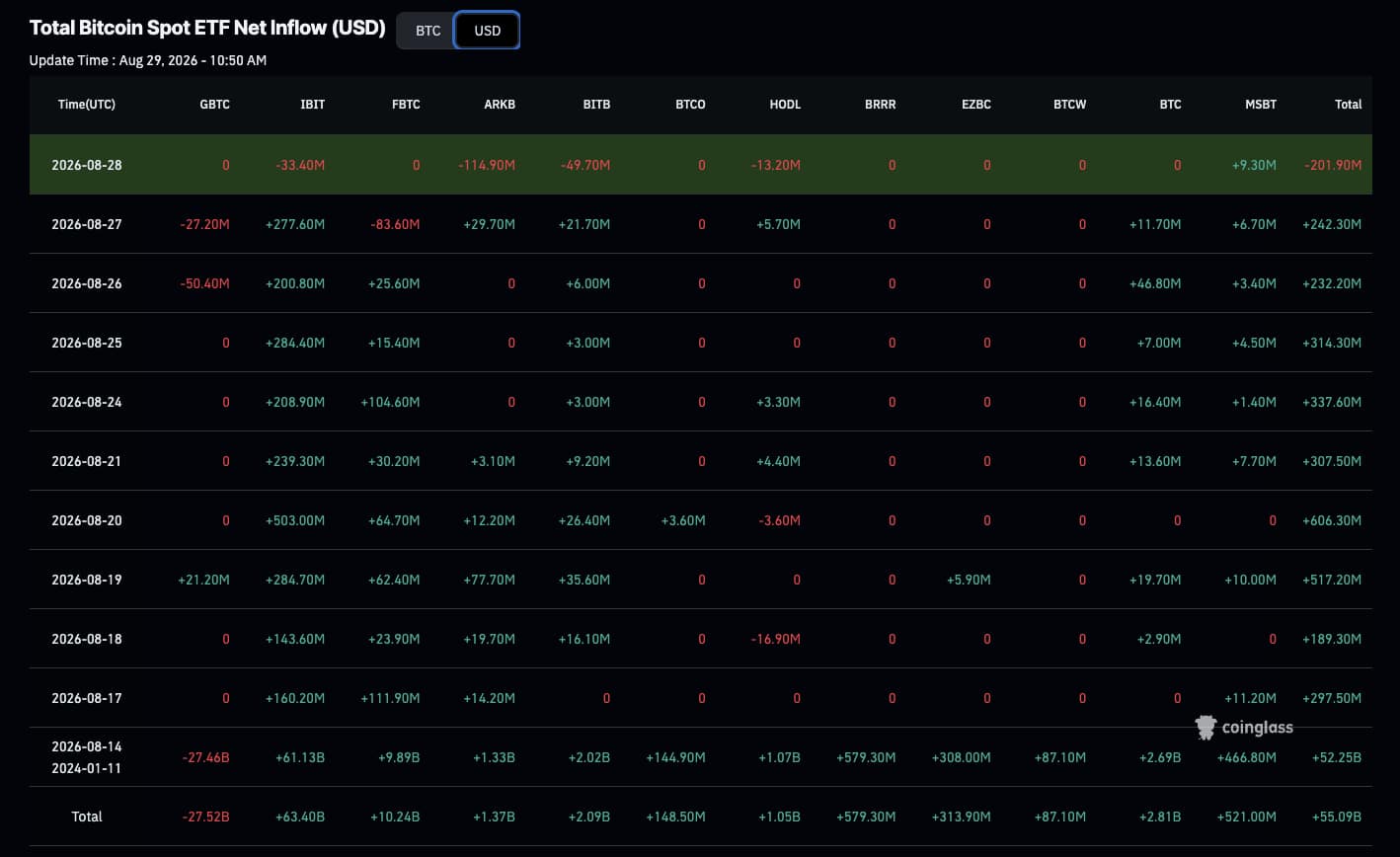
- •August's closing bitcoin ETF flow total is being watched to see whether an eight-day inflow run continued despite the shift in rate expectations.
Bitcoin traded at $78,500 as the Japanese yen breached 160 per dollar in Tokyo trading, while a U.S. strike on Iran's Larak Island added to bearish price pressure. The moves followed Friday's broad dollar advance and hawkish remarks from Warsh at Jackson Hole, which lifted expectations for a Federal Reserve rate hike. The 160 level has historically drawn attention because Japanese authorities have stepped into currency markets to support the yen during past episodes of weakness at similar levels.
Bitcoin's daily loss remained under 1% even as the strike in Iran lifted oil prices and pushed stocks lower. Market attention centered on whether bitcoin could hold near $78,000 amid yen weakness, higher rate expectations, and rising geopolitical risk.
The month's closing ETF total was also in focus as a measure of whether an eight-day bitcoin ETF inflow run continued through the change in rate expectations. Bond investors had been pricing a Fed positioned to hike, and that repricing had pulled institutional money out of bitcoin ETFs across May and June. Monday was the final trading session of August, making the month's closing ETF total a closely watched signal of whether the eight-day inflow run survived the shift in rate expectations. August's closing ETF flow total stands as the more immediate crypto-market indicator, offering a read on institutional appetite as bitcoin traded near $78,000 under competing market pressures, according to Bitcoin ETF Flows data from Coinglass.
Three Forces Behind Bitcoin's $78,000 Test
The first force is currency stress. The yen has long been used as a funding currency for investments in U.S. stocks and Treasury notes, placing its movement near intervention-sensitive levels alongside broader market positioning. When the yen weakens sharply, investors who borrowed cheaply in yen to buy higher-yielding dollar assets can face losses on those positions, which is one reason episodes of yen weakness have rippled through global markets.
U.S. Treasury Secretary Scott Bessent said Sunday that recent yen moves had been contained and did not warrant a joint U.S.-Japan intervention like the one seen the previous month. Bessent had warned Friday that a disorderly yen market could feed through to higher U.S. interest rates, linking Tokyo's currency market to Wall Street's rate outlook.
The second force is the repricing of rate expectations following Warsh's hawkish Jackson Hole remarks. Higher rate expectations tend to weigh on risk assets broadly, and bitcoin has traded alongside equities during past macro repricing episodes. The third is geopolitical: Reuters reported that U.S. forces struck Iran's Larak Island on Sunday and that oil rose as Gulf tensions flared.
Reuters has also reported that flows of crude and refined products through the Strait of Hormuz, which averaged about 18 million barrels per day before the conflict, fell to 4.8 million bpd in July and averaged around 2 million bpd so far in August, according to Kpler. The Strait of Hormuz is one of the world's most important oil chokepoints, and the reported drop represents a sharp reduction in seaborne energy supply through it. The report said traders were increasingly treating disruptions to Middle East energy supplies as a new reality rather than a temporary shock.
What Could Move BTC Next
Reuters reported that investors were turning to upcoming U.S. data, including the nonfarm payrolls report and consumer inflation figures, which could shape expectations ahead of the September Fed meeting. August's closing ETF flow total remained the more immediate crypto-market indicator.
The dollar's direction, the yen's movement near intervention-sensitive levels, and the path of rate expectations remain key variables for risk assets, including bitcoin.
- ETF flows: August's closing total will show whether the eight-day bitcoin ETF inflow run continued through the shift in rate expectations.
- Currency markets: The yen's movement near intervention-sensitive levels and the dollar's direction remain important market variables.
- U.S. data and policy expectations: Nonfarm payrolls and consumer inflation figures could shape expectations ahead of the September Fed meeting.
- Energy and geopolitical risk: Gulf tensions and their effect on oil markets add another macro risk alongside yen weakness and higher rate expectations.
Bitcoin's sub-1% daily decline came as the yen breached 160 per dollar, rate-hike expectations increased, and Gulf tensions flared. Cryptonews characterized bitcoin's response to the Iran-related market moves as comparatively muted, while the broader crypto market showed mixed performance.
Source: 99Bitcoins
