Bitcoin Bearish Sentiment Intensifies as Next Price Support Sits at $68,000
Key Takeaways
- •Coinglass has flagged $68,000 as Bitcoin's next major support level, cautioning that a break below it could deepen bearish pressure on the asset.
- •Bitcoin's monthly decline from above $80,000 to a low of $72,000, driven partly by macro pressures and the Binance hack, produced billions of dollars in liquidations.
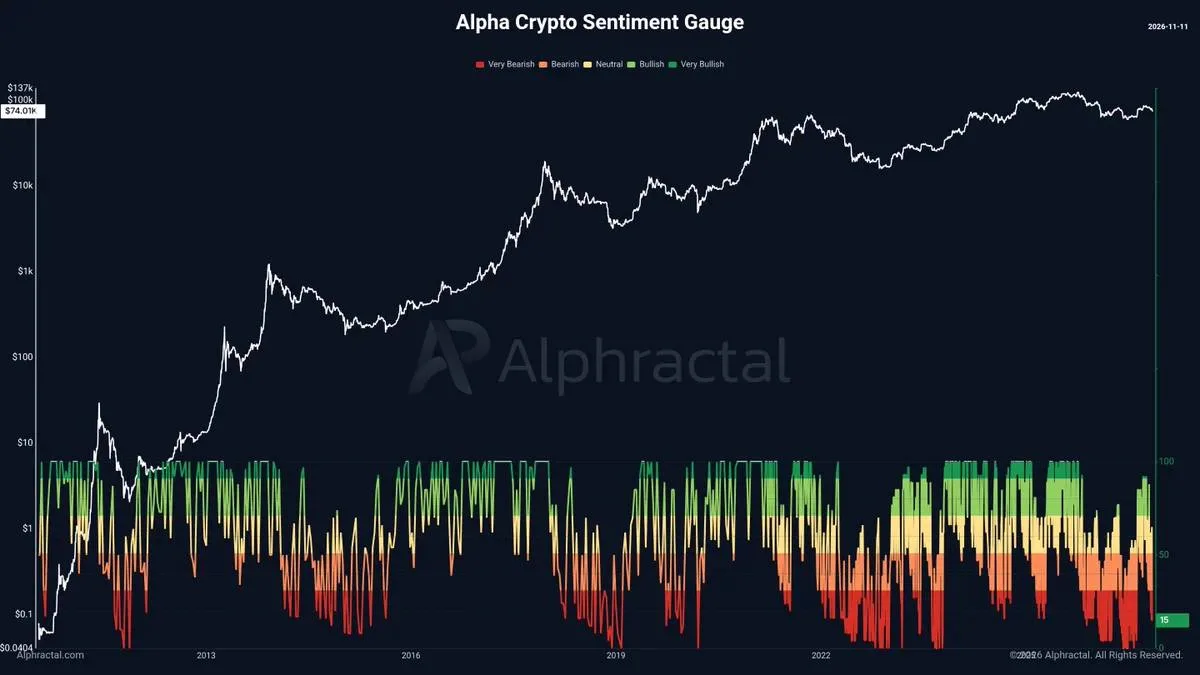
- •Market sentiment has deteriorated sharply, with the Crypto Fear & Greed Index at 27 and Alphractal's sentiment gauge at 15, signaling very bearish conditions.
- •Only 35% of Bitcoin holders are currently in profit, and the price trades below the $75,600 short-term basis cost, leaving recent buyers underwater.
- •Stablecoin supply fell $14.3 billion over 30 days, the fastest shrinkage since June 2022, while ETF outflows point to contracting institutional demand.
Bitcoin's next major support level sits at $68,000, suggesting the leading cryptocurrency could slip below $70,000, according to on-chain analytics platform Coinglass, which disclosed the level in a post on X and cautioned that any further price breakdown could prove bearish for the flagship asset.
The warning comes amid a difficult stretch for Bitcoin, which has fallen from above $80,000 to as low as $72,000 over the past month. That decline, driven in part by macroeconomic pressures and the recent Binance hack, has produced billions of dollars in liquidations. Bitcoin did bounce back in the most recent session, gaining almost 2% to reclaim a price above $74,000, but many observers do not regard the move as a recovery, describing it instead as part of a broader market bounce after days of falling prices rather than a genuine turnaround.
Bearish Sentiment Builds Across the Crypto Market
The support level below $70,000 reflects a broader deterioration in market sentiment. According to CoinMarketCap, the Crypto Fear & Greed Index currently reads 27 out of 100 — firmly in fear territory and approaching extreme fear, which begins at 20.
Joao Wedson, chief executive of crypto analytics platform Alphractal, said several other metrics back that assessment. Citing the Alphractal Alpha Crypto Sentiment Gauge, which analyzes sentiment drawn from news and social media, he noted the gauge sits at 15, indicating very bearish conditions. In a post on X, Wedson added that Google searches for crypto-related topics have declined across multiple years, while visits to Wikipedia pages covering crypto topics are near their lowest levels in history.
"What we're witnessing looks like a typical, boring accumulation phase, where many altcoins continue to decline or underperform, gradually pushing investors out of the market," Wedson said. Although he remains bullish on Bitcoin's long-term recovery, he noted that the data currently point to a stretch of "resilience, patience, and intelligent accumulation."
Other analysts have turned more bearish as well. CryptoQuant's Analyst Consensus Index dropped from -1.0σ to -1.8σ in just seven days, as the firm noted on X, with analysts citing ETF outflows, struggles in technology stocks, and inflation concerns as the forces driving the decline.
Bitcoin Trades Below Short-Term Basis Cost as Demand Contracts
Despite the recent rebound, Bitcoin now sits solidly below its short-term basis cost — the metric tracking the average price paid by buyers over the past 155 days — which currently stands at $75,600. That gap means recent buyers are underwater.
Only 35% of Bitcoin holders are now in profit, a sharp contrast with September, when nearly all holders were in the black. Two-thirds of holders now sit at a loss, and the only major cohort still holding gains is the group that acquired coins between $62,000 and $66,000, including buyers who accumulated around the August low.
The slide has also left Bitcoin performing worse than stocks. A key factor behind the falling price is a broad contraction in demand for BTC: beyond fading retail interest, institutional demand has weakened as well, with ETFs recording outflows.
Stablecoin supply provides further evidence of the pullback. According to Glassnode, which shared the figures in a post on X, stablecoin supply has fallen by $14.3 billion over the past 30 days — the fastest shrinkage since June 2022 — and a sign that investors are not preparing to buy more Bitcoin in the near term.

