Senators Gallego and Tillis Finalize Bipartisan Ethics Compromise on CLARITY Act
Key Takeaways
- •Senators Ruben Gallego and Thom Tillis are finalizing a bipartisan ethics compromise for the CLARITY Act that could be delivered to the White House within days.
- •The proposed agreement addresses Democratic concerns about conflicts of interest involving public officials and digital asset markets, which have been a primary obstacle to the bill's advancement.
- •The CLARITY Act aims to clarify regulatory responsibilities between the SEC and CFTC and would establish the first comprehensive cryptocurrency market structure rules in the United States.
- •Securing 60 Senate votes remains a significant challenge, and the ethics compromise could remove one of the largest barriers preventing the legislation from moving forward.
- •The bill's potential advancement comes as other jurisdictions including the EU, UK, Singapore, and the UAE have already implemented tailored cryptocurrency regulatory frameworks, increasing competitive pressure on U.S. lawmakers.
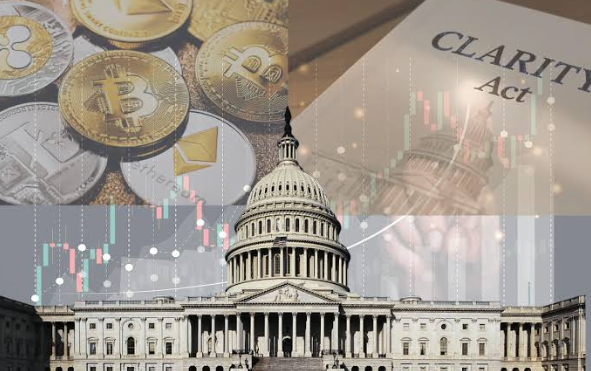
A bipartisan push to advance the CLARITY Act is gaining traction as lawmakers from both parties move toward a compromise addressing the ethics concerns that have stalled progress on the sweeping cryptocurrency regulation bill.
Democratic Senator Ruben Gallego and Republican Senator Thom Tillis are finalizing a proposed ethics compromise that could be delivered to the White House within days, according to reports. The agreement is designed to resolve one of the principal objections raised by Democratic lawmakers and could help clear the path to securing the 60 Senate votes needed to advance the legislation.
The development marks a pivotal moment in the debate over how the United States should regulate digital assets — an industry that has grown rapidly yet continues to navigate a complex and frequently uncertain regulatory landscape shaped largely by enforcement actions and agency guidance rather than comprehensive statutes.
A Closely Watched Bill
The CLARITY Act has become one of the most scrutinized cryptocurrency bills in Washington. It seeks to establish clearer rules for digital asset markets, define regulatory responsibilities, and create a more predictable framework for blockchain-sector companies. Supporters contend the legislation would deliver much-needed clarity for investors, exchanges, developers, and financial institutions. Critics, however, have flagged concerns over potential conflicts of interest, enforcement standards, and the relationship between government officials and the expanding crypto industry.
The current round of bipartisan negotiations centers specifically on ethics provisions that emerged as a major sticking point during the legislative process. Democratic lawmakers have advocated stronger safeguards to prevent conflicts involving public officials, financial interests, and digital asset markets. Republicans have generally backed advancing the broader regulatory framework while seeking to ensure the bill does not impose unnecessary barriers to innovation.
The compromise being developed by Senators Gallego and Tillis is intended to bridge those differences. Gallego has emphasized transparency, accountability, and protecting the public interest. Tillis has focused on creating regulatory certainty that allows technological innovation and financial markets to develop within a clear legal framework.
The 60-Vote Hurdle
Under Senate rules, most major legislation requires 60 votes to overcome procedural obstacles and proceed toward final consideration. Reaching that threshold has been among the biggest challenges for CLARITY Act supporters. If the ethics compromise is accepted and garners sufficient backing, it could remove one of the largest barriers preventing the bill from advancing.
The potential breakthrough arrives amid mounting pressure on lawmakers to establish clearer cryptocurrency regulations. For years, digital asset companies and investors have argued that the absence of a comprehensive framework has generated uncertainty, making it difficult for businesses to understand their legal obligations. The SEC under Chair Gary Gensler pursued an enforcement-heavy approach that drew both support for investor protection and criticism from industry participants who argued the agency should provide formal rulemaking rather than rely on litigation. Many in the industry have called for clearer definitions of which cryptocurrencies should be classified as securities, commodities, or other forms of digital assets.
The CLARITY Act aims to address some of these questions by establishing a clearer division of responsibilities between federal regulators, including the Securities and Exchange Commission (SEC) and the Commodity Futures Trading Commission (CFTC). The bill is part of a broader congressional effort to legislate digital asset rules, alongside separate proposals addressing payment stablecoins and anti-money-laundering requirements for the sector.
Bipartisan Cooperation on Crypto Policy
The negotiations underscore the growing role of bipartisan cooperation in shaping cryptocurrency policy. Unlike many issues that divide sharply along party lines, digital asset regulation has created opportunities for lawmakers with differing priorities to find common ground. Both Democrats and Republicans have acknowledged the need for clearer rules, though they continue to disagree on how those rules should be structured.
A successful Senate vote would represent a major step toward establishing the first comprehensive cryptocurrency market structure rules in the United States.
Global Competition and Institutional Adoption
The potential advancement of the CLARITY Act comes as global competition in digital finance intensifies. The European Union implemented its Markets in Crypto-Assets (MiCA) regulation, providing a unified framework across member states, while jurisdictions including the United Kingdom, Singapore, and the United Arab Emirates have moved to establish tailored crypto regimes. Industry leaders have warned that continued uncertainty in the United States could push companies to relocate to jurisdictions with clearer rules. Supporters argue that a modern regulatory framework would allow the U.S. to remain competitive in the rapidly evolving digital economy.
The legislation could also carry broader implications for institutional adoption. Banks, investment firms, asset managers, and technology companies have increasingly explored blockchain-based financial products, but many remain cautious due to regulatory uncertainty. The approval of spot Bitcoin and Ethereum exchange-traded funds in the United States signaled a shift toward greater mainstream integration, yet market participants note that product approvals alone do not substitute for comprehensive market-structure legislation. Clearer rules could encourage greater participation from traditional financial institutions by providing more confidence on compliance requirements.
At the same time, lawmakers continue to weigh innovation against consumer protection. Cryptocurrency markets have experienced episodes of extreme volatility, major exchange failures, and significant investor losses, prompting regulators to stress the importance of oversight. The challenge for policymakers is crafting rules that protect investors without constraining technological development.
Ethics Concerns in the Spotlight
The ethics debate surrounding the CLARITY Act reflects broader concerns about the relationship between government policy and the rapidly growing digital asset industry. As cryptocurrency companies gain influence and financial markets become more connected to blockchain technology, lawmakers face new questions about transparency, accountability, and potential conflicts of interest. The Gallego–Tillis compromise is intended to address those concerns while allowing the broader legislation to proceed.
Information regarding the potential bipartisan agreement has been discussed through updates shared by the Coin Bureau account on X (source post), contributing to wider awareness among cryptocurrency market participants.
What Comes Next
The coming days are expected to be decisive as lawmakers determine whether the ethics compromise is sufficient to secure broader bipartisan support. If the agreement reaches the Senate floor and obtains enough votes, it could mark one of the most significant developments in U.S. cryptocurrency policy in recent years. The White House response will also be closely watched as lawmakers attempt to build support for a regulatory framework that could shape the future of digital assets nationwide.
The outcome could determine whether the United States moves toward a unified approach for cryptocurrency regulation or continues to operate under a fragmented system of enforcement actions and agency guidance.
Source: Hokanews

