Biochar Industrial Group Raises $1.5M to Turn African Farm Waste Into Carbon Revenue
Key Takeaways
- •Biochar Industrial Group raised $1.5 million in pre-seed funding led by BREEGA, with backing from The Catalyst Fund and non-dilutive support from the Mulago Foundation, to expand its Biochar-as-a-Service model across Sub-Saharan Africa.
- •The company installs pyrolysis equipment directly inside food-processing plants, heating biomass waste such as nut shells, maize cobs, husks, and stalks above 600°C in low-oxygen conditions to produce biochar that can remain in soil for hundreds to thousands of years.
- •BIG's process generates two revenue sources: biochar used as a soil enhancer in agriculture and carbon removal credits purchased by companies to offset their emissions.
- •The company's controlled field trials showed crop yield increases of up to 50%, although these results have not yet been validated across diverse crops and real-world growing conditions.
- •Founders Ikenna Nzewi, Uzoma Ayogu, and Isaiah Udotong previously worked together at Releaf, a Y Combinator-backed agro-processing company, bringing nearly a decade of experience managing factories, equipment design, and farmer supply chains.
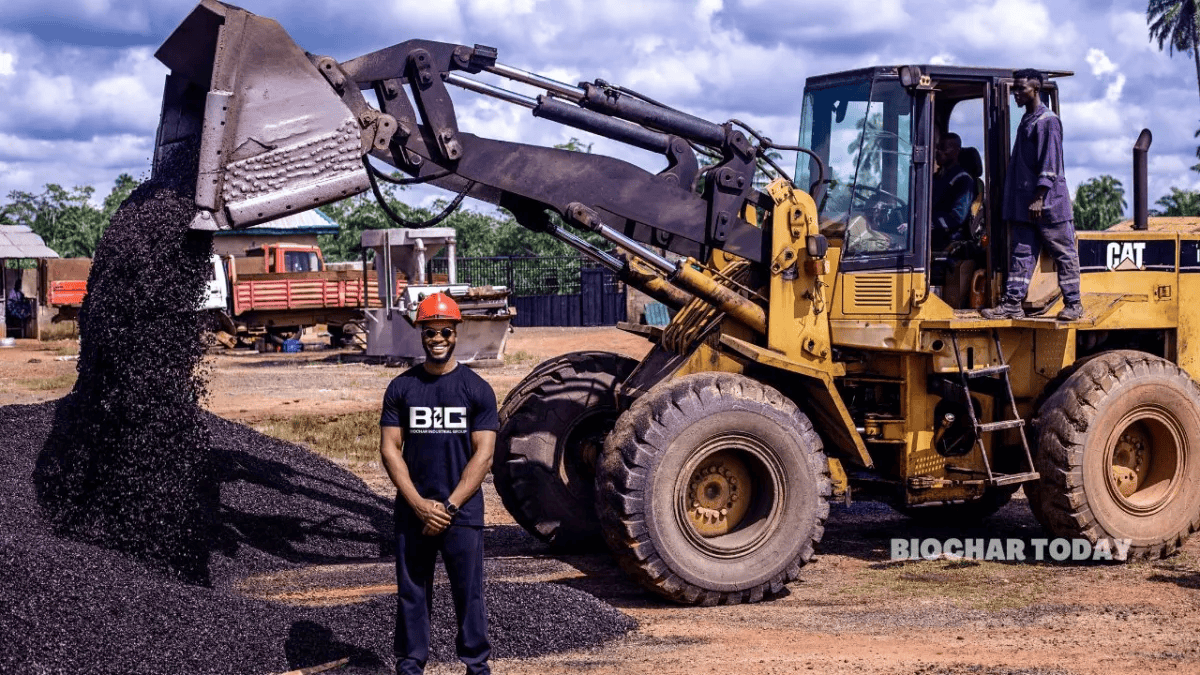
Biochar Industrial Group (BIG), a climate technology company that converts agricultural waste from food-processing factories into biochar and carbon removal credits, has raised $1.5 million in pre-seed funding to expand its Biochar-as-a-Service model across Sub-Saharan Africa.
The round was led by BREEGA, with support from The Catalyst Fund and non-dilutive contributions from the Mulago Foundation. According to the company, the capital will be used to strengthen partnerships with food-processing companies and to deploy more of its pyrolysis technology across the region — milestones that will show how quickly the Biochar-as-a-Service model moves from early funding to scaled operation.
From factory waste to carbon revenue
Food processing generates large volumes of biomass waste, including nut shells, maize cobs, husks, and stalks. Rather than letting this material rot or paying to dispose of it BIG installs pyrolysis equipment directly at the factories.
Pyrolysis heats organic materials to more than 600°C in an environment with very little oxygen. Because the material is not burned in open air, the carbon it contains is left in a solid, durable form known as biochar, which can remain in soil for hundreds or even thousands of years. That durability underpins the carbon-credit side of the business, since buyers are ultimately paying for carbon to stay locked away over long timescales.
The process yields two valuable outputs. The first is the biochar itself, which can be reused in agriculture as a soil enhancer. The second is carbon removal credits — certificates that companies purchase to offset their carbon emissions. Amid growing focus on sustainability, the credits represent both an environmental benefit and a new income stream for food factories.
Field trial results
BIG says its biochar can deliver significant crop yield improvements, reporting increases of up to 50% in controlled field trials. The company presents the figures as evidence of the product's agricultural value, though the results come from specific tests rather than widespread farming practice. How those gains hold up across different crops and real-world growing conditions is likely to shape how widely processors adopt the technology as deployments expand.
A decentralised model
A key advantage of BIG's approach is its decentralisation. Instead of building large facilities that require transporting bulky agricultural waste over long distances, the company places its pyrolysis units inside food-processing plants. The on-site placement means factories avoid the cost of moving waste to distant processing centres. This cuts logistics costs and allows the plants to benefit directly from the process, turning waste into a potential money-maker.
The pitch to agribusinesses is clear: rather than merely adopting climate-friendly technology, factories can convert material they once considered useless into a source of income. By addressing waste disposal and revenue generation at the same time, BIG is targeting a significant problem in food production.
Founding team
BIG, which outlines its Biochar-as-a-Service model on its official website, was founded by Ikenna Nzewi, Uzoma Ayogu, and Isaiah Udotong, who all previously worked together at Releaf Earth, an agro-processing company backed by Y Combinator. Their experience in agriculture spans nearly a decade and includes overseeing four factories, designing food-processing equipment, and managing supply chains involving thousands of small farmers. The trio is now applying that operating background to carbon removal.
"Africa has natural advantages to lead the most scalable and cost-effective biomass-based carbon removal globally," said Ikenna Nzewi, CEO of BIG. In his view, the continent is positioned to harness biomass for carbon capture in a way other regions cannot match.
A growing carbon-removal market
BIG is entering a carbon-removal market that is gaining traction among businesses seeking ways to absorb carbon from the atmosphere rather than focusing only on cutting future emissions. For African food processors, the company offers a more tangible proposition: taking waste that is often a financial burden and turning it into a valuable product, creating both climate benefits and a new revenue stream.
In effect, BIG is converting an environmental challenge into an opportunity for business growth and climate action at the same time.
Source: TechNext24

