Binance NFT Marketplace in 2026: Fees, Features, Security, and Regional Access
Key Takeaways
- •Binance NFT Marketplace charges a 1% platform fee on successful sales, notably below the 2.5% to 7.5% commonly levied by competing NFT platforms.
- •Minting NFTs on BNB Chain through the marketplace usually costs only a few cents, making it significantly cheaper than minting on Ethereum.
- •Access to the marketplace is tied to a standard Binance account, so existing exchange users can trade NFTs without creating a separate wallet or login.
- •The platform is restricted in the United States, where Binance.US does not support NFTs, as well as in Canada, the United Kingdom, and several other jurisdictions.
- •Despite low fees and security backed by the SAFU fund, the marketplace faces drawbacks including centralization, a smaller catalog of collections, and stricter creator minting permissions.
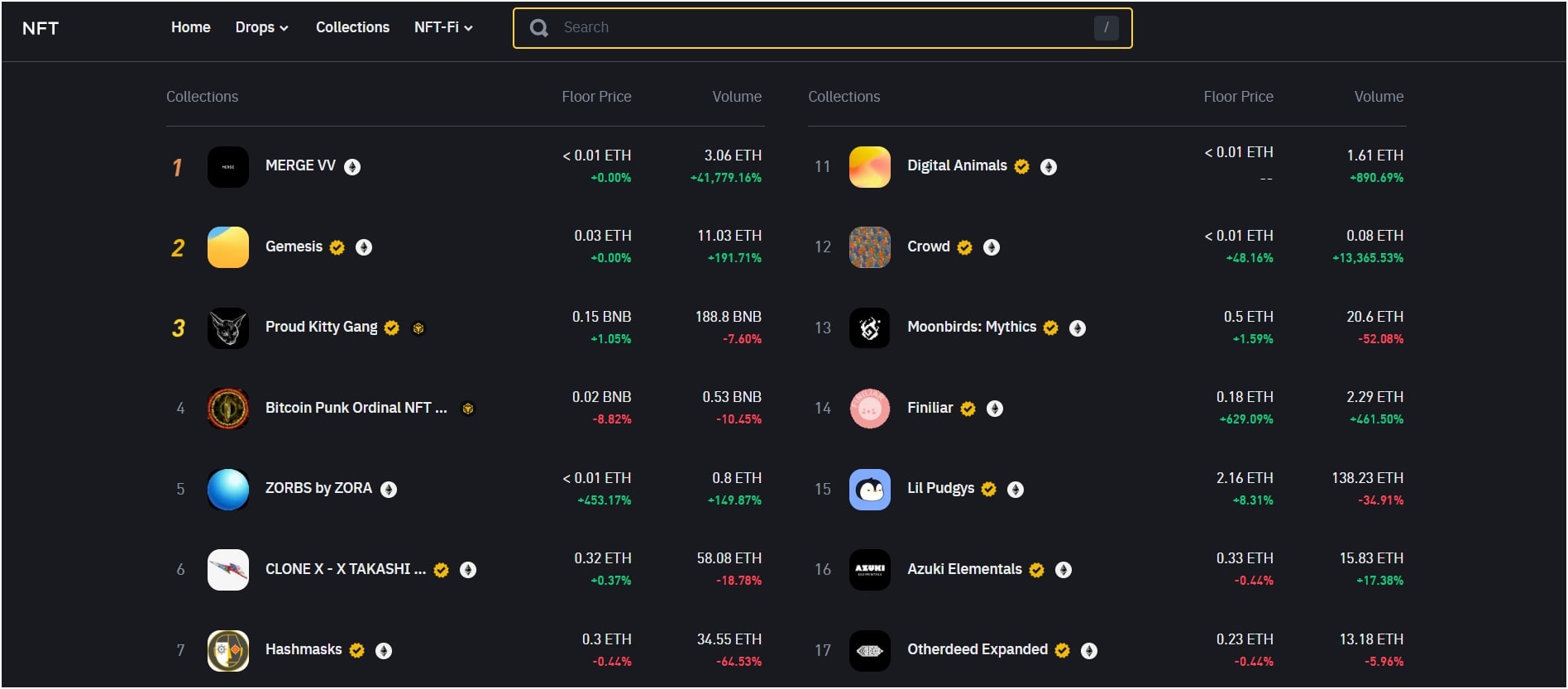
Binance NFT Marketplace is a platform operated by Binance where users can buy, sell, mint, and trade non-fungible tokens (NFTs). It supports multiple blockchains, charges comparatively low fees, and is accessible across much of the world. According to a detailed review published by Crypto Ninjas, the characteristics that most distinguish the marketplace are its deep integration with the Binance ecosystem, a competitive fee structure, and distinctive offerings built around gamification. The platform also emphasizes strong security, regulatory compliance, and an interface that works smoothly on both desktop and mobile devices.
The review walks through what the marketplace is, how it operates, its key features, the countries it serves and restricts, its complete fee schedule, its advantages and drawbacks, and a step-by-step guide to buying and selling NFTs.
What Is Binance NFT Marketplace?
Binance NFT Marketplace is a centralized venue for purchasing, selling, and creating non-fungible tokens. Access is tied directly to a standard Binance account, so anyone who already trades cryptocurrencies on the exchange can enter the NFT marketplace with the same login. For existing Binance customers, this substantially lowers the barrier to entering the NFT space.
The marketplace supports NFTs created on Ethereum and on the Binance Smart Chain, which has since been rebranded as BNB Chain. Minting on BNB Chain is a particular cost advantage: creating, or “minting,” a token on that network typically costs only a few cents, far less than the equivalent operation on Ethereum. According to the review, this gap benefits creators, who can launch collections without significant upfront expense, and buyers, who avoid elevated costs passed through pricing.
Several acquisition channels are available. Users can purchase NFTs outright at a fixed price, participate in auctions by placing bids, or buy “Mystery Boxes” — sealed packages containing a random NFT from a collection, with varying levels of rarity.
Before using the marketplace, users must register with Binance and complete the identity verification process, then deposit cryptocurrency such as BNB or Ether, which serve as the platform's principal payment methods. Beyond standard sales, Binance also operates “Initial Game Offerings” (IGOs), which release unique NFT assets tied to leading gaming projects.
Core Strengths
The review identifies five principal advantages: low fees, integration with the Binance exchange, high liquidity, inexpensive minting on BNB Chain, and robust security measures.
Low fees. Transactions on the marketplace typically carry a fee of only 1% for buying and selling NFTs, meaning traders retain a larger share of their funds than on higher-cost platforms.
Integration with the Binance ecosystem. Existing users of the main Binance exchange can start using the NFT marketplace with their current account, making it easy to keep track of cryptocurrencies and NFTs in one place.
High liquidity and a large user base. The marketplace benefits from its backing by Binance, one of the largest cryptocurrency exchanges in the world. Substantial user numbers and trading volume make it generally easier to buy and sell NFTs quickly, since counterparties are consistently available.
Low minting costs on BNB Chain. For creators, minting NFTs on BNB Chain through the marketplace often costs only a few cents — a significant advantage over networks such as Ethereum, where minting fees can run far higher. The review describes this as making the platform more accessible to new artists.
Strong security measures. Binance's security infrastructure extends to the NFT marketplace, including two-factor authentication and the Secure Asset Fund for Users (SAFU), which protect user assets and transactions.
Notable Drawbacks
Three disadvantages are highlighted: centralization, a comparatively limited range of NFT collections, and restrictive minting permissions.
Centralization. The marketplace is controlled by a single company, Binance. The review notes that some in the cryptocurrency community prefer decentralized platforms, which are viewed as giving users more control and reducing the risk of a single point of failure.
Less diverse NFT collections than older platforms. Because the marketplace is relatively newer than some established competitors, it may not always feature the rarest or most sought-after collections. The review characterizes its catalog as still growing and building out its unique offerings.
Restrictive minting permissions. Becoming an authorized creator and minting NFTs can be more stringent than on some other marketplaces, despite the low minting fees. Not every user can immediately begin minting their own NFTs.
Legitimacy and Safety
The review concludes that Binance NFT Marketplace is generally considered legitimate and safe. As part of Binance — described as the biggest cryptocurrency exchange in the world — it employs the same security measures that protect the primary trading platform. These include real-time monitoring for suspicious activity, cold storage that keeps assets offline, and two-factor authentication. In the event of a significant security breach, the SAFU insurance fund can assist in covering losses.
Supported and Restricted Countries
The marketplace is generally available in most countries where Binance itself operates — more than 100 countries across Europe, Asia, Africa, and the Americas, including France, India, Brazil, and South Africa.
Binance services, including the NFT marketplace, are nonetheless limited or unavailable in a number of jurisdictions due to regulatory restrictions and compliance issues. Most notably, the United States is served by a separate platform, Binance.US, which operates under different regulations with availability restricted by state. US residents cannot access the global Binance NFT Marketplace through Binance.com, and Binance.US does not support NFTs. Canada, the United Kingdom, the Netherlands, Iran, Cuba, Syria, North Korea, and the Crimean region of Ukraine are among the other territories where the marketplace is typically restricted. The review also warns that attempting to circumvent restrictions with a VPN or a falsified location can result in an account being flagged or banned. Since access is determined by national regulatory boundaries rather than by Binance's overall footprint, prospective users should confirm that the marketplace is currently supported in their jurisdiction before registering or depositing funds.
Key Features in Detail
Integration With the Binance Ecosystem
The marketplace connects to Binance's broader blockchain infrastructure, including its cryptocurrency exchange. Users do not need to create a separate wallet or login for NFTs if they already hold a Binance account for trading. Balances denominated in BNB, BUSD, or ETH are accessible on the same platform, making it simple to move between trading cryptocurrencies and collecting or selling NFTs. The review emphasizes that this arrangement also draws on Binance's massive existing user base, producing the large pool of potential buyers and sellers that a liquid marketplace requires.
Competitive Fee Structure
Binance typically charges a flat platform service fee of only 1% of the sale price when an NFT is bought or sold. The review contrasts this with many other NFT marketplaces, which commonly charge between 2.5% and 7.5% or more — a difference that allows creators and sellers to keep a larger share of the proceeds from successful sales. In addition, gas fees for minting NFTs on BNB Chain through the platform are notably low, often just a few cents, making it economical for artists and creators to launch collections without incurring high upfront costs.
Unique Offerings and Gamification
Beyond direct purchases and auctions, the marketplace offers distinctive acquisition formats. “Mystery Boxes” function as digital lucky dips: a buyer purchases a box and receives a random NFT from a collection, adding an element of surprise and excitement. The platform also heavily features “Initial Game Offerings” (IGOs), launches of exclusive NFT assets from popular gaming projects, often in the form of in-game items or early access passes.
Security, Compliance, and Trust
As an extension of Binance, the marketplace inherits the exchange's industry-leading security protocols and its commitment to regulatory compliance. Measures include advanced two-factor authentication, cold storage for a significant portion of user assets to protect against hacks, and continuous real-time monitoring for suspicious activities and potential threats. The platform maintains the Secure Asset Fund for Users (SAFU), an emergency insurance fund created to safeguard users' assets in dire situations. The review also points to Binance's adherence to international laws and its Know Your Customer (KYC) identity verification, and notes that the exchange is trusted by more than 275 million users globally.
Cross-Device Usability
The interface is designed for usability across desktop computers, tablets, and smartphones via the Binance mobile app. The review describes the design as simple and uncluttered enough for users unfamiliar with NFTs, with a responsive layout that adapts fluidly to different screen sizes. Users can browse collections, place bids, manage holdings, and track sales conveniently from their preferred device at any time.
Fee Structure Explained
The core marketplace fee is 1% on successful NFT sales. Overall, the review identifies six fee categories: platform fees, creator royalty fees, listing fees, burning fees, deposit and withdrawal fees, and minting fees. Because these charges are levied independently, a single resale can involve several at once — Binance's 1% platform fee, a creator royalty of 1% to 10% paid by the seller, and any network gas or withdrawal fees charged by the underlying blockchain — so the effective cost of a transaction is often higher than the headline platform fee alone.
Platform Fees
Binance charges a 1% platform fee on every successful NFT sale, deducted from the final sale price. On a $100 sale, Binance generally takes around $1.
Creator Royalty Fees
Creator royalties are paid to the original NFT creator each time the token is resold. Binance allows creators to set their own royalty rate between 1% and 10%. The royalty is added to the sale price and paid by the seller.
Listing Fees
There is no charge for listing NFTs for sale. Sellers can set a fixed price or place an NFT up for auction without paying an upfront fee.
Burning Fees
Burning an NFT means sending it to a null address where it can no longer be accessed, effectively removing it from circulation. Binance itself does not charge a specific burning fee; however, the standard network transaction (gas) fee set by the underlying blockchain still applies to the action.
Deposit and Withdrawal Fees
Binance generally does not charge deposit fees. Withdrawals of cryptocurrencies or NFTs do carry fees, but these are network transaction fees paid to the miners or validators that process them, not charges set by Binance.
Minting Fees
Minting an NFT means creating it and recording it on a blockchain, and the cost depends on the chosen network. On BNB Chain, minting fees are usually very low, often just a few cents. On Ethereum, fees can be much higher and fluctuate considerably depending on network activity, so the final cost of creating an NFT on that chain depends on conditions at the moment of minting. Binance does not add a separate minting fee on top of the network's gas fee.
How to Use Binance NFT Marketplace: Step by Step
To buy and sell NFTs, users must first log in to Binance — or register if they lack an account — and complete identity verification before transacting. The review lays out six steps, which apply to the global platform at Binance.com; readers in the restricted jurisdictions described above — most notably the United States, where Binance.US does not support NFTs — cannot complete them on the global marketplace.
Step 1: Prepare a Verified Binance Account
A Binance account is required, and the identity check (KYC) must be completed; without it, users cannot trade NFTs or buy cryptocurrency. Accounts that are already set up and verified are ready to proceed to the next step.
Step 2: Deposit Cryptocurrency Into the Spot Wallet
Users should fund their Binance Spot Wallet with BNB or ETH, the main currencies used for NFT purchases on the platform. These can be bought with local currency or transferred from another crypto platform, and the review advises ensuring sufficient BNB is available for trading.
Step 3: Navigate to the NFT Marketplace
On desktop, go to Binance.com and click “NFT” at the top of the page. On the mobile app, swipe down from the top to reveal “Marketplace” and select “Binance NFT,” or tap “More” and locate “Binance NFT.”
Step 4: Find an NFT
Use the search bar or filters to locate an NFT, browsing by category such as art or games, by price, or by collection name. New and popular listings can also be reviewed.
Step 5: Buy the NFT
Three purchase methods are available. Fixed price: click “Buy Now” and confirm the price; with sufficient crypto, the NFT is acquired immediately. Auction: click “Place a Bid” and submit an offer; the highest bid when the timer expires wins. Make an Offer: click “Make Offer,” enter the proposed price, and the seller can accept or decline.
Step 6: Sell an NFT
Owners can list an NFT for sale using either a fixed price or an auction. After setting the price and choosing the preferred cryptocurrency for payment, confirm the listing details and click “Submit.” A small fee, usually 1%, applies when the NFT sells. Binance reviews the listing before it goes live.
Taken together, the review presents Binance NFT Marketplace as a centralized but low-cost entry point to NFT trading, distinguished by its integration with a major exchange, its 1% fee schedule and inexpensive BNB Chain minting, gamified formats such as Mystery Boxes and IGOs, and institutional-grade security — offset by centralization, a still-developing catalog, and tighter creator onboarding. Availability remains subject to national regulatory boundaries.
This article is based on the review Binance NFT Marketplace Review: What Makes It Unique in 2026?, originally published by Crypto Ninjas.

