Binance Hacker Moves $35.5M in Ethereum as $1.9B in Stolen Crypto Remains Unfrozen
Key Takeaways
- •The hacker's wallets moved $35.52 million in Ethereum on November 26, following larger transfers of roughly $142.1 million and $248.23 million on November 18 and 19.
- •The attacker still controls about $1.9 billion in unfrozen funds — approximately 461,980 ETH and 18,350 BTC — with Bitcoin accounting for nearly 59% of the total.
- •Around $2.6 billion in stablecoins remains frozen, and the DOJ's November 23 civil forfeiture motion seeks more than $1.1 billion in USDC across 36 addresses on 18 blockchains.
- •US officials blamed the attack on North Korea's Lazarus Group, but native cryptocurrencies like Bitcoin and Ethereum cannot be directly blocked by an issuer, complicating recovery efforts.
- •Binance estimated the breach's damage at about $6.34 billion, replenished 98% of affected tokens by October 31, and ended all hack-related withdrawal suspensions on November 27.
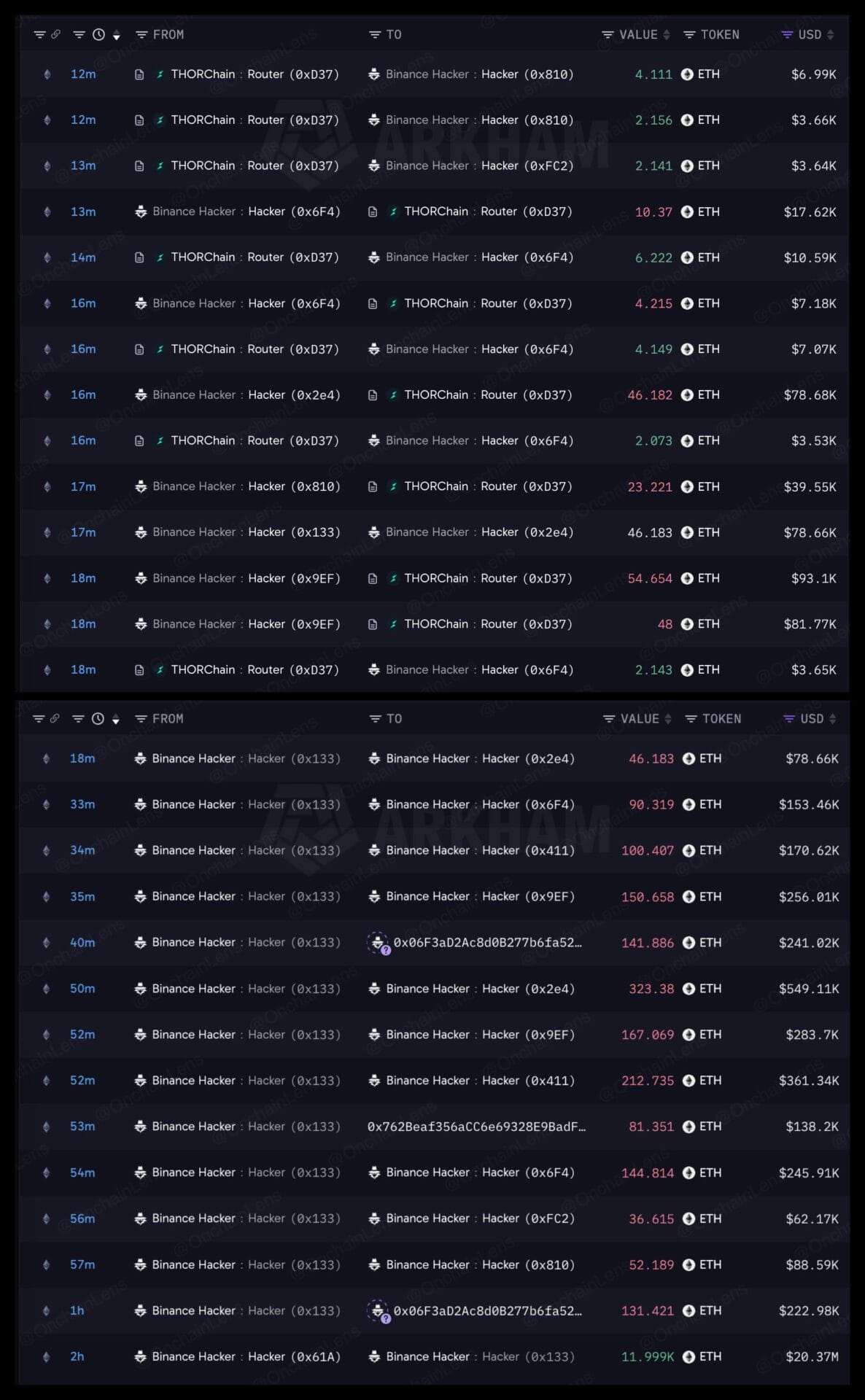
Wallets linked to the October Binance security breach have resumed moving stolen cryptocurrency, with blockchain analytics platform Onchain Lens identifying fresh Ethereum transfers worth $35.52 million on November 26. The renewed on-chain activity comes amid ongoing efforts by investigators and stablecoin issuers to recover billions of dollars in stolen digital assets.
BINANCE HACKER IS ON THE MOVE AGAIN
So far, the hacker has moved 35.52M worth $ETH in the past few hours.
Current Unlocked holding:
→ 461.98K $ETH ($785.2M)
→ 18.35K $BTC ($1.11B)
Frozen holding: $2.6B in stablecoins
Is Lazarus planning to launder funds again using tornado?
powered by @rainbetcom
— Onchain Lens (@OnchainLens) November 26, 2026
Bitcoin Makes Up Nearly 59% of Unfrozen Binance Hack Funds
According to figures shared by Onchain Lens, the attacker still holds approximately 461,980 ETH valued at about $785.2 million, along with 18,350 BTC worth roughly $1.11 billion. Together, the two balances represent close to $1.9 billion in unfrozen stolen funds. Bitcoin accounts for nearly 59% of the combined unfrozen holdings, while Ethereum makes up the remaining 41%. In addition to these unlocked balances, the blockchain analytics platform also identified approximately $2.6 billion in stablecoins that remain frozen.
The latest Ethereum transfers form part of a considerably larger chain of transactions that occurred earlier in November. According to the data, the stolen wallets traded approximately $142.1 million worth of ETH on November 18, followed by an additional $248.23 million on November 19.
Onchain Lens noted that the recently moved tokens could be flowing back into Tornado Cash, echoing the possibility of renewed laundering raised in its November 26 post, though the platform was not certain where the funds were going or why. Tornado Cash is a crypto mixing service that obscures the link between sending and receiving wallets, a category of tool commonly used in attempts to launder stolen funds. Transfers of cryptocurrency from one wallet to another are not always proof that the currency has been sold, converted, or successfully laundered.
US Authorities Pursue $1.1 Billion in Stolen USDC
The renewed movement of funds came days after the US Department of Justice (DOJ) filed a civil forfeiture motion targeting more than $1.1 billion in USDC suspected to have been connected to the Binance hack. The November 23 filing lists 36 blockchain addresses across 18 blockchains. The stablecoins, issued by Circle, were already subject to a court order prohibiting their transferability. A civil forfeiture motion is the legal process through which the government asks a court for ownership of property it alleges is connected to criminal activity, and it must run its course before any assets can be permanently forfeited and any restitution made.
On October 25, US officials blamed the attack on North Korean cybercriminals belonging to a group known as Lazarus Group, which US authorities have previously linked to some of the largest cryptocurrency thefts on record.
Frozen Crypto Does Not Mean Recovered Funds
The DOJ stated that nearly $3 billion in cryptocurrency has recently been frozen, seized, or returned thanks to the work of authorities. That figure, however, includes assets described as being in various stages of recovery, meaning the funds are not yet back with their owners.
Frozen stablecoins do not automatically return to Binance and can remain subject to legal action before any restitution is made. The gap in recoverability comes down to asset design: centrally issued stablecoins give their issuer the technical ability to block balances at specific addresses, while native cryptocurrencies such as Bitcoin and Ethereum are, for the most part, impossible for a token issuer to take offline directly, adding a further layer of difficulty to asset recovery efforts.
Binance Restores Withdrawals as Investigators Track Stolen Assets
Binance estimated the financial damage from the October 29 security breach at approximately $6.34 billion and said it would use company funds to rectify damages suffered by customers. As of October 31, the exchange said it had replenished 98% of the affected tokens and continued purchasing less liquid cryptocurrencies into early November.
On November 27, Binance announced that it had ended all withdrawal suspensions related to the security incident. The exchange assured customers that their assets are 100 percent backed, though some blockchain networks remain temporarily unavailable for maintenance or upgrades unrelated to the hack. For customers, the operational side of the incident is now largely settled, leaving the forfeiture proceedings and any further on-chain movements by the attacker as the principal threads to watch.
Source: Crypto Ninjas

