Binance Customer Records in Russia Reportedly Used in Terrorism Case
Key Takeaways
- •A CoinDesk report dated August 17, 2026 claims Binance handed customer data to Russian authorities, and the disclosure reportedly led to the arrest of a Ukrainian donor.
- •The material at issue consisted of user identity records collected through KYC procedures, and the data was later used in a terrorism case, according to the report.
- •The claim remains unverified, with no court finding described, no official Binance response included, and low confidence assigned to the underlying research.
- •KYC data collection is an industry-wide practice imposed by anti-money-laundering and counter-terrorism-financing rules, and Binance publishes a formal process for law enforcement requests.
- •The report underscores that centralized exchanges are not anonymous, since user identity held by a platform can be shared with governments across jurisdictions.
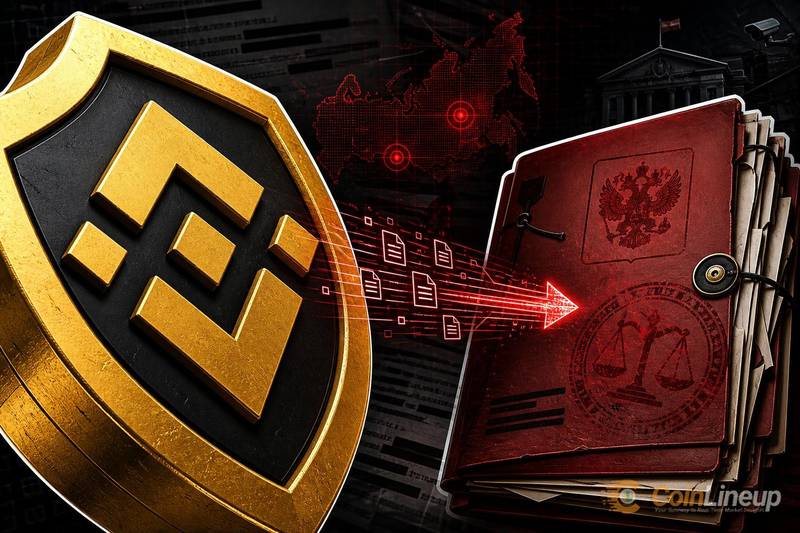
A report claims that Binance handed customer records in Russia to authorities in that country, and that the data subsequently played a role in a terrorism case. The claim concerns user information rather than funds, and it has not been confirmed by any court finding described in the report.
What the Report Claims
The story originates from investigative reporting rather than an official Binance statement. According to a CoinDesk report published on August 17, 2026, Binance shared user data with Russia, and that disclosure led to the arrest of a Ukrainian donor.
The pairing is what gives the claim its sensitivity: the records reportedly went to Russian authorities, and the individual named in the reporting is a Ukrainian donor. What the report does not contain matters just as much — there is no court finding described, and no official response from Binance is included.
The core allegation is straightforward: Binance customer records tied to Russia were later used in a terrorism case, the report says. The significance lies in the fact that personal account information — not stolen cryptocurrency — is at issue. When an exchange holds your identity documents, that data can travel far beyond your control once it is handed to a government.
The Timeline: Records First, Case Later
The phrase “were later used” points to a gap in time. Binance first collected the customer records as part of routine account sign-up. Later, that information reportedly surfaced within a terrorism case.
The report frames the sequence around Russia and an arrested Ukrainian donor, who is the key actor named in the reporting.
It is important to separate two things here. Holding customer records is routine for any regulated exchange. Using those records in a legal case against a person is a very different step, and the report attributes that later use to the data Binance provided. A terrorism case is also among the most consequential legal settings in which personal records can surface, which is why the reported later use carries weight that a routine data handover would not.
Much of the account remains unverified. The research behind the story carries low confidence, so the details should be treated as a single outlet’s account rather than established fact.
How Exchange Data Can End Up With a Government
Every major exchange collects identity data through a process called KYC, short for “know your customer.” A user’s name, documents, and sometimes address are stored the moment an account is opened. These collection duties are not chosen by platforms alone: KYC requirements are imposed on exchanges by anti-money-laundering and counter-terrorism-financing rules in the jurisdictions where they operate, which is why identity collection is an industry-wide practice rather than a Binance-specific policy.
Binance publishes a process for law enforcement requests, which allows authorities to ask for user information through formal channels. This is standard across the industry, but the CoinDesk report raises questions about how that data is used once it leaves the company. A platform that serves users in many countries can also receive requests from many countries, which means a user in one jurisdiction can be affected by a disclosure made to another — a structural feature of centralized exchanges that this report brings into focus.
Crypto is often described as private, yet centralized exchanges are not anonymous. This is a recurring theme in cases where funds or accounts can be reached by outside parties, and it applies to identity data as well.
Why This Matters for Regular Crypto Holders
For someone holding a small amount of Bitcoin on a large exchange, the practical lesson concerns data rather than price. Account information sits with the company, and companies can be compelled to share it.
This is not unique to any one platform. Similar concerns appear in law enforcement actions such as the Bitcoin ransom case involving multiple defendants, where blockchain and account data feed directly into investigations.
Binance remains the largest exchange by trading activity, and its practices ripple across the market — including moments such as a recent Binance-driven short squeeze in Bitcoin. That reach is precisely why a report about its handling of customer records draws attention.
The practical takeaway: recognize that any exchange you use holds your identity, understand its law enforcement policy, and follow how this specific report develops before drawing firm conclusions. In practice, that means watching for a public statement from Binance, corroboration from outlets beyond the single report, and any change in the confidence level of the underlying research.
Disclaimer: This article is for informational purposes only and does not constitute financial or investment advice. Cryptocurrency and digital asset markets carry significant risk. Always do your own research before making decisions.
Source: CoinLineup

