Binance CEO Richard Teng Calls Bitcoin Selloff Normal as Saylor and Strive Eye More BTC
Key Takeaways
- •Binance CEO Richard Teng characterized the drop toward $62,000 as a typical market reaction to tighter financial conditions, while maintaining that Bitcoin's longer-term outlook remains intact.
- •Binance Research measured a 15.6% Bitcoin decline over 11 days, the asset's steepest comparable drop since June.
- •Strategy Executive Chairman Michael Saylor and Strive CEO Matt Cole signaled interest in purchasing more Bitcoin on November 15, though neither confirmed a new transaction.
- •US spot Bitcoin ETFs recorded approximately $1.91 billion in net withdrawals across seven consecutive trading sessions ending November 13, including $185.4 million on Friday alone.
- •MARA Holdings sold 13,597 BTC for about $1.1 billion after the third quarter ended, using $750 million of the proceeds to repay Bitcoin-backed loans.
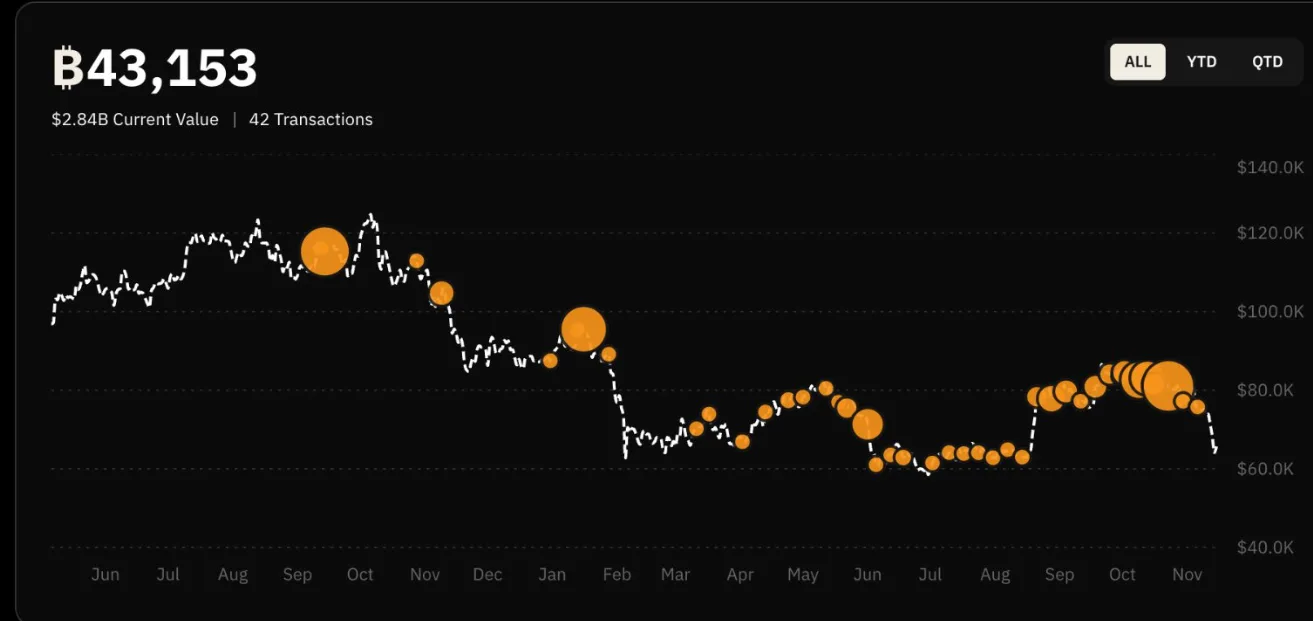
Binance CEO Richard Teng has described Bitcoin's latest selloff as a normal market response to tighter economic conditions, following a decline that pushed the asset's price toward $62,000 on November 15. His comments arrived as Strategy Executive Chairman Michael Saylor and Strive CEO Matt Cole signaled interest in buying more Bitcoin, even as US spot Bitcoin ETFs recorded $1.91 billion in withdrawals across seven trading sessions.
Teng Points to Tighter Financial Conditions
In a recent post on X, Teng linked the market decline to economic uncertainty and changing sentiment around artificial intelligence financing. He said tighter financial conditions had placed short-term pressure on several markets, including crypto.
The Binance chief, who has led the exchange since late 2023, maintained that Bitcoin's longer-term outlook remained intact, citing the continued development of the exchange's institutional trading services and wider adoption of digital assets as supporting factors. Binance co-founder Yi He also addressed the downturn on X, describing volatility as part of a developing cryptocurrency market.
Bitcoin fell to $62,081 on Sunday before recovering to roughly $64,300 at the time of reporting. Binance Research, the exchange's in-house research arm, separately measured a 15.6% BTC decline over 11 days, the cryptocurrency's steepest comparable drop since June.
Saylor and Strive Signal More Buying
Saylor suggested on November 15 that another purchase could be in the works, writing on X that the dip could use more orange. Cole likewise said on X that he wanted to increase his company's Bitcoin holdings. Neither executive confirmed a new transaction in those posts. Both companies have previously announced new purchases through formal disclosures, which would be where any confirmation of the flagged interest would appear.
Strategy (formerly MicroStrategy) bought 1,036 BTC for $81.9 million between November 2 and November 8, paying an average of $79,012 per coin, according to its November 9 disclosure. The purchase lifted the company's holdings to 850,364 BTC, the largest known corporate Bitcoin position, at an overall acquisition cost of about $64.16 billion. That works out to roughly $75,400 per coin on average, above the levels seen during the recent decline.
Strive separately disclosed a recent purchase of 29 BTC for approximately $2.2 million, bringing its holdings to 43,153 BTC as of November 6. The company paid an average of $75,721 per coin for the additional Bitcoin.
Other corporate holders took a different approach. MARA Holdings, a publicly traded Bitcoin miner, reported selling 13,597 BTC for about $1.1 billion after the third quarter ended, using $750 million of the proceeds to repay Bitcoin-backed loans.
US Spot Bitcoin ETFs Log $1.91 Billion in Outflows
US spot Bitcoin ETFs recorded approximately $1.91 billion in net withdrawals across seven consecutive trading sessions ending November 13, according to data from Farside Investors. The funds, which hold Bitcoin directly and trade on US exchanges, have offered investors regulated exposure to the asset since launching in January 2024. The figures showed that the November 9–13 trading week accounted for about $1.065 billion of the total. The funds lost another $185.4 million on Friday alone, data showed.
BlackRock's IBIT accounted for $143.5 million of that Friday figure, while Fidelity's FBTC recorded $41.9 million in outflows. The pace of withdrawals stands in contrast to the buying interest voiced by Saylor and Cole, a reminder that corporate treasuries and ETF investors represent distinct demand channels that can move in opposite directions.
Binance Research identified stronger Bitcoin selling on a major dollar-denominated spot exchange than on Binance between November 11 and 14, with net aggressive selling reaching 7,438 BTC on the unnamed venue, compared with 2,707 BTC on Binance.
The Coinbase Premium Index, meanwhile, remained negative for 51 consecutive days through November 13. The metric tracks the price gap between Bitcoin on Coinbase and on Binance, and is commonly read as a gauge of US demand relative to global venues. On that day, Bitcoin traded at a 0.10% discount on Coinbase relative to Binance, a sign of weaker relative demand on the US exchange.
This article provides general financial information, not investment advice. Bitcoin and cryptocurrency-related securities are volatile and carry substantial loss risks. Investors should consult a qualified financial professional before making investment decisions.

